If your collectors need a fresh layer of pre-coat powder every shift, you already know the cost: extra material, extra handling, and a pressure drop that never quite settles. Buyers ask whether a PTFE coated filter cartridge can remove that step entirely. A porous membrane on the media simply takes over the pre-coat's job. This guide explains the mechanism, when it works, and how to verify it with a supplier before changing your routine.
Filter pre-coating means dosing a fine powder into the dirty air stream so a sacrificial layer builds on the filter surface. That layer captures sticky dust and keeps it off the media. It works, but it consumes material every cycle and adds a handling step to every shift. A thick pre-coat also raises pressure drop, so the fan works harder and the cleaning cycle grows longer. When the dust is sticky, the pre-coat blends with it and the layer never releases cleanly. A PTFE coated filter cartridge is designed to make filter pre-coating unnecessary by placing the release surface on the media itself.
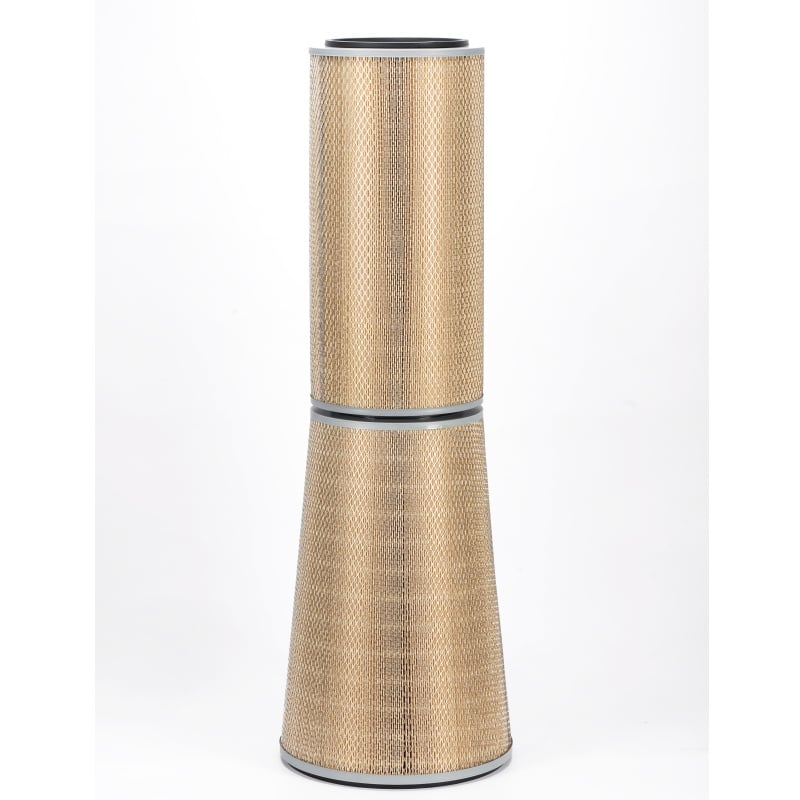
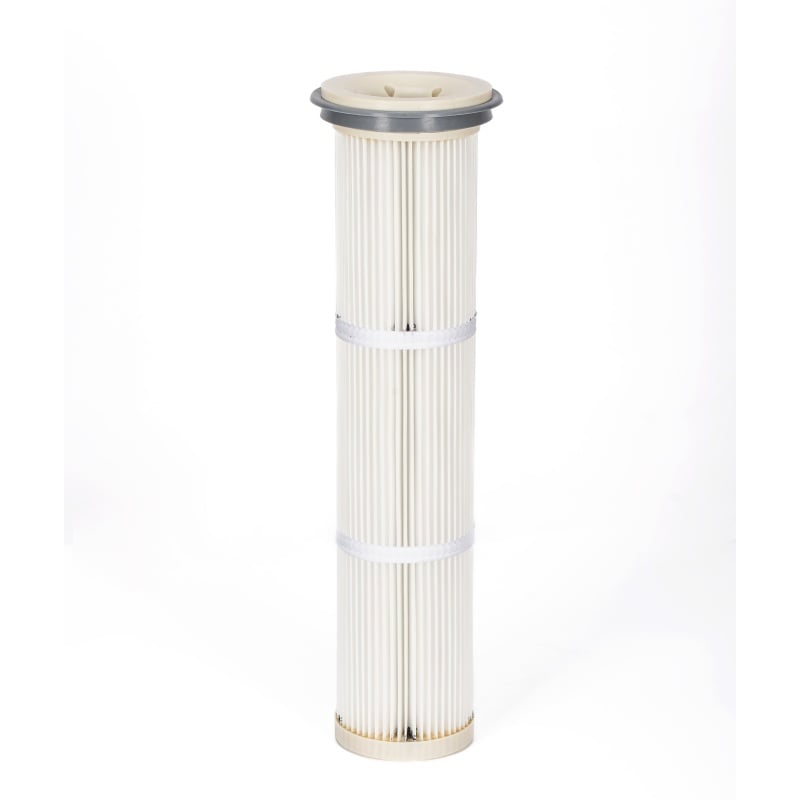
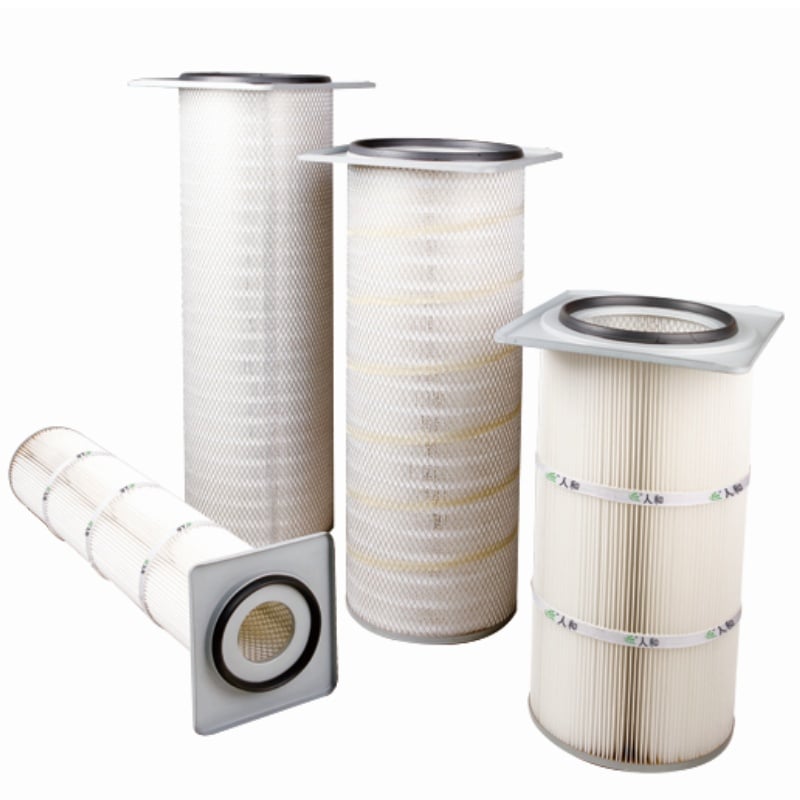
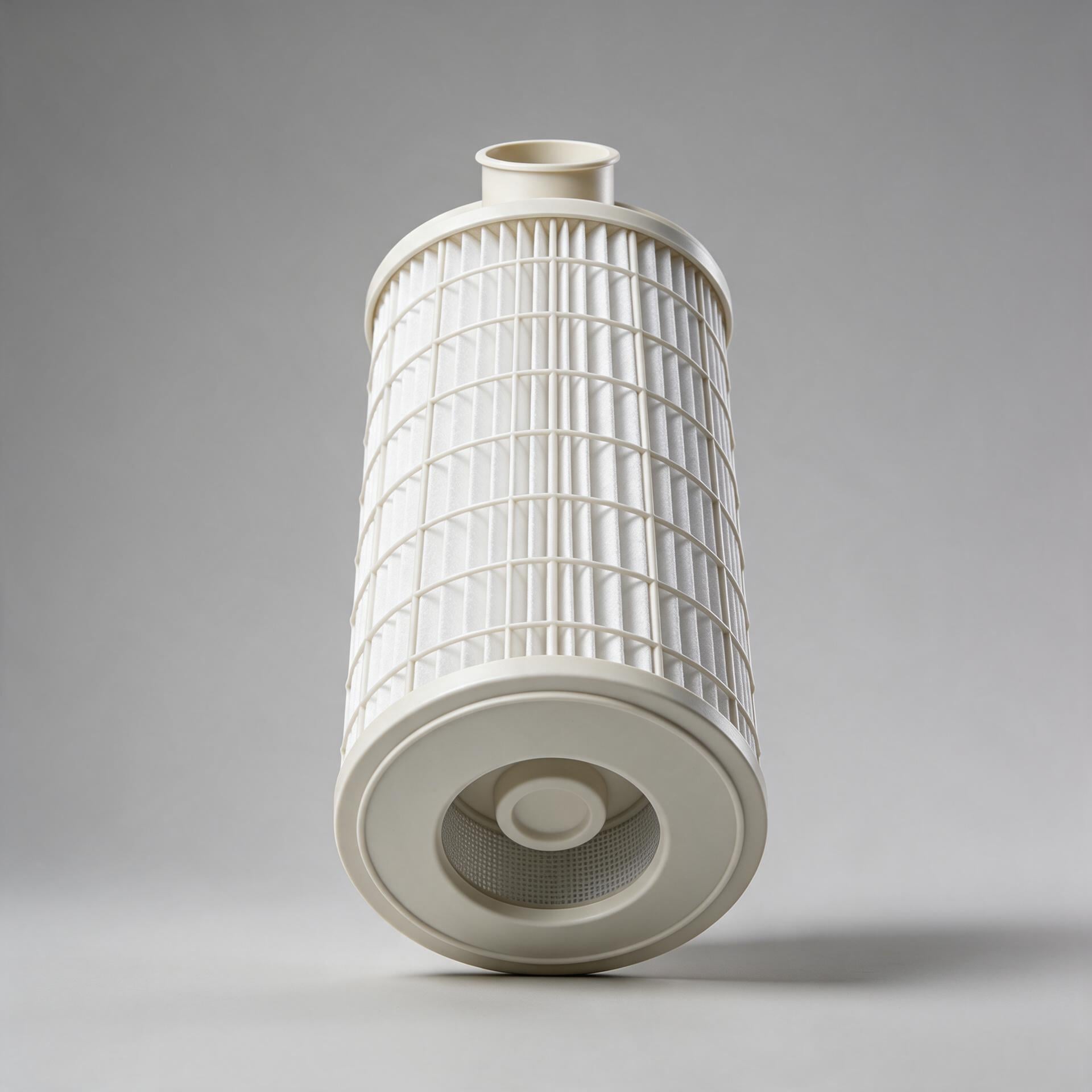
A PTFE coated filter cartridge is a pleated element whose media carries a thin expanded polytetrafluoroethylene membrane. The membrane sits on the upstream face of the pleats and has fine pores that pass air while holding particles at the surface. Underneath, the pleated media supplies depth and structural support. The outcome is surface filtration, not depth loading: dust forms a cake on the membrane, and pulse cleaning removes that cake. Because the cake releases easily, a PTFE coated filter cartridge keeps its cleaning behaviour consistent and protects the pleats over many cycles. Not every PTFE coated filter cartridge uses the same membrane grade, so ask which one is specified for your dust.
The reason membrane filtration removes the need for filter pre-coating comes down to where particles are collected. Without a membrane, fine particles wander into the media depth, especially when the dust is sticky or oily, and resist the pulse. With membrane filtration, particles stop at the surface and the pulse dislodges the cake as a sheet. For sticky dust such as fume from lubricated machining or certain chemical powders, that difference is decisive. The membrane presents a smooth, low-energy surface that sticky dust cannot grip, so it releases instead of smearing. This is how membrane filtration lets you drop filter pre-coating from the daily routine.
Buyers often expect a membrane to add resistance. In practice the opposite tends to happen over a full cycle. A freshly coated element starts at a similar resistance, but because the cake releases cleanly, the operating pressure drop stays lower and more stable. That low pressure drop is the practical benefit: the fan moves the required airflow without a rising penalty and pulse cleaning can be less frequent. A stable low pressure drop also keeps downstream airflow predictable when several collectors share a plant air system. Ask for resistance data at the relevant airflow rather than a single clean-filter figure. The shape of that curve tells you more about a PTFE coated filter cartridge than the starting point alone. A well chosen PTFE coated filter cartridge holds that curve flat for longer.
Membrane filtration is not a universal fix. Very high dust loads, gas hotter than the media rating, or abrasive particles that cut the membrane call for another design. If the process produces heavy coarse debris, an upstream pre-separator still makes sense even with a PTFE coated filter cartridge. A PTFE coated filter cartridge still needs the right housing and cleaning setup to perform as intended. The decision should rest on particle size, dust load, temperature, and cleaning method. A supplier who asks these questions before quoting is showing the right kind of expertise. Treat the membrane as one tool for sticky dust and fine particles, not a reason to ignore the rest of the system.
Consider a plant handling a fine, slightly oily powder where operators had been adding pre-coat daily. The dust bridged the pleats and the cleaning cycle grew longer each week. After switching to a PTFE coated filter cartridge with a compatible media grade, the maintenance team compared each PTFE coated filter cartridge option and found that the cake released during normal pulsing, so the daily powder step could be dropped. This is the scenario where membrane filtration pays off and low pressure drop is sustained without constant intervention. Supplier support matters too: a company with over twenty years in filtration, such as Jiangsu Renhe, can review a dust sample and recommend a media grade instead of shipping a catalogue part. The point is not the name but the habit of matching a PTFE coated filter cartridge to the dust it must handle.
Question one: Can a PTFE coated filter cartridge handle sticky dust without any pre-coat?
Answer: Often yes, when the dust is fine and gas temperature is within the media rating. The membrane gives sticky dust a smooth surface to release from. For very heavy or hot loads, confirm with the supplier and consider upstream separation.
Question two: Does membrane filtration raise pressure drop?
Answer: Starting resistance is comparable, but a low pressure drop is usually maintained across the cycle because the cake releases cleanly. Ask for resistance data at your airflow to confirm before you specify a PTFE coated filter cartridge.
Question three: How do I verify the coating before placing an order?
Answer: Request the media specification, efficiency information, and test documents. Review specifications and verify test documents rather than relying on a general claim about a PTFE coated filter cartridge or its filter pre-coating performance.
 Hot News
2026-11-21
2026-11-21
2026-11-21
2026-11-21
2026-11-21
2026-11-20
Renhe focuses on air filter cartridge, gas turbine air filter, Pleated Filter Media, industrial dust, Our main products have been recognized as high-tech products in Jiangsu Province, famous trademarks in Wuxi City, and CE certification.
NO. 31 Xingyuan Road, Jiefang Industrial Park, Gushan Town, Jiangyin City, Jiangsu Province, China (214414)
Copyright © 2024 Jiangsu Renhe Environmental Equipments Co., Ltd Privacy Policy
 EN