The least costly component in an air filtration system often decides how long the expensive one lasts. A pre-filter is usually the first and cheapest stage in the train, yet it handles the coarsest and heaviest dust before anything more delicate sees the air. When it is missing or poorly sealed, the downstream filter takes a load it was not designed for, and its service life collapses. Buyers evaluating an air filtration system rarely start here, which is why the first line of defense is often the most neglected part of the specification. The economics are simple: a stage that can be cleaned or replaced cheaply should be doing the work that would otherwise ruin a costly element.
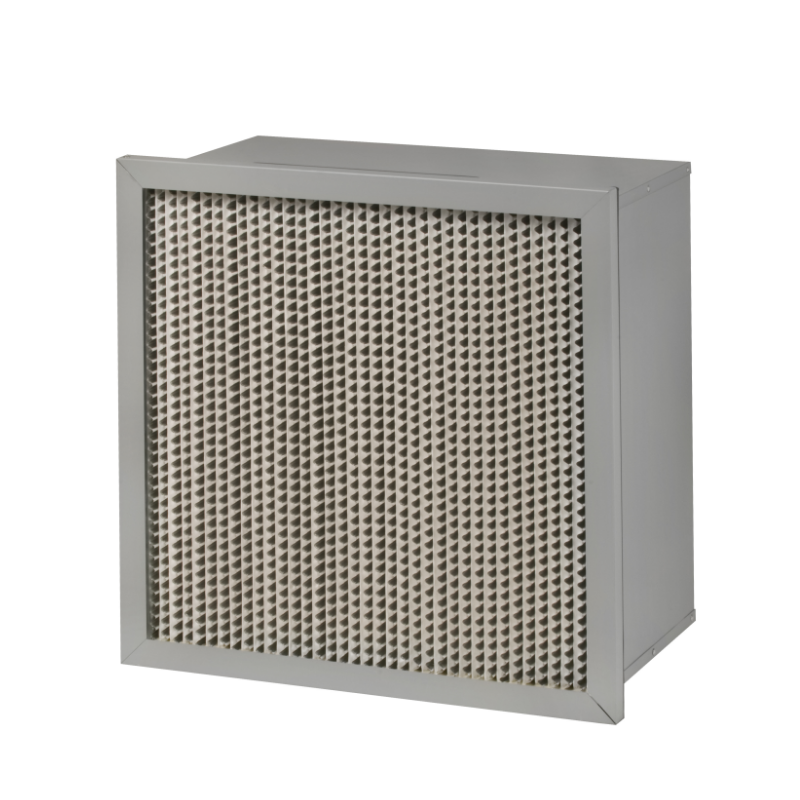
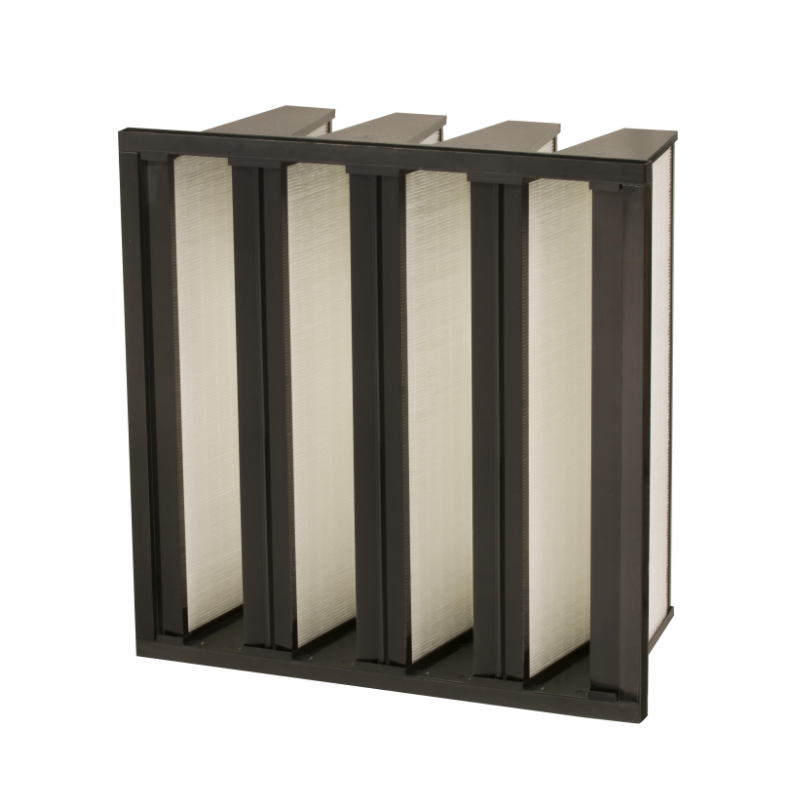
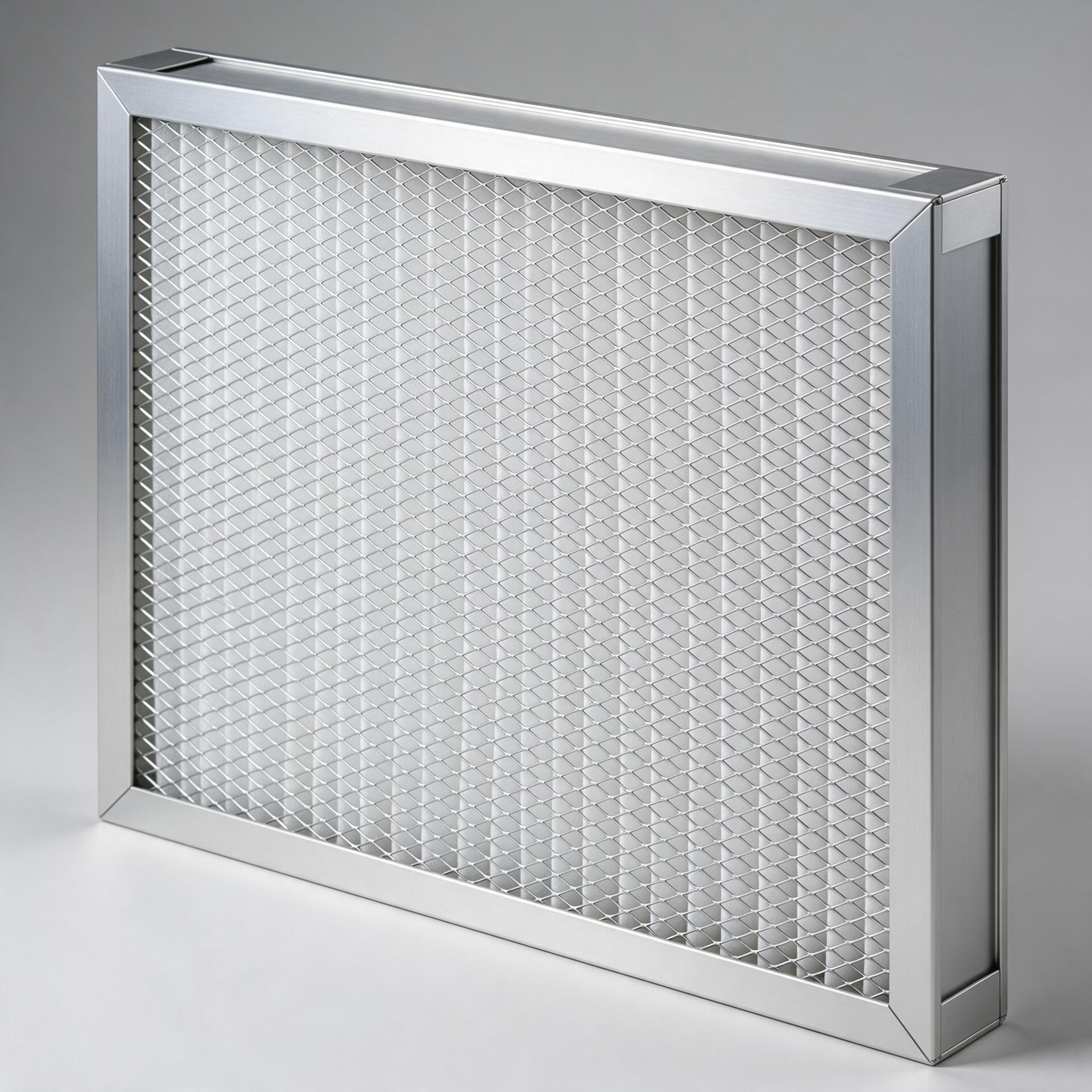
A pre-filter is a coarse filter placed upstream of finer stages in an air handling or dust collection system. It may be a panel, a pad, or a simple screen, depending on the dust and the housing. Its position is deliberate: air passes through it first, so large particles are removed before the media doing the fine work sees them. In air filtration this arrangement is called staging, and the benefit is that each stage handles the fraction it suits. A reusable panel pre-filter is a common form in HVAC and industrial intake applications, and it can serve as the first line of defense in air filtration. The term describes both the function and the service model, because these panels are made to be cleaned rather than discarded after one loading cycle.
The first line of defense idea is easy to explain in mechanical terms. Coarse particles carry most of the mass in many dust streams. If they reach a fine filter, they load it quickly and can embed in fibres where pulse cleaning cannot remove them. A pre-filter intercepts that mass early, keeping the pressure drop of the downstream stage predictable, and it is the first line of defense against load spikes. This matters where incoming air varies: the upstream stage gives the system a buffer against occasional surges. Air filtration performance is therefore not only about the efficiency of the final stage but about how well earlier stages protect it. Treat the first line of defense as a design requirement, not an optional accessory.
A reusable synthetic panel pre-filter is made for washing, drying, and reinstallation. That service model changes the maintenance conversation. Instead of buying replacements on a fixed schedule, the team inspects the panel, cleans it when loaded, and puts it back. Three details decide whether this works: the panel must fit the frame without gaps, the gasket must seal the perimeter, and pressure drop must return to a normal baseline after cleaning. A reusable panel pre-filter that fits loosely lets dust bypass the edge and quietly defeats the arrangement. Inspect the frame and gasket each time the panel is removed. When pressure drop stays high after washing and drying, the media has reached the end of its useful life and should be replaced.
A foundry running a lost-wax casting line in a temperature-controlled hall shows why staging matters. Sand from a drenching station produced a continuous, abrasive dust load, and the plant wanted cleaned air returned to the workshop to reduce heating and cooling losses. The documented system used a capture hood at the sand drop point, ducting to a filtration chamber, and a second-stage high-efficiency unit before the clean-air plenum, with reported capture above ninety-eight percent and discharge below one milligram per cubic metre. In such an arrangement, the first line of defense is what keeps the downstream high-efficiency stage from being overwhelmed by coarse sand. A buyer reviewing similar air filtration design should ask which pre-filter stage handles the heavy fraction and how it is cleaned. The case shows that good results come from the whole train, not one heroic filter.
Four checks are enough. Confirm the dust load and the particle size the first stage must catch. Check that the panel fits the frame and that a gasket seals the perimeter. Ask how pressure drop is monitored, because that is the signal for both cleaning and replacement. Confirm whether the stage is disposable or a reusable panel pre-filter, and make sure the maintenance plan matches that choice. A pre-filter specification that ignores sealing is incomplete, whatever the media looks like. Air filtration systems fail at interfaces more often than at media, and the first line of defense is where those interfaces are most exposed. Request specifications and compare options against your actual dust before committing.
Question one: Can I skip the pre-filter and buy a better final filter?
Answer: Usually not. A finer final filter loaded with coarse dust will cost more to run and replace. A pre-filter is the economical way to protect it and is the first line of defense in air filtration.
Question two: How should a reusable panel pre-filter be cleaned?
Answer: Remove it, wash it gently, let it dry fully, then reinstall it squarely in the frame. Check the gasket each time and verify that pressure drop returns close to its original baseline before the system returns to duty.
Question three: What does pressure drop tell you about a pre-filter?
Answer: A rise that cleaning does not reverse means the panel is loaded or the media is spent. Track the baseline after installation and use that trend to schedule service rather than a fixed calendar date.
 Hot News
2026-11-21
2026-11-21
2026-11-21
2026-11-21
2026-11-21
2026-11-20
Renhe focuses on air filter cartridge, gas turbine air filter, Pleated Filter Media, industrial dust, Our main products have been recognized as high-tech products in Jiangsu Province, famous trademarks in Wuxi City, and CE certification.
NO. 31 Xingyuan Road, Jiefang Industrial Park, Gushan Town, Jiangyin City, Jiangsu Province, China (214414)
Copyright © 2024 Jiangsu Renhe Environmental Equipments Co., Ltd Privacy Policy
 EN