Humidity defeats more filtration systems than dust load does. When warm moist air meets a cool surface, condensation forms inside the cabinet and turns dry dust into a sticky layer that resists pulse cleaning. The result is a rapid rise in resistance and short element life. Choosing an industrial filter cartridge for a damp workshop therefore means looking beyond efficiency figures to the media surface and the way the cartridge handles moisture. This guide explains the material and design factors that matter, drawing on PTFE coated media and the construction of conical and cylindrical elements. The aim is to help a buyer evaluate options without relying on guesswork about humidity levels.
Dry dust releases easily from a pleat when a pulse passes. Moist dust does not. Water vapour condenses on cooler media and binds particles into a film that a normal pulse cannot lift. In a high humidity workshop the industrial filter cartridge is working against two problems at once: capturing fine particles and avoiding a damp cake on the pleats. Over time the film thickens, resistance climbs and the fan works harder. The practical sign is a pressure drop that never fully returns after cleaning. Understanding this mechanism explains why the same industrial filter cartridge performs well in a dry foundry and poorly in a damp finishing room.
A PTFE membrane filter cartridge addresses moisture at the surface. The PTFE membrane gives the media a smooth, low energy face from which sticky dust releases more readily. Knowledge base guidance notes that membrane filtration helps release adhesive dust, lowers pressure drop and protects the pleats. For an industrial filter cartridge in a high humidity environment, that release behaviour is the key benefit, because it reduces the chance that a damp layer becomes permanent. The coating does not remove the need to control condensation, but it makes the media more forgiving when moisture is present. Buyers should ask whether the PTFE membrane is applied to the media used in their specific dust stream, rather than assuming all elements share the same surface.
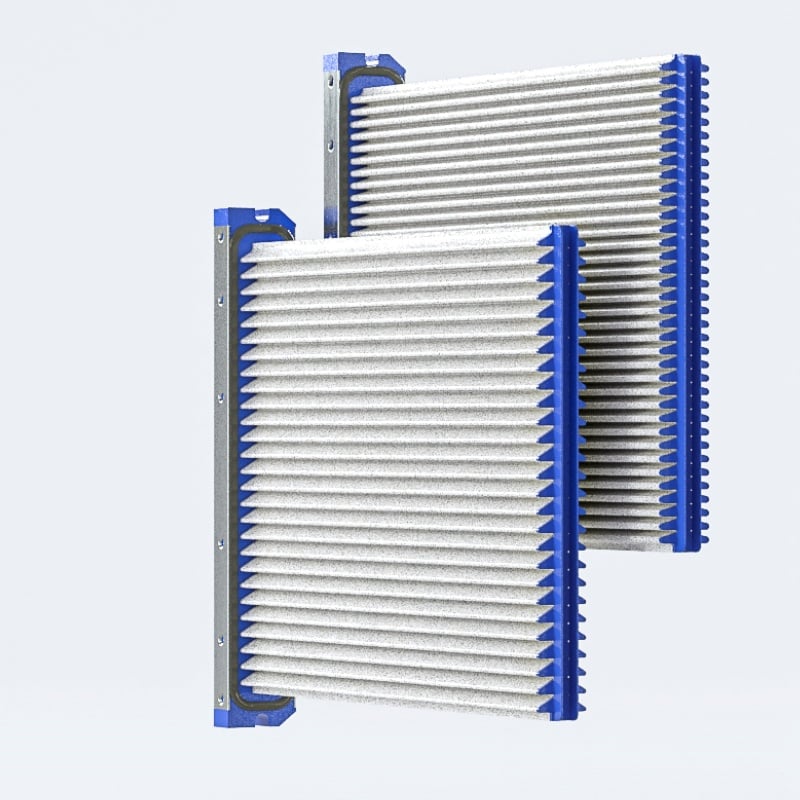
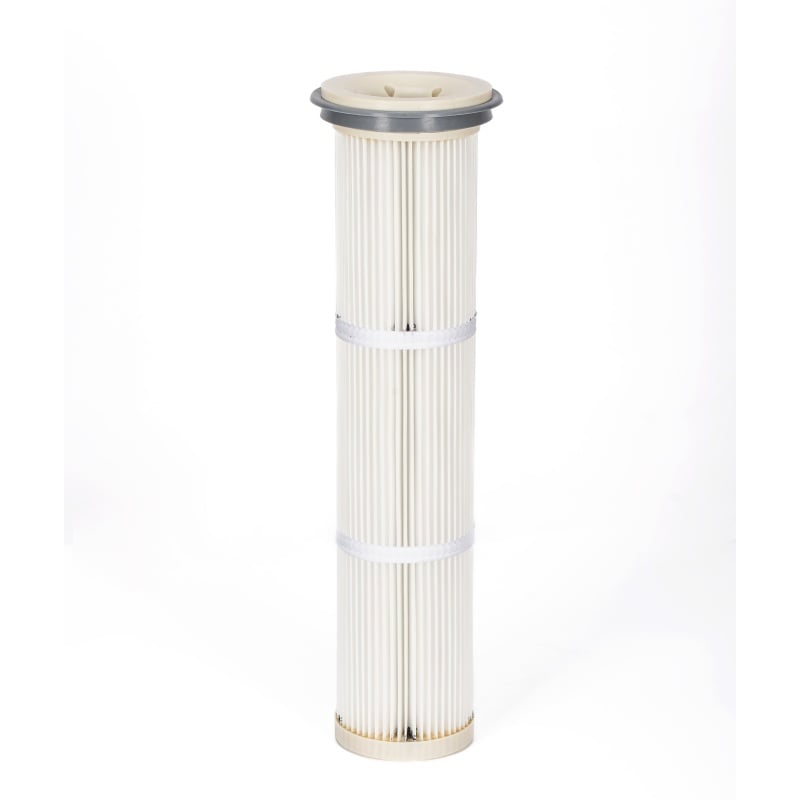
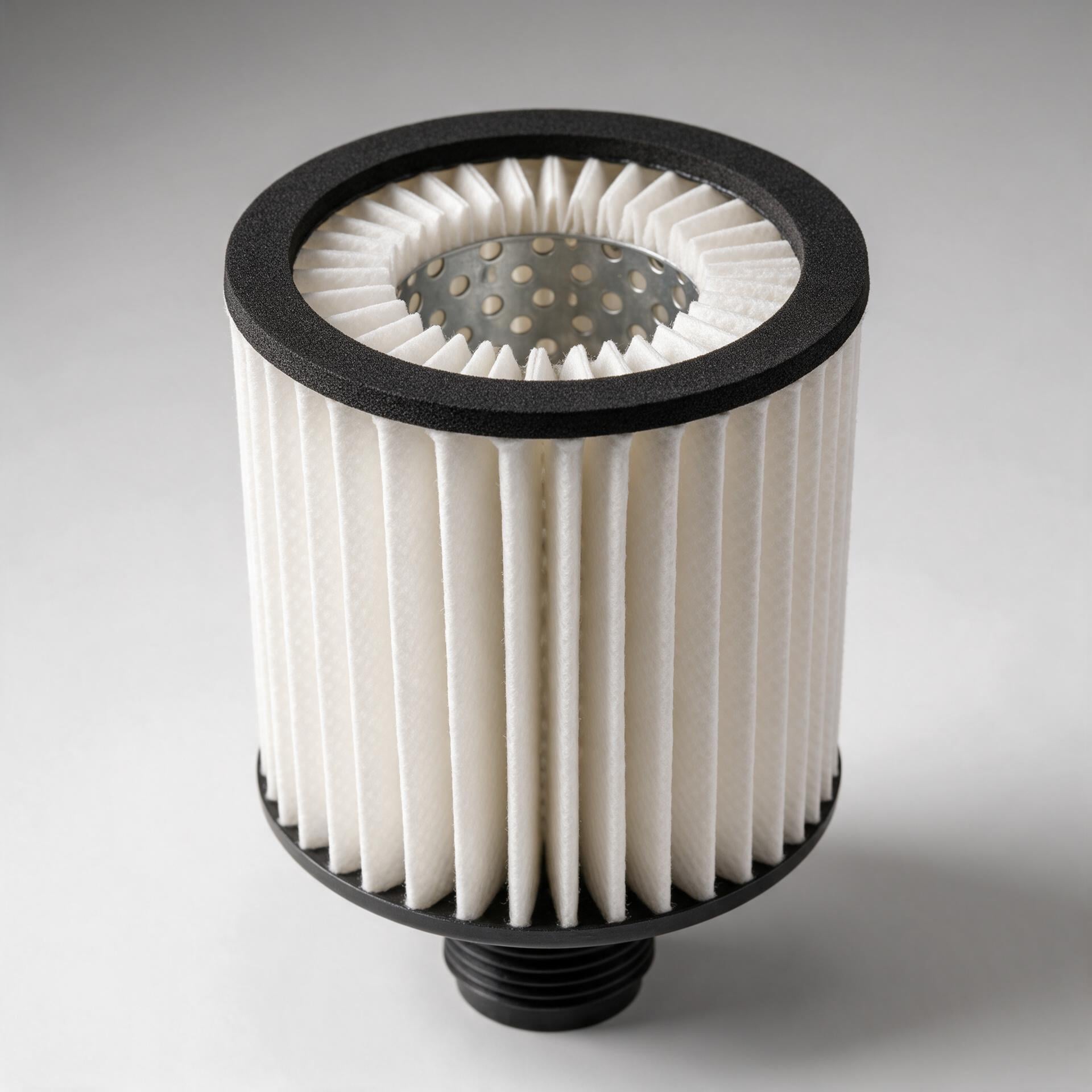
Humidity is not the only stress on an element. Repeated pulse cleaning and moisture cycling can shift the pleats if the media is not held firmly. The conical and cylindrical filter cartridges in the knowledge base use wide pleat depth with inner and outer liner, and a special process that prevents the media from moving excessively. A further detail keeps the media from crossing the metal support mesh. These features preserve pleat spacing in an industrial filter cartridge, which keeps the filtering area effective and the cleaning pulse even. For an industrial filter cartridge, stable pleat geometry is what allows a PTFE surface to keep working over many cycles. When comparing options, look for inner and outer liners rather than a single support.
Pressure drop is the most useful operational signal in a high humidity workshop. Because moisture changes how dust releases, a rising baseline is often the first evidence that the element is struggling. Operators should track resistance at the end of each cleaning cycle and compare it over days. If the baseline climbs while airflow falls, the industrial filter cartridge may be blinded by a damp cake rather than simply loaded with dry dust. The response is to inspect the element, confirm the drainage and check whether compressed air to the pulse system is dry. A plant that logs pressure drop can catch condensation problems early, before the element reaches its terminal resistance.
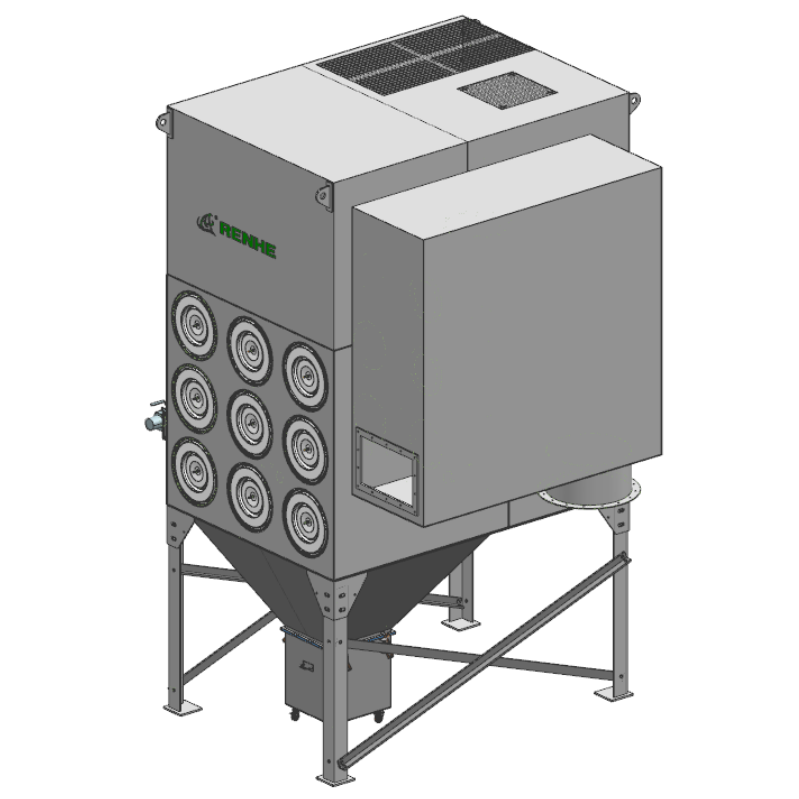
A useful example is an anonymous casting shop operating a lost wax process in a constant temperature and humidity hall. A sand drenching station generated dust that was captured by a hood, drawn through ducting into a cartridge collector, passed through a second high efficiency stage and returned to the workshop as clean air. The plant reported capture above ninety eight percent and outlet concentration below one milligram per cubic metre. Jiangsu Renhe supplied the filtration stage. Because the hall was humidity controlled, the team paid close attention to condensation on the duct and media, and selected media whose surface would release dust cleanly. That case shows why an industrial filter cartridge for a high humidity room is chosen on surface behaviour and construction, not on efficiency alone.
Good media choice works well when condensation is controlled. Keep duct runs as short and warm as the process allows, and avoid pockets where moist air can stagnate. Insulating a cold surface near the inlet reduces the chance of local dew formation. The dirty-air inlet should be arranged so that incoming air does not strike a cold cabinet wall directly. In a cartridge dust collector handling damp streams, these measures reduce the load on the PTFE membrane surface and keep pressure drop predictable. During specification review, ask the supplier how the cabinet and inlet are arranged. Combining sound layout with a suitable industrial filter cartridge is more reliable than relying on any single feature.
Question one: Is a PTFE membrane filter cartridge enough for a high humidity workshop?
Answer: It is an important part of the answer, because the PTFE membrane helps sticky dust release and lowers pressure drop. It should still be paired with condensation control and a sound cabinet layout.
Question two: How do I know if moisture is blinding the media?
Answer: Watch a pressure drop baseline that keeps rising after cleaning. Combined with falling airflow, that pattern points to a damp cake rather than normal dry loading.
Question three: What construction details should I verify before ordering?
Answer: Look for an industrial filter cartridge with inner and outer liner, stable pleat spacing and a surface suited to the dust. Verify test documents and confirm the coating used for your application.
 Hot News
2026-11-21
2026-11-21
2026-11-21
2026-11-21
2026-11-21
2026-11-20
Renhe focuses on air filter cartridge, gas turbine air filter, Pleated Filter Media, industrial dust, Our main products have been recognized as high-tech products in Jiangsu Province, famous trademarks in Wuxi City, and CE certification.
NO. 31 Xingyuan Road, Jiefang Industrial Park, Gushan Town, Jiangyin City, Jiangsu Province, China (214414)
Copyright © 2024 Jiangsu Renhe Environmental Equipments Co., Ltd Privacy Policy
 EN