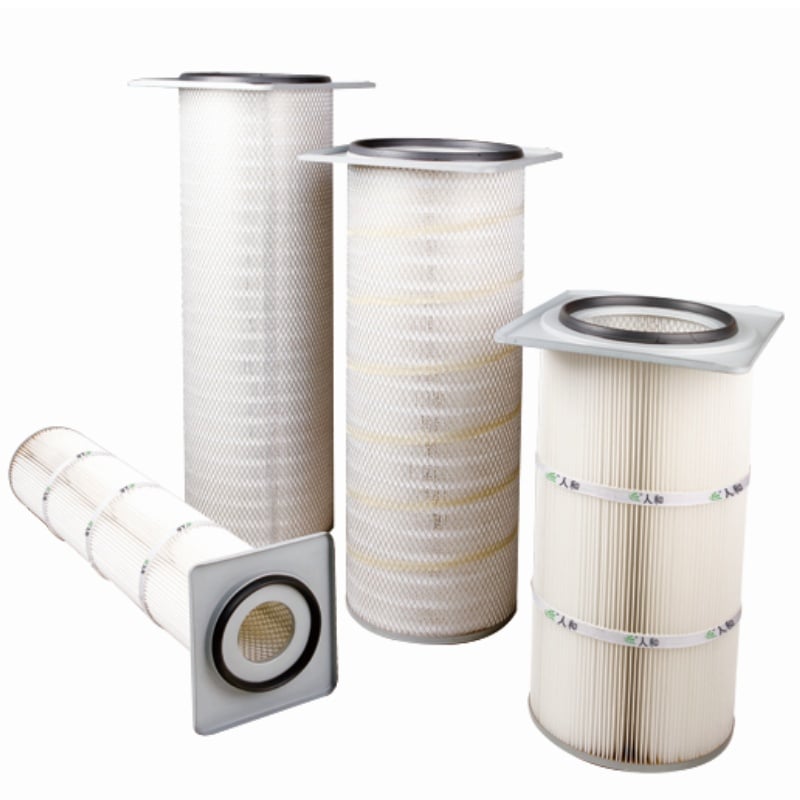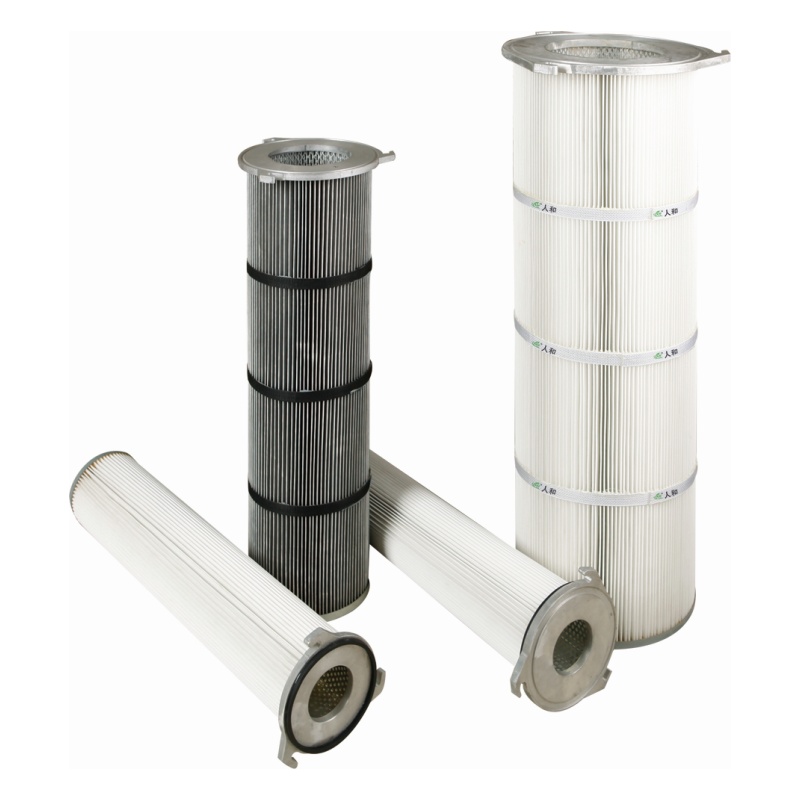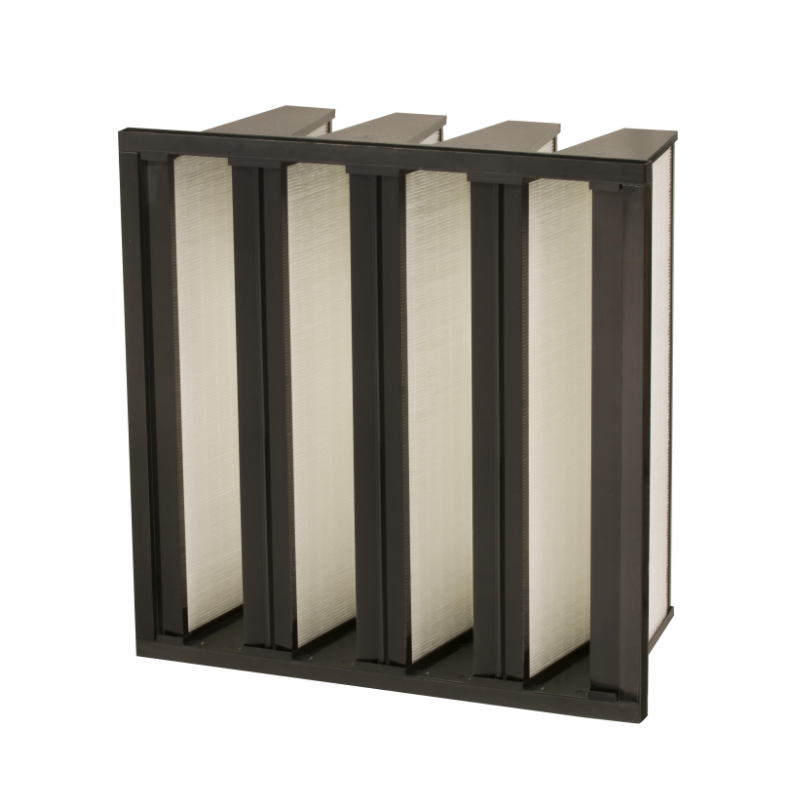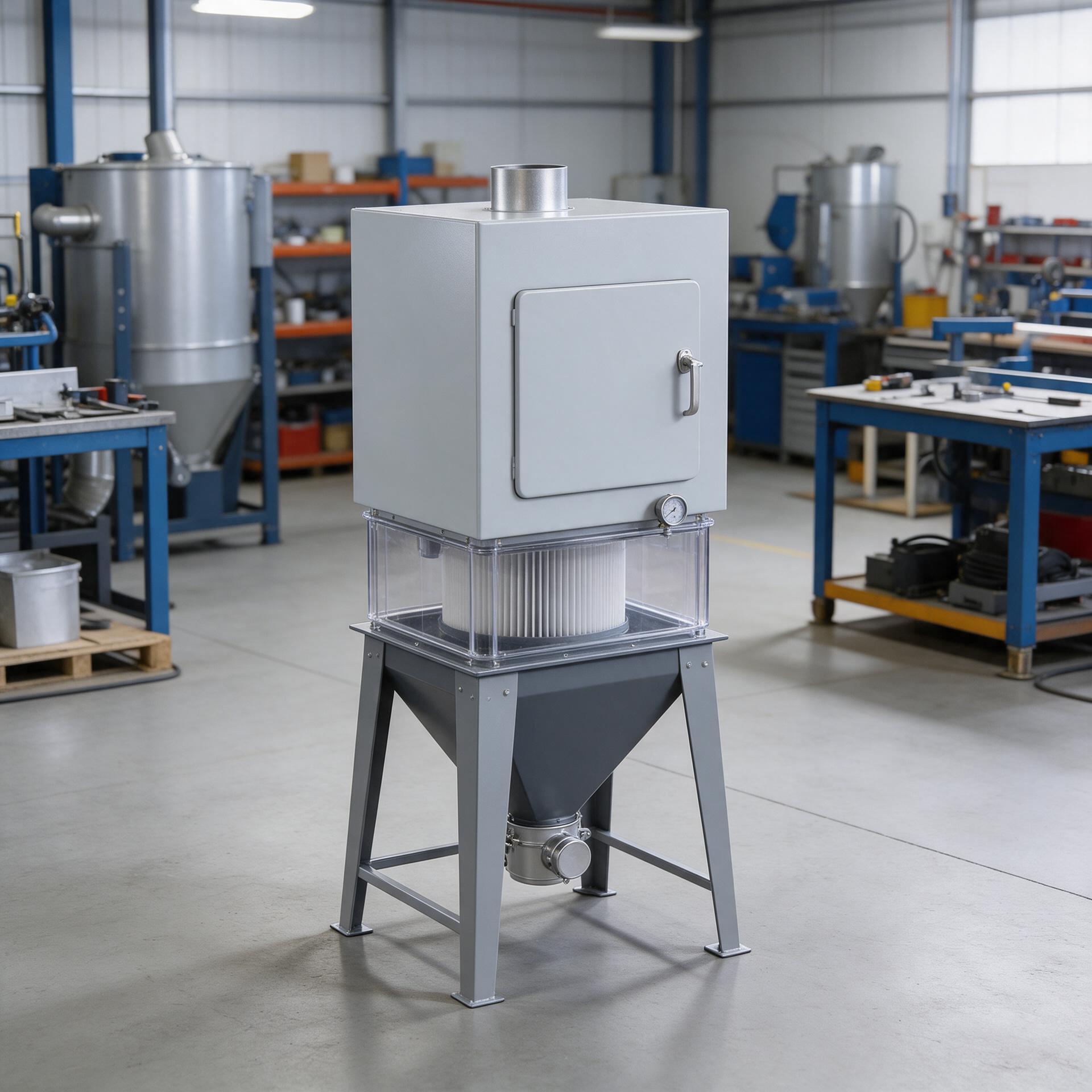
A workshop rarely has spare floor space for a dust system. The question buyers ask is not whether a collector filters air, but whether it can be installed, serviced and expanded within a tight footprint. A cartridge dust collector answers that need because pleated media packs a large filtering surface into a small cabinet. This guide explains how compact structure, drawer replacement, workshop installation and modular construction turn into practical installation advantages, using the RH XLC II horizontal cartridge collector as the reference. The goal is to help a plant team judge whether a cartridge dust collector fits a real layout before ordering.
A cartridge dust collector uses pleated media to deliver high filter area in a shallow cabinet, so it occupies less room than a baghouse built for the same fine-dust duty. Against a large fabric collector, a compact cartridge unit can sit beside the process it serves instead of in a distant plant room. Shorter duct runs mean lower fan load and simpler installation. The compact structure of a cartridge dust collector is not merely a dimension on a drawing: it decides whether the equipment fits behind a welding bay or under a mezzanine. For a small workshop, that difference alone decides whether dust collection happens at the source or not at all.
The strongest argument for a cartridge dust collector is often the way its filters come out. The RH XLC II uses a fifteen degree inclined drawer arrangement, so each element slides out from the clean side. A technician works in clean air rather than reaching into a dusty hopper, and the changed element does not shower dust across the floor. This drawer replacement approach reduces the time and containment needed for routine service and is a key reason a cartridge dust collector suits a tight workshop installation. An anti abrasion baffle at the dirty-air inlet protects the media from direct impact, which lengthens life in streams with sharp particles. Because there are no transmission parts inside the cabinet, there is less to jam during workshop installation or later maintenance. Buyers should confirm the drawer replacement arrangement during specification review before planning workshop installation.
Workshops grow, and a collector that cannot grow with them is a poor investment. The RH XLC II is described as modular, allowing larger configurations to be assembled from standard sections. Airflow across the range runs from 3300 to 45000 cubic metres per hour, with filter area from 184 to 1472 square metres and element counts from eight to sixty four. Resistance is given as an initial 120 to 250 Pa, a working 500 to 700 Pa and a terminal 1000 to 1250 Pa. Those figures let a team size a cartridge dust collector against measured airflow rather than guesswork. Filtering efficiency is stated at 99.99 percent. When a new station is added, modular construction means the original cabinet is extended, not replaced, which protects the earlier investment.
Installation is easier when access and airflow are planned together. A cartridge dust collector should be positioned so that the drawer side has clear space for a person to stand and remove an element. The duct from the hood should be kept short and direct, because long runs add pressure loss and demand more fan power. The dirty-air inlet should face a layout where the anti abrasion baffle can do its job. For a workshop installation, the team should also confirm that the compact structure leaves room around the cabinet for inspection. Jiangsu Renhe supplies this horizontal cartridge collector with the inclined drawer and no internal drive parts, and those details matter most at commissioning. Reviewing specifications before delivery avoids costly relocation later.
A helpful illustration comes from an anonymous plant handling fine dry dust in tobacco and pharmaceutical production. The line had limited space around the process, so a large fabric collector was impractical. A cartridge dust collector was selected for its compact cabinet and drawer access, with the dirty-air inlet arranged so incoming particles could not strike the pleats directly. Routine service was carried out from the clean side, keeping the aisle usable during a short maintenance window. This case shows why the compact structure is a production decision rather than a cosmetic one. The ability to slide elements out from the clean side is what made the installation workable in a live workshop.
One mistake is choosing a collector by cabinet size alone, without checking the installed filter area against the airflow. Another is placing the unit where the drawer cannot fully extend, which defeats the service advantage. A third is treating modular construction as an afterthought, then discovering that the duct network cannot be extended. In each case the fix is the same: plan installation around the service access, the airflow and the expansion path at the same time. A cartridge dust collector rewards that planning with stable operation and short service intervals. Requesting material guidance and a layout review before ordering is a sensible step.
Question one: How much floor space does a cartridge dust collector need?
Answer: It needs less than a fabric collector of similar fine-dust duty because pleated media raises area within a compact cabinet. Confirm actual cabinet dimensions against your aisle and drawer clearance.
Question two: What makes drawer replacement easier than bag removal?
Answer: The fifteen degree inclined drawer lets elements slide out from the clean side. The technician stays in clean air and the floor stays cleaner, which shortens routine service.
Question three: Can one cartridge dust collector be expanded later?
Answer: Modular construction allows larger units to be built from standard sections. Confirm the airflow and filter area of each section so the original cartridge dust collector can grow with the line.
 Hot News
2026-11-21
2026-11-21
2026-11-21
2026-11-21
2026-11-21
2026-11-20
Renhe focuses on air filter cartridge, gas turbine air filter, Pleated Filter Media, industrial dust, Our main products have been recognized as high-tech products in Jiangsu Province, famous trademarks in Wuxi City, and CE certification.
NO. 31 Xingyuan Road, Jiefang Industrial Park, Gushan Town, Jiangyin City, Jiangsu Province, China (214414)
Copyright © 2024 Jiangsu Renhe Environmental Equipments Co., Ltd Privacy Policy
 EN