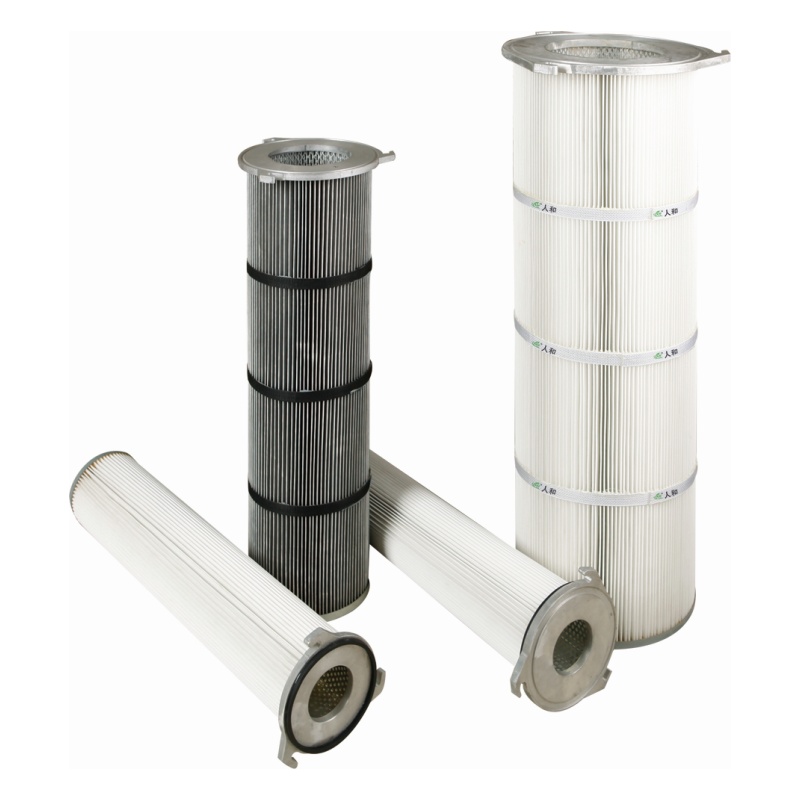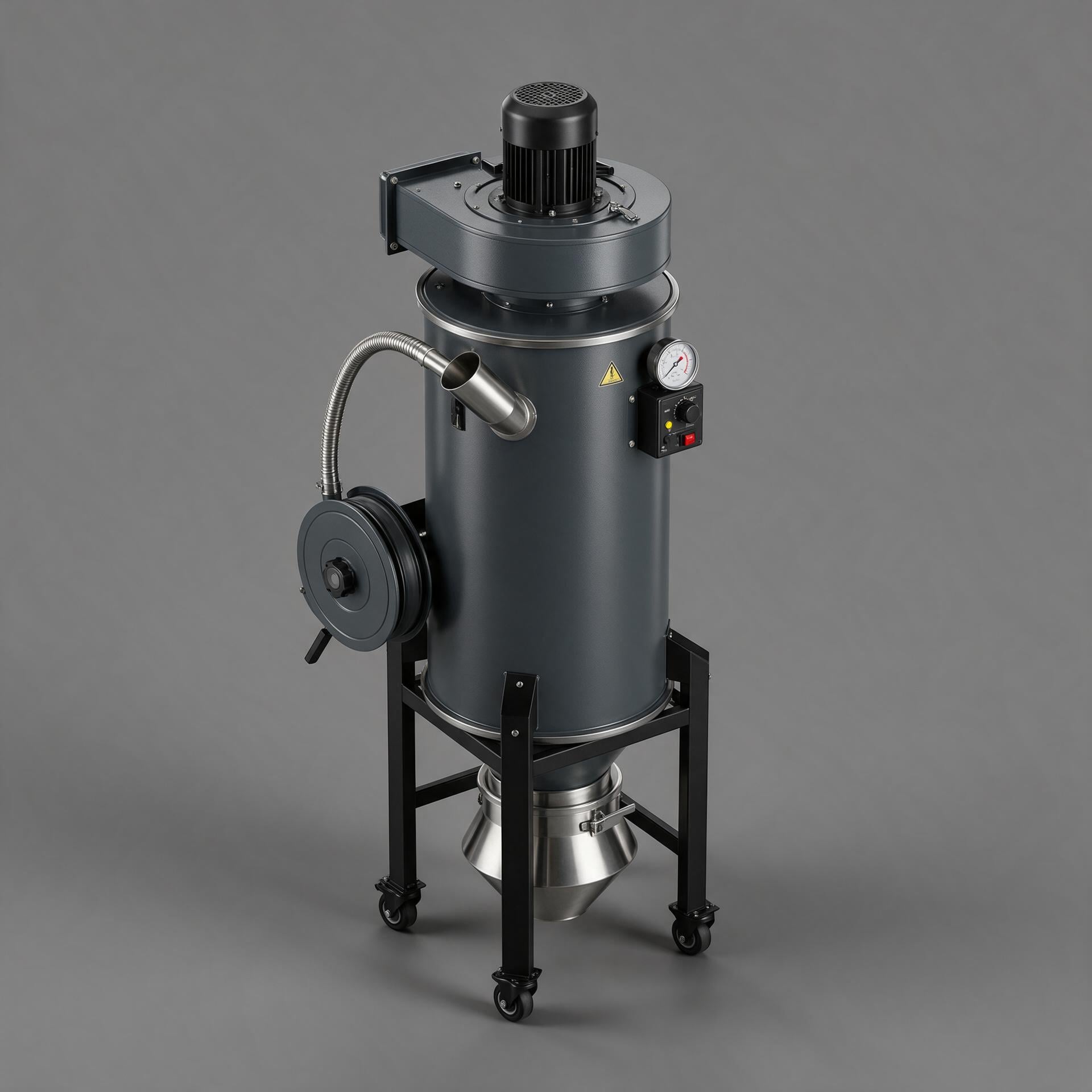
Welding and soldering fume contains a large fraction of particles below one micron, and those particles behave differently from coarse dust. They follow the airflow almost exactly, so a simple settling chamber does little to remove them. A fume dust collector has to bring the particles into contact with a fibre surface through mechanisms that work at very small sizes. This is why buyers should look beyond the nominal airflow of a unit and ask how it handles submicron particles specifically. Understanding the capture mechanisms makes it easier to judge whether a fume dust collector is suited to fine smoke or only to visible coarse dust.
Three mechanisms do most of the work. Inertial impaction catches larger particles that cannot follow a sharp bend in the airflow and therefore collide with a fibre. Interception catches particles that pass close enough to a fibre to touch it. For submicron particles, diffusion is the dominant mechanism: random Brownian motion drives the smallest particles across streamlines until they contact a fibre and stick. Because diffusion is strongest at very small sizes and moderate flow speeds, a well designed fume dust collector balances airflow and media structure instead of simply pushing more air. This is a general filtration principle used across many industries, not a claim of special technology.
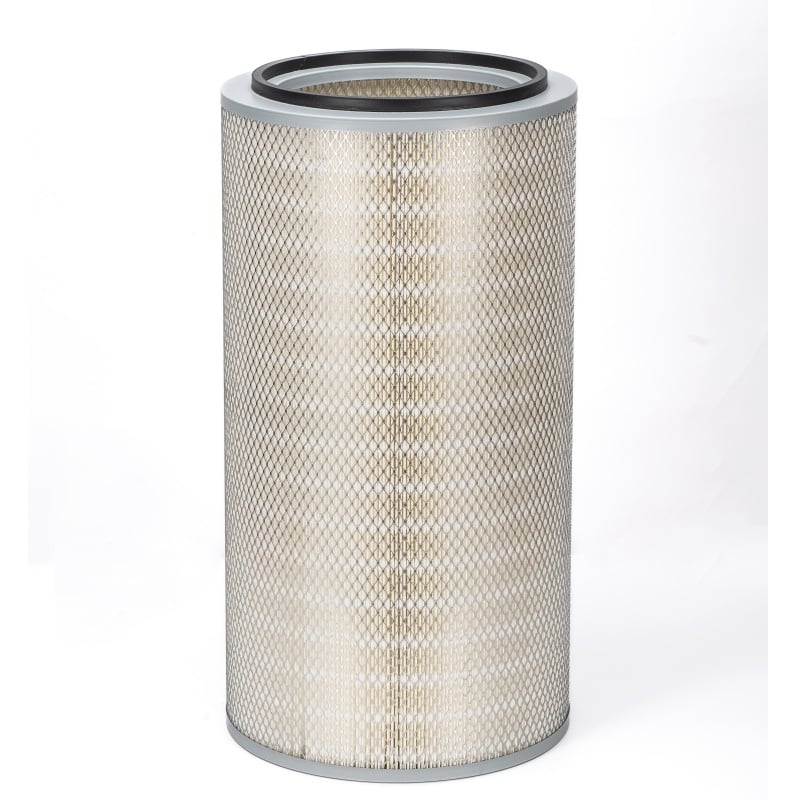
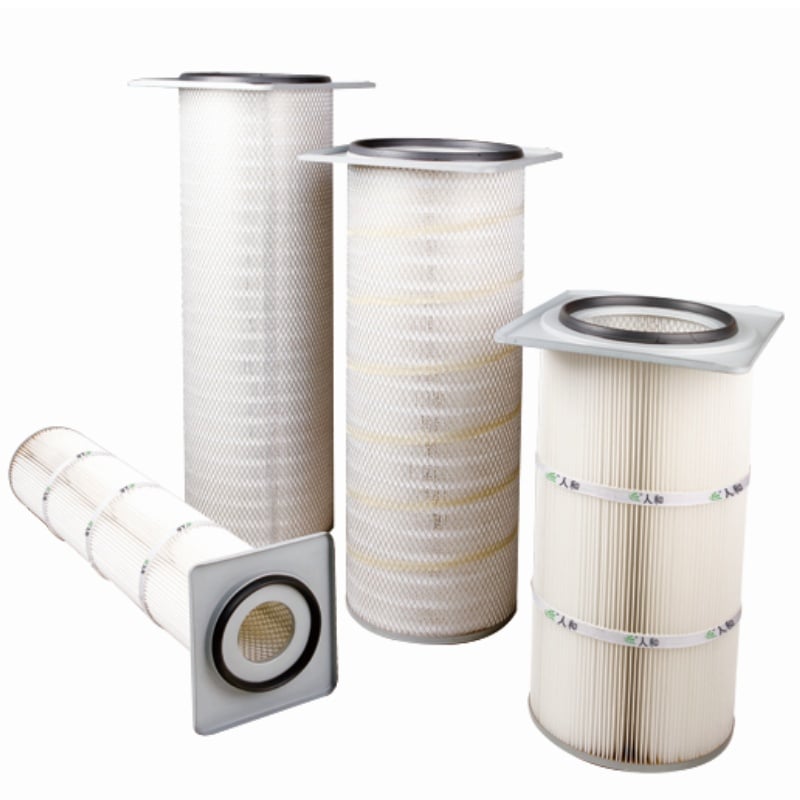
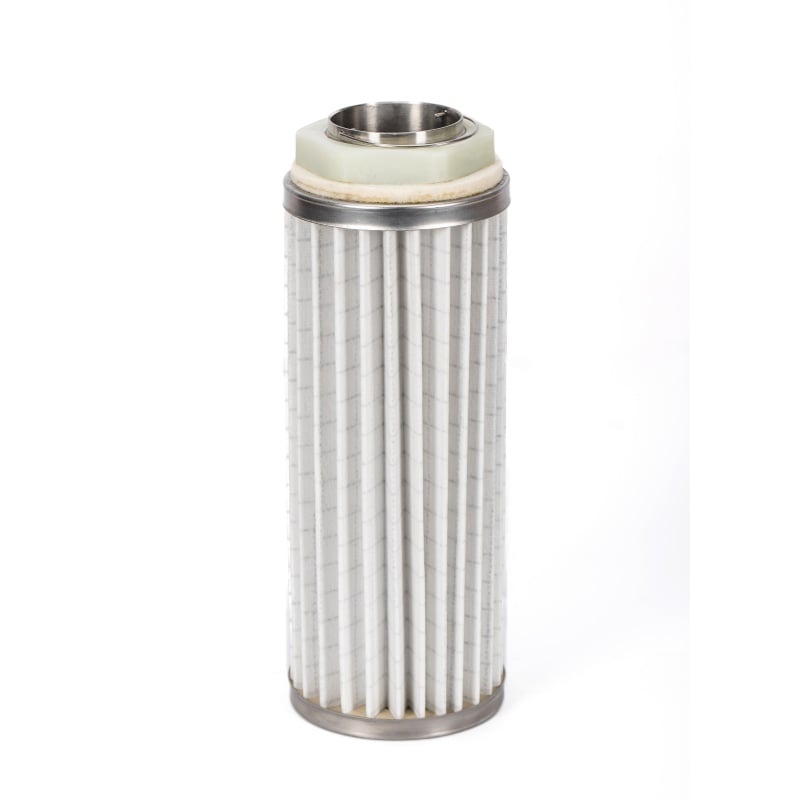
To capture smoke reliably, the collection medium must be fine enough to exploit these mechanisms without imposing excessive resistance. A HEPA filter is rated to capture 99.97 percent of particles at 0.3 microns, a size that is especially challenging because it sits between the impaction and diffusion regimes. In a fume dust collector, HEPA filtration is often used as a final stage after a main element that removes the bulk load. That ordering protects the fine media and extends its life. When comparing units, ask where the rating applies: a laboratory figure for a media sample is not the same as the performance of a sealed assembly with real bypass paths.
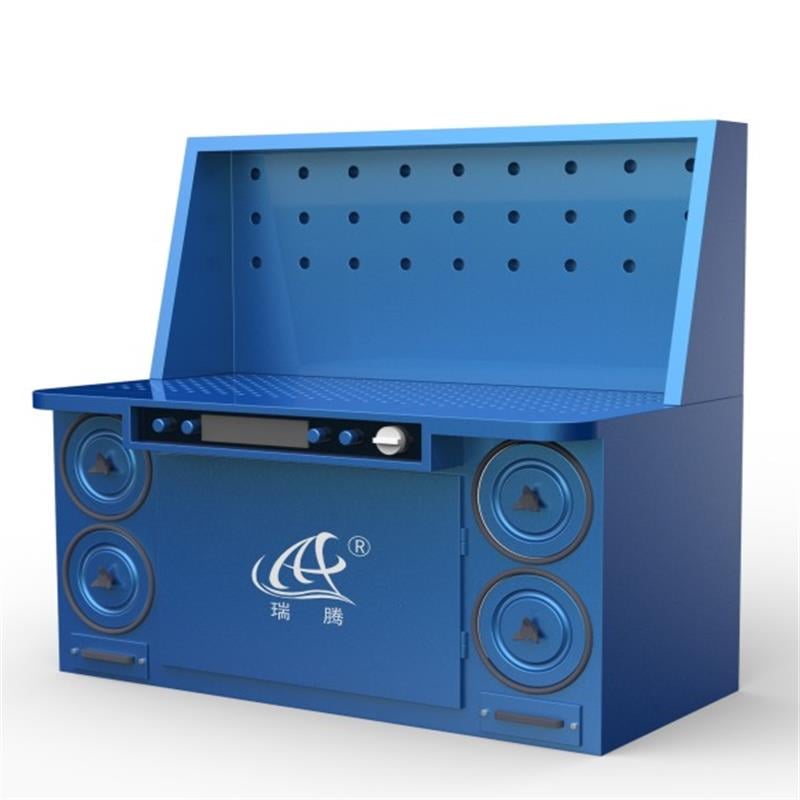
No filter can collect fume that never enters the hood. Smoke capture is therefore the first step in any fume dust collector system. A close hood, a movable arm or a distributed airflow arrangement must be positioned so the plume is drawn in at the point of generation. Thermal buoyancy from hot welding fume can help carry smoke upward into an overhead hood, but cross draughts can scatter it. Buyers should map the work positions and the shop airflow before selecting a capture method. HEPA filtration cannot compensate for a hood that misses the plume. A high efficiency fume dust collector with poor capture will still leave smoke in the breathing zone of the operator.
Consider an anonymous electronics assembly area doing lead free soldering at several benches. The original local exhaust had hoods placed too far from the work, and operators reported visible smoke near the stations. The team repositioned the hoods, balanced the make up air to stop cross draughts and routed the collected stream through a fume dust collector with a main cartridge and a HEPA final stage. Smoke capture improved without increasing fan power, because the change was in the airflow path rather than the filter. The case shows that submicron particles are controlled by a combination of capture and diffusion based filtration, not by a single headline specification.
Start by describing the process: handheld welding, robotic welding, soldering or brazing each produce different plume behaviour and different particle sizes. If the work moves, a fixed hood may not follow it, and a mobile arm or distributed arrangement is more appropriate. For fine metal oxide smoke, confirm that the fume dust collector uses a high efficiency final stage and that the housing is sealed against bypass. Where odours or volatile compounds are present, a gas phase option may be needed in addition to HEPA filtration. Match the smoke capture method to the real work pattern, then verify the result with measurements after installation.
One misconception is that a higher airflow number always means better smoke capture. In practice, airflow that is too high at the hood can pull in surrounding air and distort the plume. Another is to treat all smoke as the same: submicron particles from soldering differ from the heavier oxide fume of arc welding. Some buyers assume a visible haze is the only problem, when the finer fraction is the one that matters most for health. A fume dust collector should be judged on how well its HEPA filtration captures particles at the difficult size, not on how clean the shop looks from a distance. Verify test documents and ask for the mechanism to be explained clearly.
Question one: Why are submicron particles difficult to filter?
Answer: They follow airflow closely and are too small for simple settling. Diffusion, which drives random motion into fibres, is the main capture mechanism at that size.
Question two: What does HEPA 99.97 percent at 0.3 microns mean?
Answer: It means the HEPA filter captures 99.97 percent of particles at that challenging size. In a fume dust collector it is usually the final stage of HEPA filtration after the main media.
Question three: Can a better filter fix poor capture?
Answer: No. If smoke is not drawn into the hood, the filter never sees it. Good smoke capture at the source must come first in any fume dust collector design.
 Hot News
2026-11-21
2026-11-21
2026-11-21
2026-11-21
2026-11-21
2026-11-20
Renhe focuses on air filter cartridge, gas turbine air filter, Pleated Filter Media, industrial dust, Our main products have been recognized as high-tech products in Jiangsu Province, famous trademarks in Wuxi City, and CE certification.
NO. 31 Xingyuan Road, Jiefang Industrial Park, Gushan Town, Jiangyin City, Jiangsu Province, China (214414)
Copyright © 2024 Jiangsu Renhe Environmental Equipments Co., Ltd Privacy Policy
 EN