Maintenance budgets in a dust plant are dominated by two items: replacement parts and labour. Both are shaped by how consistently an element performs across its service life. An industrial filter cartridge that holds its pleat geometry, resists media movement and releases dust cleanly will be changed less often and will protect the fan from load swings. This guide explains the manufacturing details that translate into lower lifetime cost, drawing on the conical and cylindrical filter cartridge specifications in the knowledge base. The point is not that one element is cheapest to buy, but that a precision built one is cheaper to run.
A cheap industrial filter cartridge that loads quickly and blinds early costs more than its price suggests. Each premature change consumes labour, creates waste and stops the line. It also raises pressure drop for part of the cycle, which pushes the fan to draw more power. When those costs are added up, the industrial filter cartridge with the lowest purchase price is often not the lowest cost option. Plant teams should think in terms of cost per operating hour rather than cost per element. That shift in thinking is the first step toward controlling maintenance costs in a realistic way.
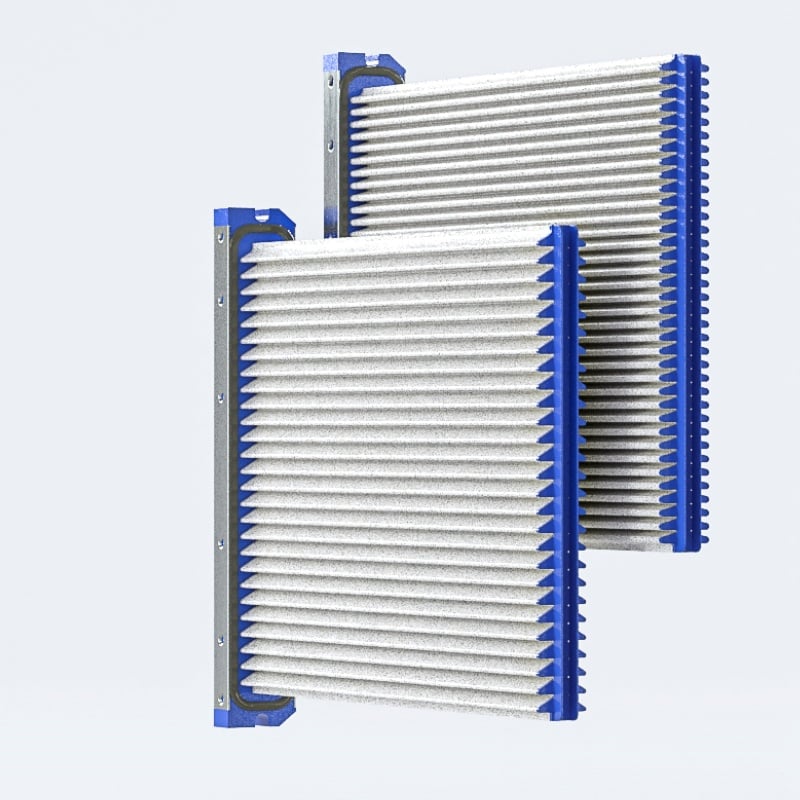
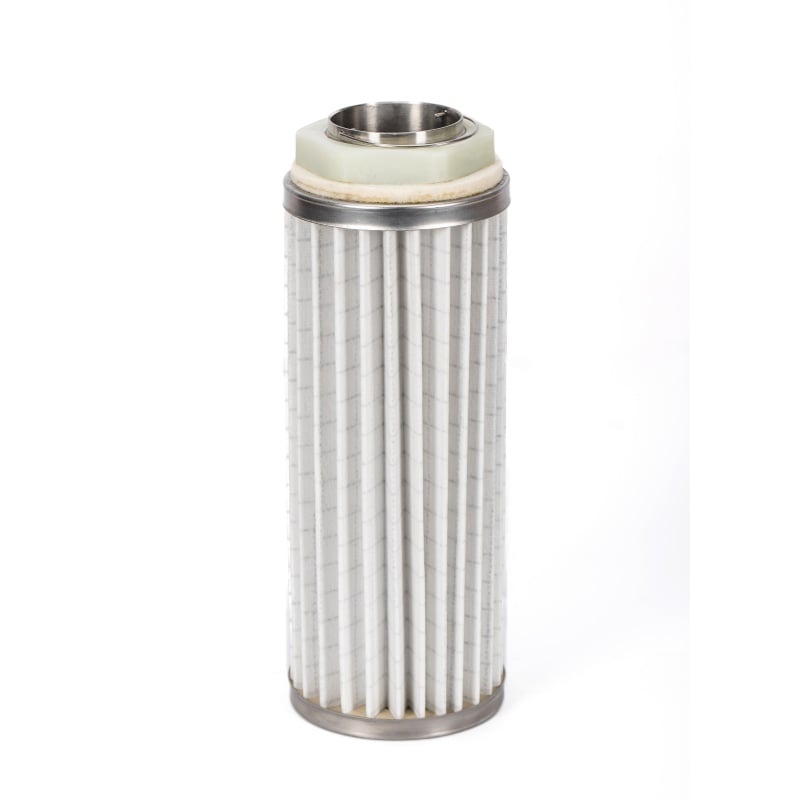
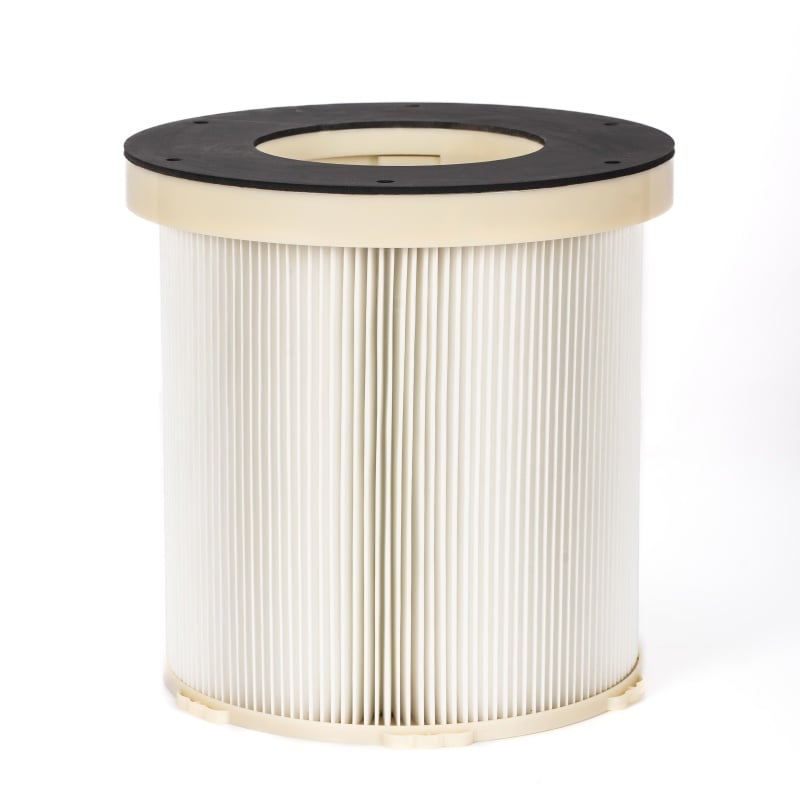
The most important manufacturing detail is how the filter media is held. In the conical and cylindrical cartridges described in the knowledge base, the filter media has wide pleat depth and is supported by an inner liner and an outer liner. A special process prevents the media from moving excessively, and a further fixing keeps the filter media from crossing the metal support mesh. Those steps protect pleat spacing under repeated pulse cleaning. When the filter media shifts or pleats collapse, filtering area is lost and resistance rises unevenly. A stable industrial filter cartridge keeps its geometry through many cycles, which extends service intervals and reduces maintenance costs across a full year.
Another factor is how much dust an industrial filter cartridge can hold before resistance reaches the terminal band. The conical and cylindrical designs are stated to offer dust holding capacity roughly forty percent higher than a conventional element. More dust holding capacity means longer intervals between changes, provided the media releases dust during cleaning. Wide pleat depth contributes to that capacity, and the conical shape supports high airflow in a horizontal installation. For a buyer comparing an industrial filter cartridge, dust holding capacity is a more useful figure than efficiency alone, because efficiency is often similar across options while service life differs widely. Look for the stated capacity and the construction behind it.
Resistance figures give a practical way to budget maintenance. The RH XLC II horizontal collector lists an initial 120 to 250 Pa, a working 500 to 700 Pa and a terminal 1000 to 1250 Pa. A precision built element stays in the working band longer, because its media releases dust predictably and its pleats stay open. That stability lowers the average pressure drop across a shift, which cuts fan energy. It also makes planning easier, because changes can be scheduled from a logged trend rather than an emergency. In this sense, the industrial filter cartridge becomes a tool for controlling maintenance costs rather than a consumable that dictates them.
An anonymous casting operation offers a concrete illustration. A sand drenching station in a constant temperature hall generated dust that was captured by a hood, drawn into a cartridge collector and passed through a second high efficiency stage before returning to the workshop. Capture was reported above ninety eight percent and outlet concentration below one milligram per cubic metre. Jiangsu Renhe supplied the filtration stage. The plant had previously changed elements on a short cycle because the media shifted and blinded. Switching to an industrial filter cartridge with an inner liner, an outer liner and better media fixing extended the interval and steadied pressure drop. That case shows how manufacturing quality, not just nominal efficiency, drives maintenance costs in a real plant.
When comparing product options, ask questions that reveal lifetime behaviour. How is the filter media fixed, and what prevents it crossing the support mesh? What is the stated dust holding capacity relative to a conventional element? Are an inner liner and an outer liner fitted, and is the surface suited to the dust? Request test documents and verify the resistance data against the collector you plan to use. A supplier that answers these questions is easier to assess than one that quotes only price. The goal is to select an industrial filter cartridge whose construction is visible and whose performance can be monitored. That approach keeps maintenance costs predictable over time.
Question one: Does a higher dust holding capacity really cut maintenance costs?
Answer: It can, because longer intervals mean fewer changes and less labour. The benefit is only real if the filter media also releases dust cleanly during pulse cleaning.
Question two: Why do an inner liner and an outer liner matter?
Answer: They hold pleat spacing under cleaning pulses and stop the media shifting. Stable geometry preserves filtering area and extends the life of the industrial filter cartridge.
Question three: What should I verify before comparing prices?
Answer: Check dust holding capacity, how the filter media is fixed, the liner construction and the stated resistance range. Review specifications and verify test documents rather than choosing on unit price alone.
 Hot News
2026-11-21
2026-11-21
2026-11-21
2026-11-21
2026-11-21
2026-11-20
Renhe focuses on air filter cartridge, gas turbine air filter, Pleated Filter Media, industrial dust, Our main products have been recognized as high-tech products in Jiangsu Province, famous trademarks in Wuxi City, and CE certification.
NO. 31 Xingyuan Road, Jiefang Industrial Park, Gushan Town, Jiangyin City, Jiangsu Province, China (214414)
Copyright © 2024 Jiangsu Renhe Environmental Equipments Co., Ltd Privacy Policy
 EN