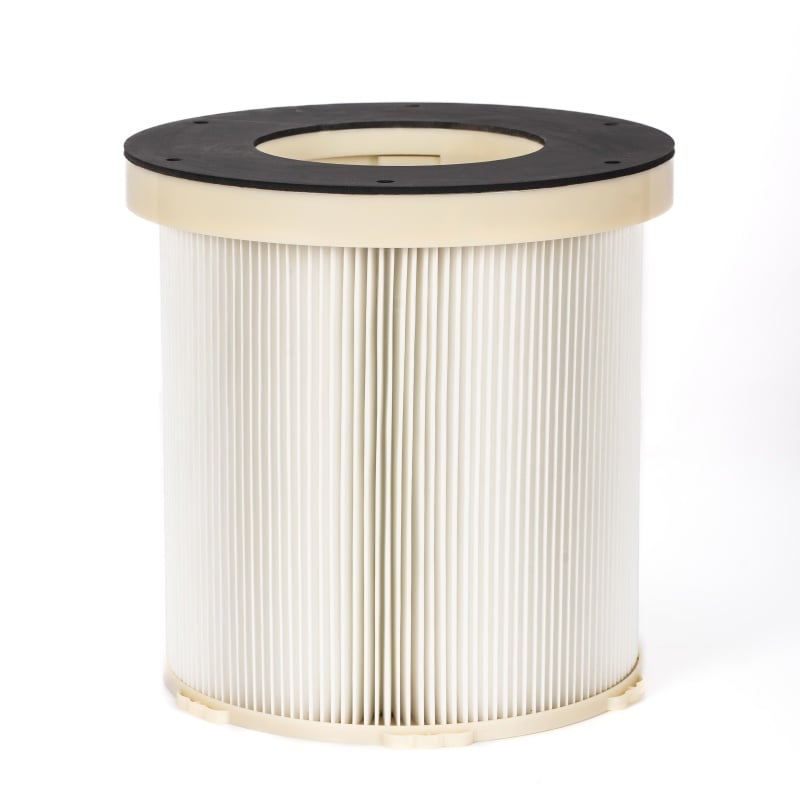
When a cleanroom project specifies high efficiency filtration, buyers often meet two terms on the data sheet: separator design and V-bank configuration. Understanding what a separator HEPA filter actually is helps you avoid a costly mismatch between the frame, the airflow, and the room class. This guide explains the role of the spacers, how the pleats are held open, and what to verify before you place an order.
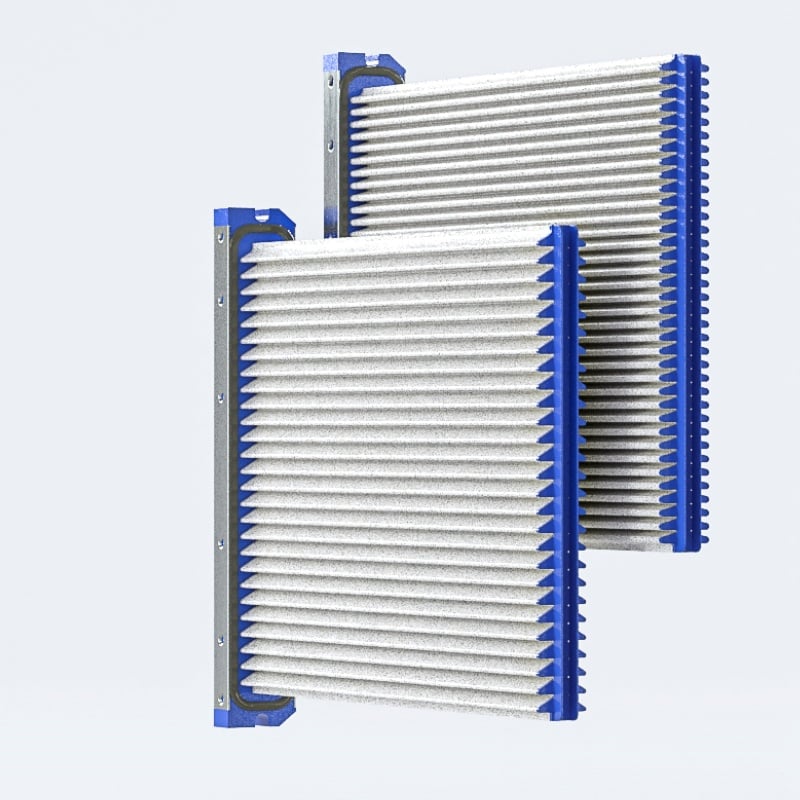
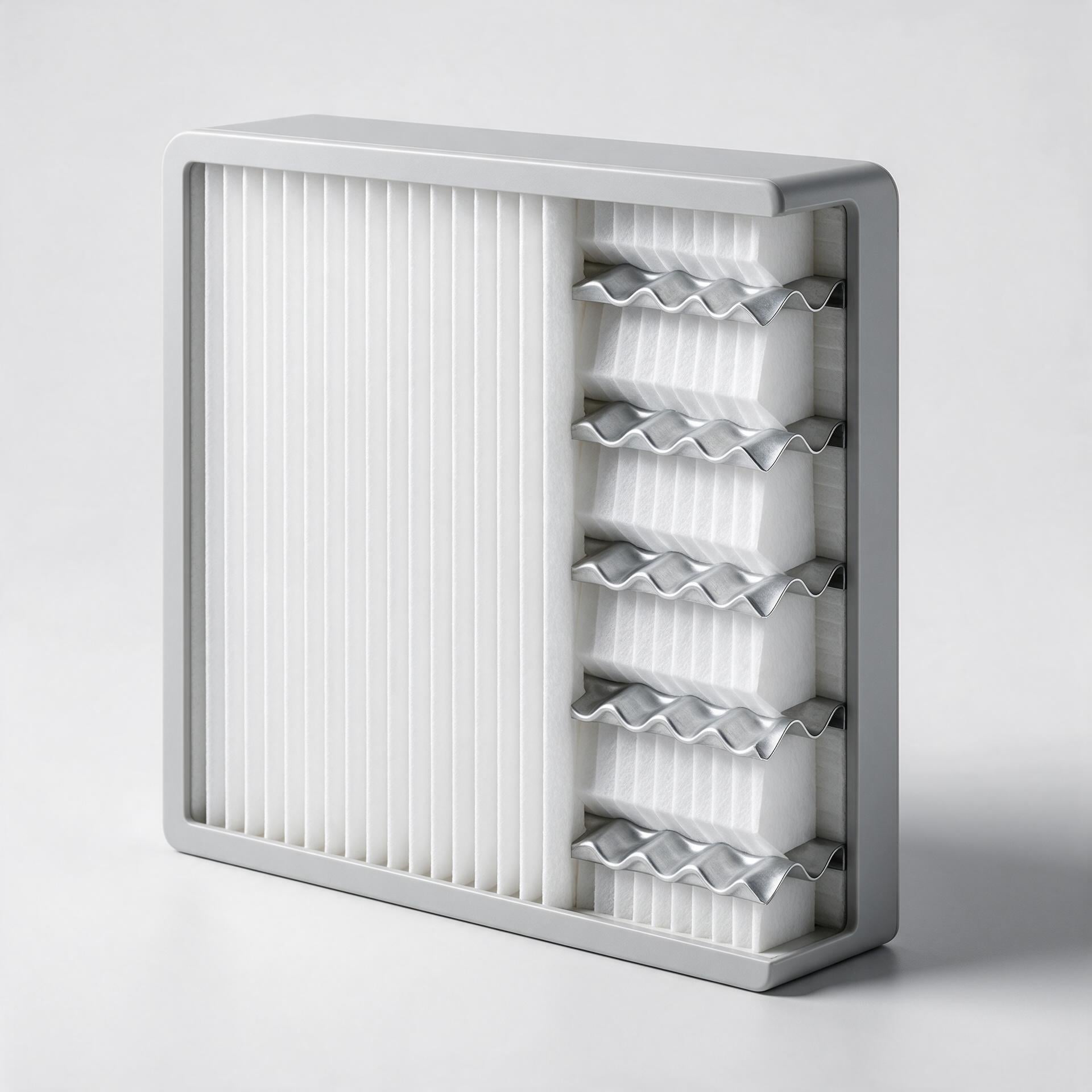
A separator HEPA filter is a panel in which pleated filter media is kept apart by physical spacers. The media is folded into deep pleats, and a spacer sits between each fold so air can move through the full surface. The filter captures 99.97 percent of particles at 0.3 micrometres, which is the familiar benchmark for this efficiency class. Without separators, the pleats would press together under airflow and the usable area would collapse. In a separator HEPA filter, the spacers preserve the channels that let air pass while particles stay on the media. That is the whole idea in one sentence.
Corrugated aluminum spacers are the most common choice for this design. They are formed into a wave so each ridge touches the pleat face at regular intervals. Corrugated aluminum spacers keep the folds evenly spaced from the inlet to the outlet, which keeps airflow uniform across the panel. Aluminum is light, resists corrosion in typical indoor environments, and can be cut to the exact pleat depth. When you compare a separator HEPA filter to a mini-pleat type, the rigid spacers are the defining difference. A separator HEPA filter with continuous spacers holds alignment better than one with short segments. Ask whether the spacers are continuous or segmented; continuous corrugated aluminum spacers survive handling and vibration better.
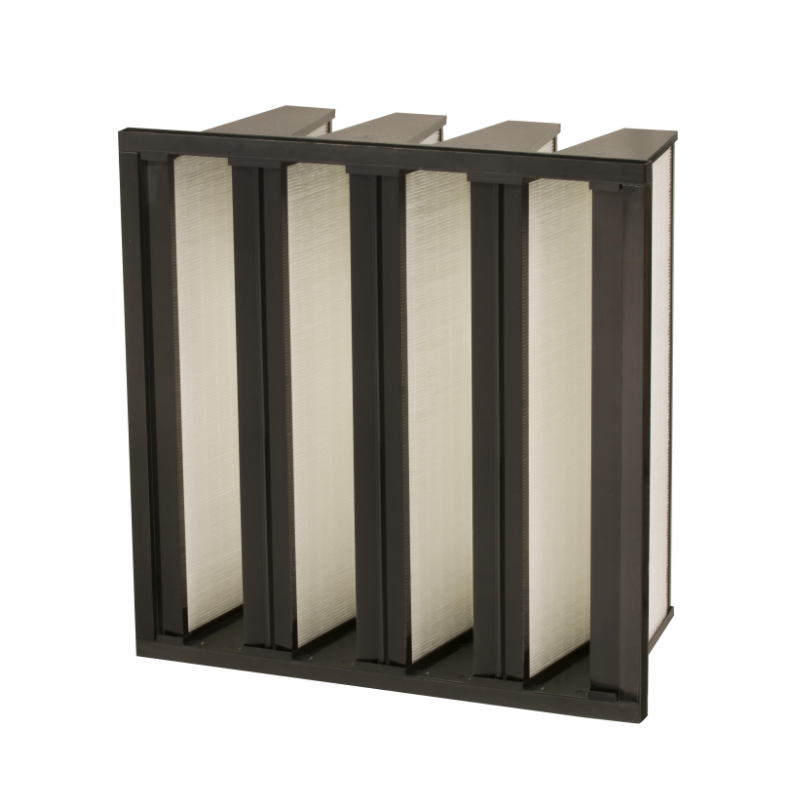
A V-bank arranges two or more panels at an angle inside one frame, so the media presents more face area to the same duct. The V-bank geometry reduces face velocity, which lowers resistance and extends service life. For a housing with limited depth, a V-bank gives more filter area than a single flat panel in the same space. This matters in cleanroom air handling where fan energy is a running cost. A separator HEPA filter built into a V-bank is often specified for terminal housings and fan filter units. When you review a layout drawing, confirm which way the V-bank opens and that the frame seals against the housing; a good seal matters as much as the media grade.
HEPA filtration is the final barrier before air enters a controlled space. Upstream pre-filters remove larger particles so the final filter is not overloaded. In a cleanroom, the target particle count drives the required efficiency and the number of terminal filters. HEPA filtration at 99.97 percent at 0.3 micrometres handles the fine particles that nuisance filters miss. A separator HEPA filter is often chosen where airflow is steady and the housing can accept a deeper panel. For very high humidity or oily aerosol, the media grade needs a separate review. Treat HEPA filtration as a system property, not just a number printed on a label.
Imagine a facility upgrading the terminal filters above a production line. The original panels used a shallow pleat that loaded unevenly, and the cleanroom struggled to hold its particle count during long shifts. The engineering team compared a flat panel with a separator HEPA filter in a V-bank frame and found that the larger media area lowered face velocity. After installation, the pressure rise across the bank was slower and the cleanroom recovered faster after each cleaning cycle. This is a typical case where corrugated aluminum spacers earn their place: the pleats stay open and the airflow stays even. A supplier with long filtration experience, such as Jiangsu Renhe, can help match the separator HEPA filter to the housing and review the test documents, rather than only quoting a catalogue size.
Buyers frequently weigh a separator design against mini-pleat or V-bank alternatives. The separator type uses rigid spacers to hold deep pleats, which suits steady, high-volume airflow. A mini-pleat pack uses adhesive beads instead of spacers and fits shallower frames. Both can deliver HEPA filtration; the right choice depends on housing depth, face velocity, and how the unit is handled during changeout. Corrugated aluminum spacers add stiffness, which helps when filters are moved or when a V-bank is serviced from above. Put the options side by side in a written comparison, including frame type and gasket, before you decide. The best specification is the one your housing can actually seal and service.
Question one: What does 99.97 percent at 0.3 micrometres mean?
Answer: It means the filter captures 99.97 percent of particles of that size, a standard benchmark for HEPA filtration. It does not mean the filter stops every particle; it defines the tested efficiency point.
Question two: Why use corrugated aluminum spacers instead of paper?
Answer: Corrugated aluminum spacers resist moisture, hold their shape during handling, and keep pleats evenly spaced. In a separator HEPA filter they also survive temperature changes better than paper spacers.
Question three: Can a separator HEPA filter be used in a V-bank housing?
Answer: Yes. A V-bank frame accepts two or more panels at an angle to increase face area. Confirm the seal, the opening direction, and the airflow rating before you order.
 Hot News
2026-11-21
2026-11-21
2026-11-21
2026-11-21
2026-11-21
2026-11-20
Renhe focuses on air filter cartridge, gas turbine air filter, Pleated Filter Media, industrial dust, Our main products have been recognized as high-tech products in Jiangsu Province, famous trademarks in Wuxi City, and CE certification.
NO. 31 Xingyuan Road, Jiefang Industrial Park, Gushan Town, Jiangyin City, Jiangsu Province, China (214414)
Copyright © 2024 Jiangsu Renhe Environmental Equipments Co., Ltd Privacy Policy
 EN