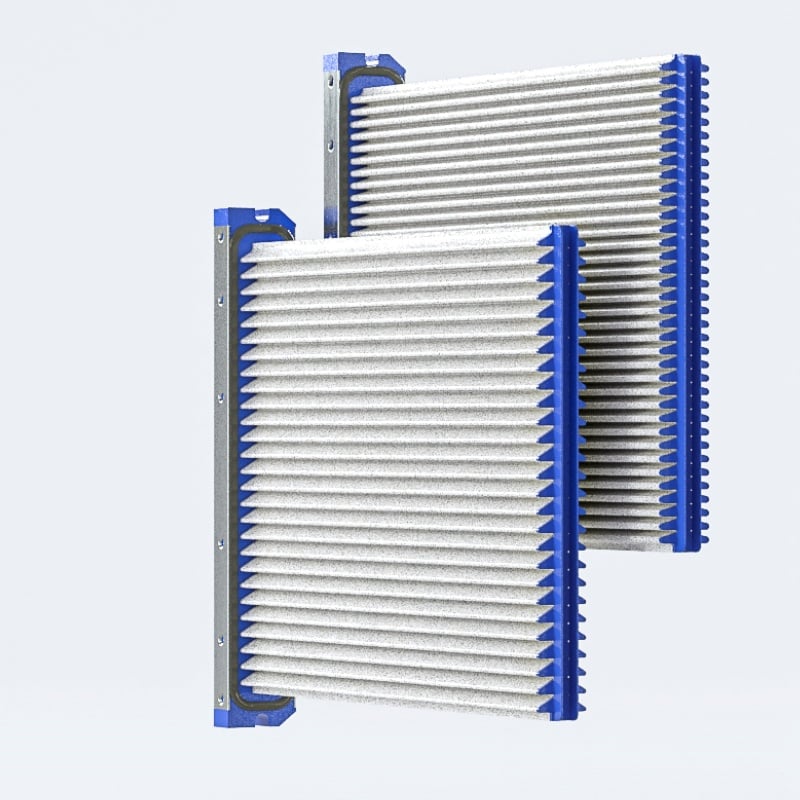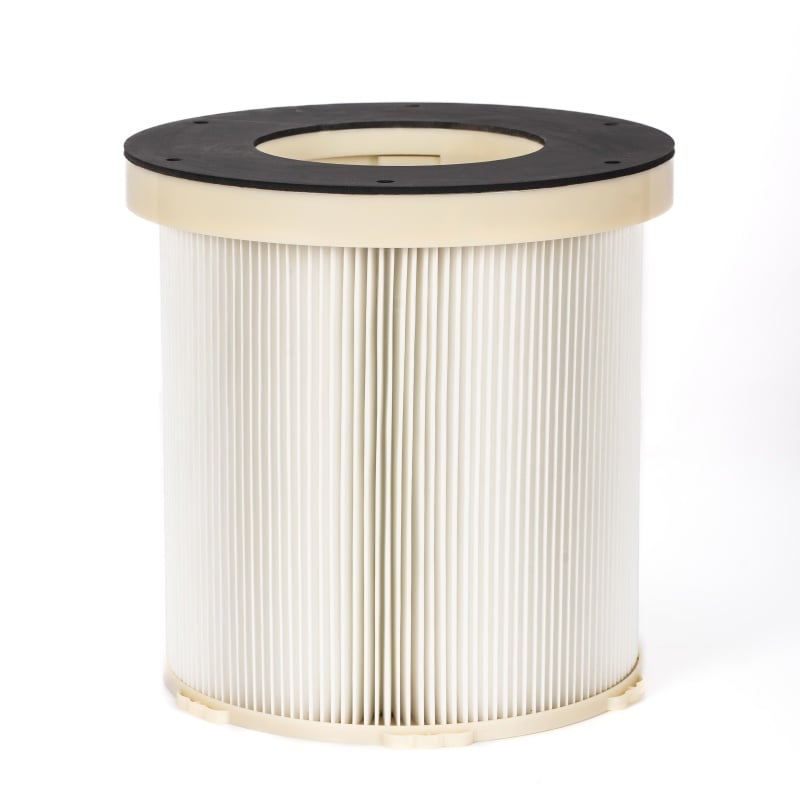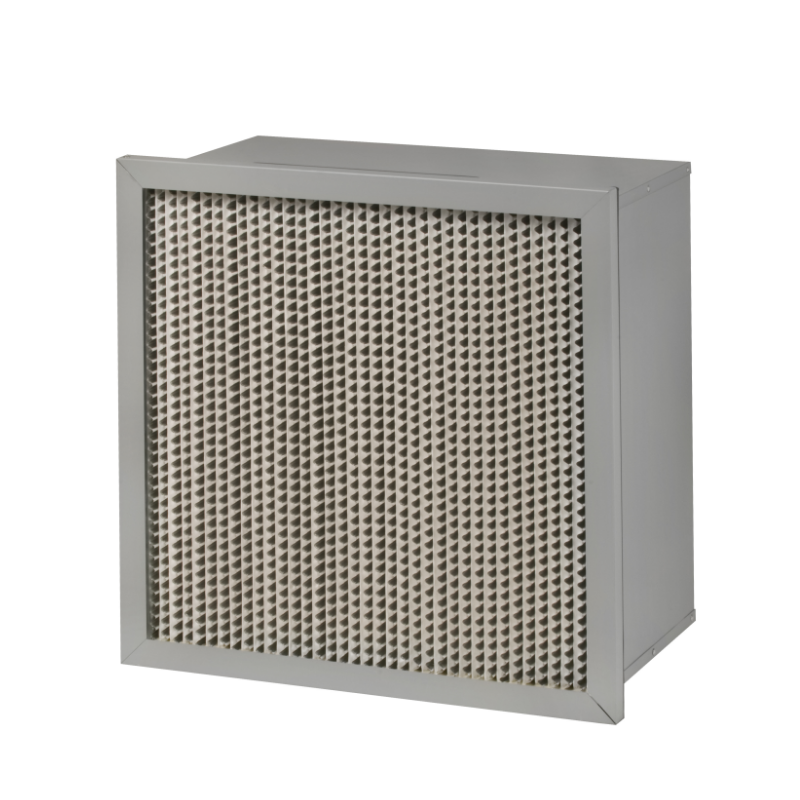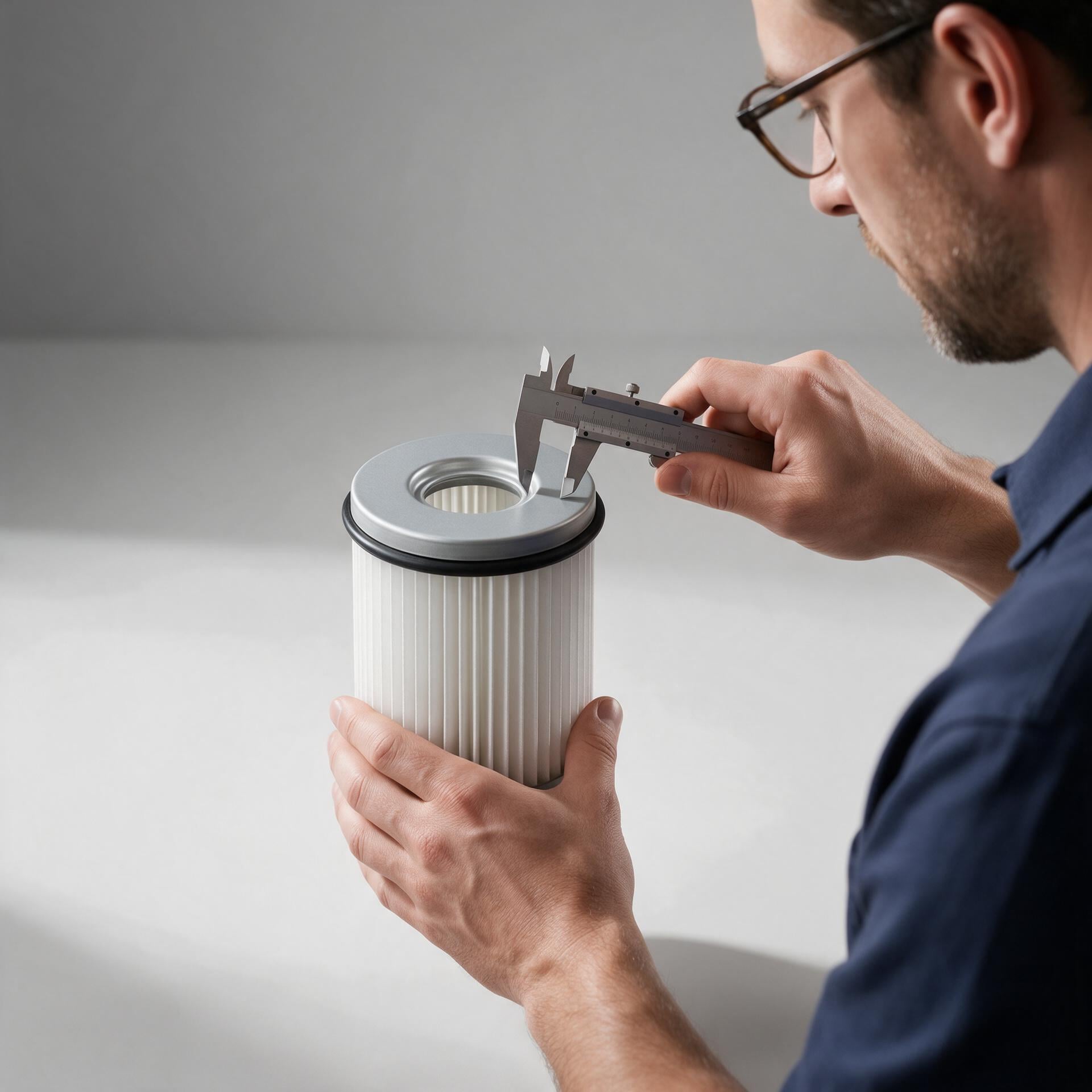
A replacement filter cartridge looks simple until it arrives and will not seat in the housing. Buyers often assume any element of the same nominal diameter will fit, but compatibility involves several interfaces at once: the end cap style, the flange or frame, the gasket face and the expected pressure drop. A mismatch does not always appear as an obvious gap; sometimes the cartridge fits loosely and lets dust bypass the medium into the clean air side. That is why a replacement filter cartridge should be specified against a checklist rather than a single size. Ten minutes spent verifying cartridge compatibility at the enquiry stage prevents a costly return and an unplanned stop later.
The first check is dimensional. Confirm outside diameter, length and airflow direction, because the same body can be supplied for inward or outward flow. Then identify the end cap. Common styles include the square cap, the twist lock, the threaded type and the three lug or four lug pattern, each engaging a different retainer. A replacement filter cartridge with the wrong end cap may look close enough yet fail to lock, leaving the gasket uncompressed. When you request a quote, send a photograph of the old cap and the retaining hardware. Experienced suppliers recognise these patterns and confirm cartridge compatibility before anything ships.
Beyond the cap, examine how the element mounts. Cartridge and pleated bag housings use different flange arrangements, and some place a gasket at the top only while others allow one at both ends. The rubber gasket is a small part with a large job: it is the barrier keeping dust on the dirty side. If the flange is tilted, the gasket compensates only so far. Check that the mating surface is flat and free of old residue, and confirm whether your housing expects a top open or bottom closed arrangement. A replacement filter cartridge that matches the flange but uses the wrong gasket position will still leak.
Fit is only half the story. The replacement filter cartridge must also match the duty of the original. Review the clean pressure drop and working resistance of the media, because a more restrictive element can push the fan off its curve and reduce airflow. Conversely, a much lower resistance may indicate thinner media and a shorter service life. Ask for the efficiency class and recommended airflow range, then compare them with your current operating point. Cartridge compatibility is therefore both mechanical and performance based; a part that drops into place but changes pressure drop is not a like for like replacement.
Consider an anonymous maintenance team that ordered by diameter alone. The new replacement filter cartridge arrived with a twist lock cap while the housing used a three lug retainer, so it could not be secured. A second order used the correct cap but the wrong gasket thickness, and dust emissions rose slowly after commissioning. The team changed its process: before ordering they photographed the cap, measured the flange face and recorded the pressure drop at working fan speed. On the third attempt the replacement filter cartridge seated correctly and performance returned to baseline. Cartridge compatibility is verified with a short physical audit, not inferred from a name.
A reliable checklist is short and repeatable. Record cartridge diameter and length. Photograph the end cap and count the lugs or identify the thread. Note the flange type and whether the gasket sits at the top, the bottom or both. Write down airflow direction and the operating pressure drop. Measure the housing depth available for the element. Compare each point with the supplier drawing before approving the replacement filter cartridge. None of these steps needs special tools, yet together they remove most of the risk. If the supplier cannot confirm cartridge compatibility from what you provide, pause and request a drawing. A drawing removes ambiguity about the gasket face and the lug positions, and it gives both parties a shared reference if the part has to be ordered again.
One mistake is trusting a part number from a different housing, even when the two look identical. Another is ignoring the gasket: teams reuse a compressed rubber gasket and then wonder why dust continues. Some buyers chase the lowest unit price and accept a media class they have not verified, only to find pressure drop climbing quickly. Ordering a single sample and skipping the leak check can also hide a sealing problem. A replacement filter cartridge is a consumable, but treating it as a commodity invites avoidable downtime. Request material guidance and verify test documents for critical duties.
Question one: Can I use a replacement filter cartridge with the same diameter?
Answer: Not safely. Diameter is only one dimension. Check the end cap style, flange, gasket position, airflow direction and pressure drop before you confirm cartridge compatibility.
Question two: What is the most overlooked detail?
Answer: The gasket. A replacement filter cartridge with the right body but a worn or wrongly positioned rubber gasket will let dust bypass the medium into the clean side.
Question three: How do I verify performance compatibility?
Answer: Compare the quoted efficiency class and pressure drop with your current operating point. If the supplier cannot match both, the replacement filter cartridge is not equivalent.
 Hot News
2026-11-21
2026-11-21
2026-11-21
2026-11-21
2026-11-21
2026-11-20
Renhe focuses on air filter cartridge, gas turbine air filter, Pleated Filter Media, industrial dust, Our main products have been recognized as high-tech products in Jiangsu Province, famous trademarks in Wuxi City, and CE certification.
NO. 31 Xingyuan Road, Jiefang Industrial Park, Gushan Town, Jiangyin City, Jiangsu Province, China (214414)
Copyright © 2024 Jiangsu Renhe Environmental Equipments Co., Ltd Privacy Policy
 EN