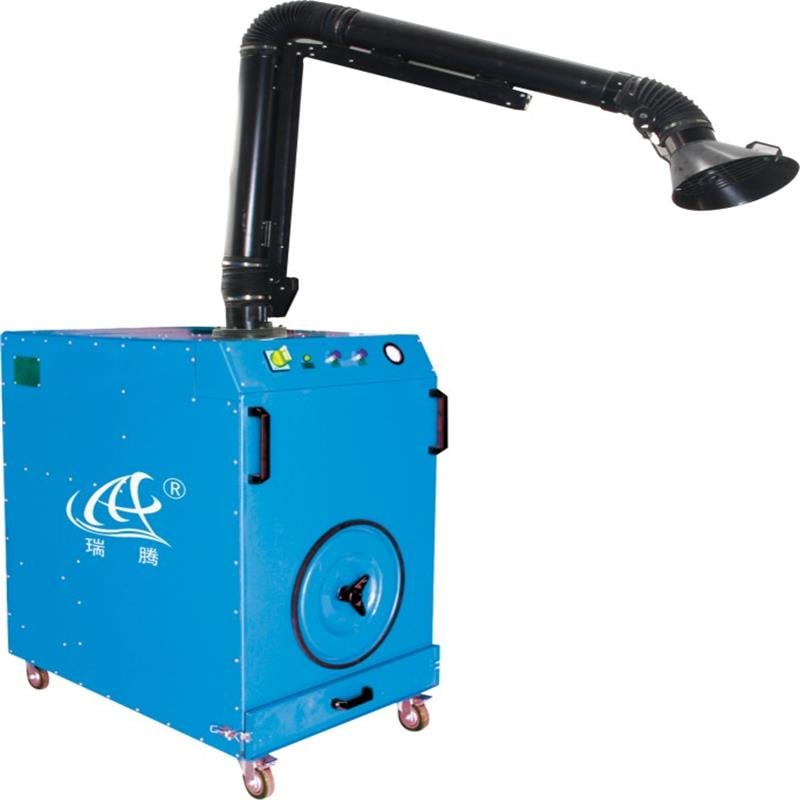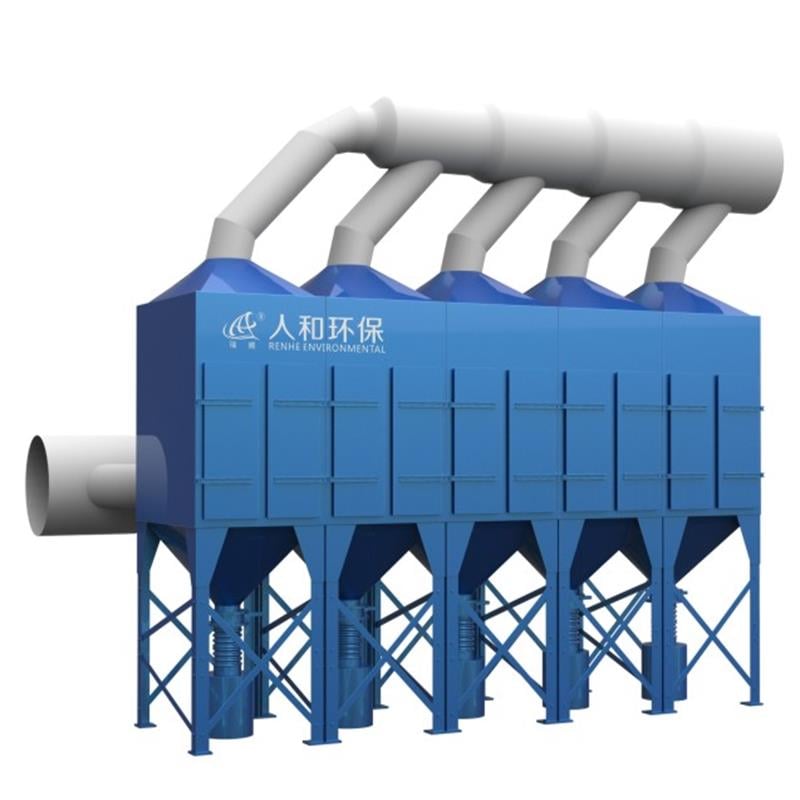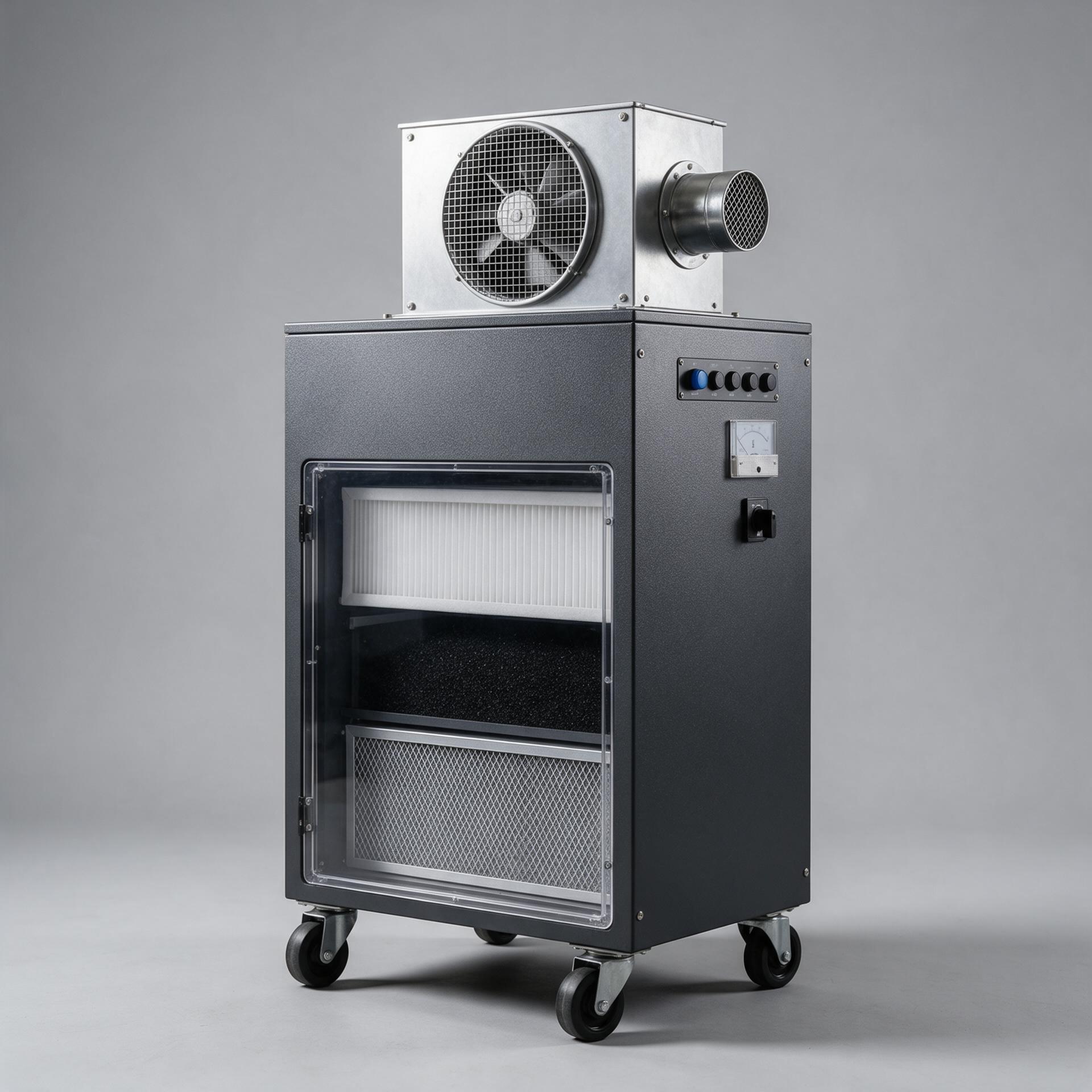
A welding fume extractor is often judged by a single efficiency number, but that number only makes sense in the context of the whole air train. Fume from MAG or argon arc welding is a mixture of fine metal oxide particles and gases, and no single medium handles every fraction well. A sensible design separates the work into filtration stages: capture at the arc, a main step for the bulk dust, a high efficiency finishing stage and, where needed, a gas phase option. Understanding these filtration stages helps a buyer compare systems on layout rather than on a headline figure. It also explains why a compact welding fume extractor can still deliver clean shop air when each stage is correctly sized.
The first of the filtration stages is not a filter at all, it is capture. A welding fume extractor can use a bench hood, a movable arm or a distributed supply and exhaust arrangement that creates a controlled airflow across the work. In an anonymous heavy industry project on crane boom welding, blowing outlets sat high above the line and suction outlets sat higher still, the two groups facing each other to form a downward circulating flow. The point is general: capture decides whether fume reaches the media at all. A high efficiency welding fume extractor cannot compensate for a layout that lets the plume escape into the shop.
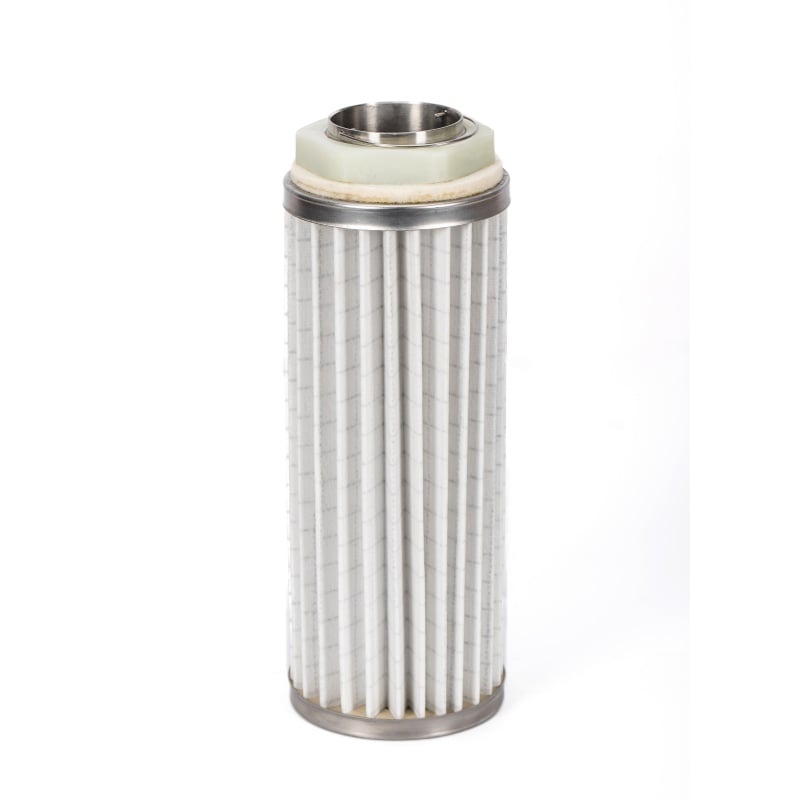
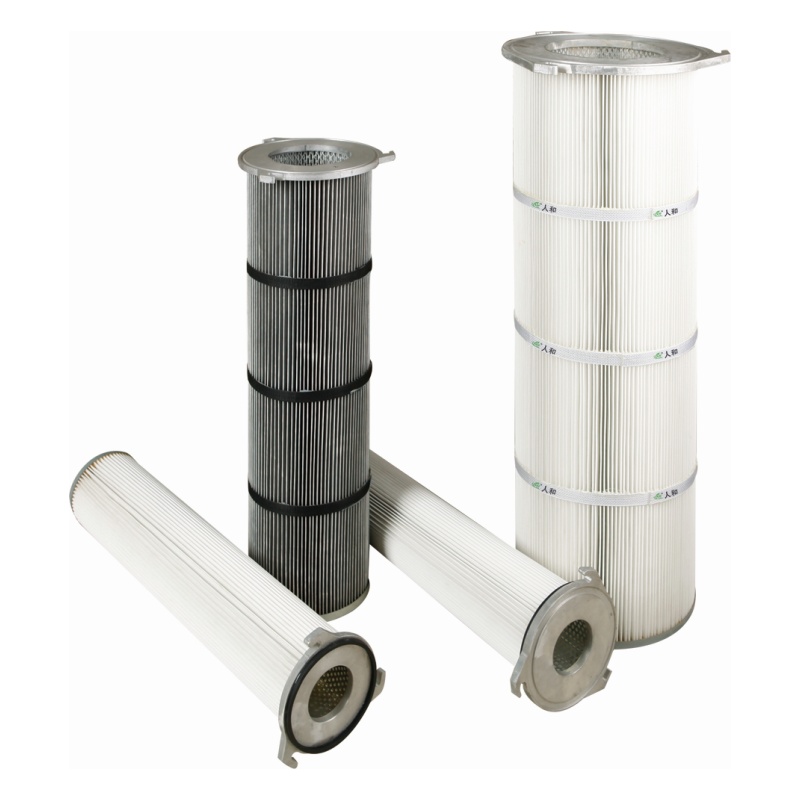
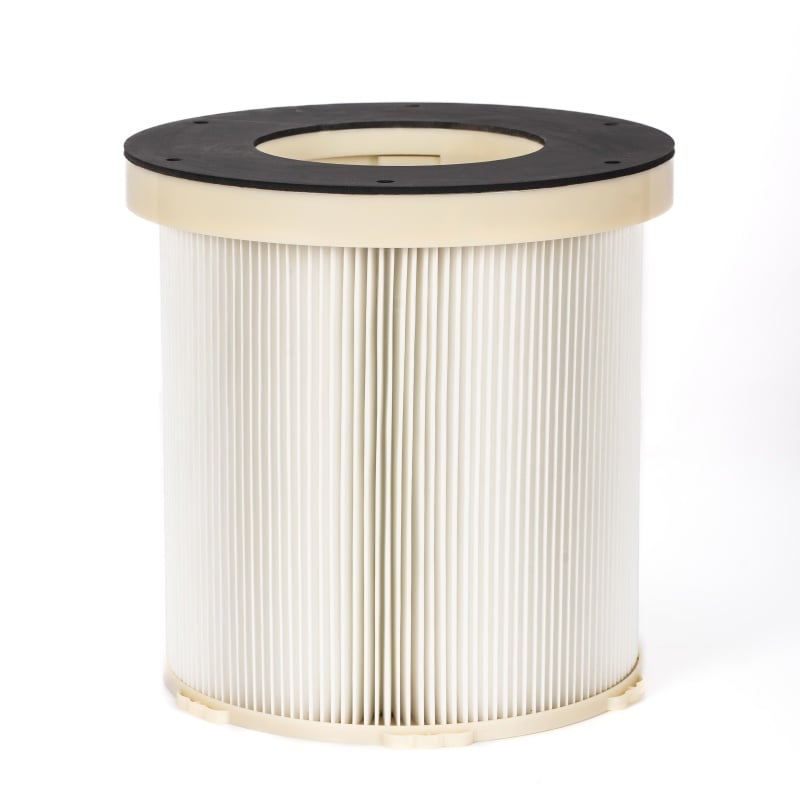
After capture, the air stream carries the bulk dust to the main element. In a welding fume extractor this is commonly a pleated cartridge or a bank of cartridges, chosen for large area in a compact housing. Some arrangements add a pre-filter upstream to catch coarse spatter before the main element. Pleated media increases surface without increasing footprint, keeping face velocity moderate and extending life. Where welding produces conductive dust, an anti-static filter cartridge helps dissipate charge and reduce spark risk, with grounding checked as routine. This stage removes most particulate load and protects the finer media downstream.
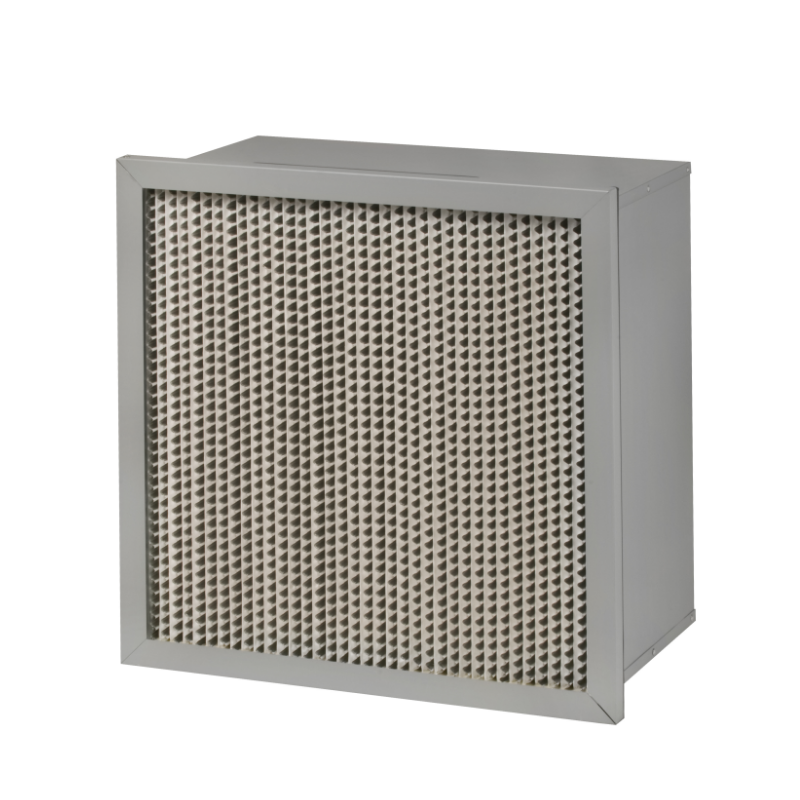
The finishing stage is what turns a collector into a high efficiency welding fume extractor. A HEPA filter is rated to capture 99.97 percent of particles at 0.3 microns, covering the respirable fraction that matters most for shop air. Placed after the main element, the HEPA filter sees a much lower dust load and therefore lasts longer. In some systems this stage is a V-bank panel or a final cartridge. Buyers should ask where the rating is measured, because a figure from a laboratory coupon differs from one achieved across a sealed housing with real leakage paths.
Not every application needs a gas phase stage, but welding near coatings or primers can produce odours and volatile compounds that particulate media do not remove. An activated carbon bed can be added as an optional stage in a welding fume extractor to address those components. The trade off is added resistance that the fan must overcome, and a finite adsorption life that depends on concentration. Treat activated carbon as a targeted option rather than a default. If your fume is purely metallic, the cost and upkeep of an activated carbon stage may not be justified for your welding fume extractor.
Consider the crane boom case in more detail. The workpieces were large carbon steel sections for tower and crawler cranes, and weld locations shifted along the boom, so a fixed hood could not follow the arc. The team used a distributed blowing and suction arrangement, with blowing outlets at four metres and suction outlets at nine metres, two facing groups forming a circulating flow that pushed fume into a local capture zone. Downstream, the collected air passed through the staged media described above. The lesson is that filtration stages only work when capture follows the movement of the work. Review the layout before you compare the final filter of a welding fume extractor.
A clear specification lists each stage in flow order: the capture method, any pre-filter, the main element, the finishing grade and a gas phase option if offered. For a welding fume extractor, ask which efficiency is quoted and at what particle size, whether an anti-static option suits your dust, and how the final HEPA filter is sealed into the housing. Request test documents for the assembled unit rather than media samples alone. If a supplier can explain why each of the filtration stages is present, the design is likely thought through. If only one number is offered, ask for the stages to be itemised first.
Question one: How many filtration stages are needed?
Answer: It depends on the fume. Most systems need capture, main media and a finishing stage. Activated carbon is added only when odours or volatile compounds are present, and a pre-filter is useful where spatter is heavy.
Question two: What does the HEPA rating mean?
Answer: A HEPA filter captures 99.97 percent of particles at 0.3 microns. It normally sits after the main element, so it handles a reduced dust load in the welding fume extractor.
Question three: Why add an anti-static filter cartridge?
Answer: Conductive metal dust can build charge. An anti-static filter cartridge dissipates it and lowers spark risk, provided grounding and the cage are checked during service of the welding fume extractor.
 Hot News
2026-11-21
2026-11-21
2026-11-21
2026-11-21
2026-11-21
2026-11-20
Renhe focuses on air filter cartridge, gas turbine air filter, Pleated Filter Media, industrial dust, Our main products have been recognized as high-tech products in Jiangsu Province, famous trademarks in Wuxi City, and CE certification.
NO. 31 Xingyuan Road, Jiefang Industrial Park, Gushan Town, Jiangyin City, Jiangsu Province, China (214414)
Copyright © 2024 Jiangsu Renhe Environmental Equipments Co., Ltd Privacy Policy
 EN