
 EN
EN
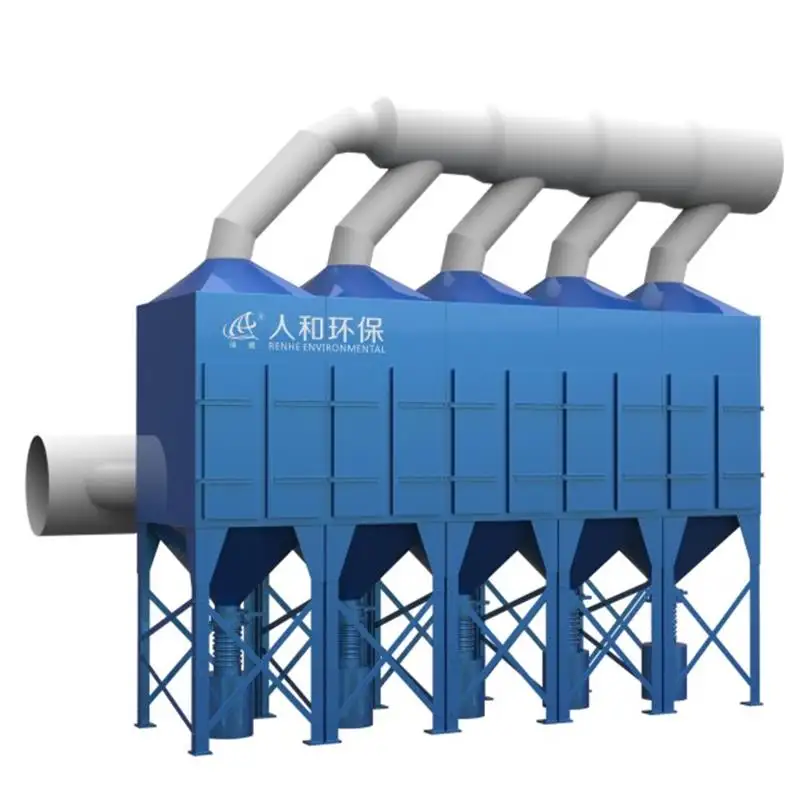
How Nano Cartridge Filters Achieve PM0.3–1.0 Micron Capture with HEPA-Level Efficiency
Nanofiber surface filtration vs. conventional depth-loading: Mechanism and performance advantages
A nano cartridge filter employs surface filtration via a dense, electrospun nanofiber web that captures sub-micron particles through impaction, interception, diffusion, and electrostatic attraction—all simultaneously at the media surface. Unlike conventional depth-loading filters—where contaminants migrate into and clog a thick fiber matrix—the nanofiber layer prevents internal loading entirely. This preserves airflow integrity, avoids resistance buildup, and delivers a 40% lower pressure drop than pleated HEPA filters of equivalent efficiency. As a result, fan and compressor energy demand decreases significantly. Testing by the Institute for Occupational Safety and Health (2025) confirms nanofiber media maintain rated efficiency 60% longer than traditional cellulose-blend alternatives, extending maintenance intervals without compromising performance across the critical 0.3–1.0 µm range—making them ideal for ultra-clean workshops requiring stable, low-energy operation.
Empirical validation: 99.97% efficiency at 0.3 microns — meeting ISO 29463 and EN 1822 benchmarks
Independent laboratory evaluations verify that nano cartridge filters consistently achieve 99.97% particle capture at 0.3 µm—the most penetrating particle size (MPPS) and definitive benchmark for HEPA-level performance. This meets the minimum threshold for H13 classification under EN 1822 (≥99.95%) and aligns with ISO 29463’s high-efficiency filter standards. In practice, many nano cartridge designs approach H14 performance (≥99.995%) due to the uniformity and high porosity of the nanofiber layer. Because the 0.3 µm size represents peak penetration likelihood for aerosols, sustaining this efficiency validates structural integrity and real-world reliability. Industrial validation programs show well-engineered nano cartridges maintain this performance throughout service life—providing a robust foundation for cleanroom operations compliant with ISO 14644-1 Class 5–7 requirements.
Compliance with Ultra-Clean Workshop Air Standards Using MERV 15+ Nano Cartridge Filters
Aligning with ISO 14644-1 Class 5–7 environments in pharmaceutical, biotech, and precision manufacturing
MERV 15+ nano cartridge filters deliver the particle control essential for ISO 14644-1 Class 5–7 cleanrooms. Leveraging nanofiber surface filtration, they achieve ≥85% efficiency on 0.3–1.0 µm particles and ≥90% on particles ≥1.0 µm per ASHRAE 52.2 testing—directly supporting stringent airborne particulate limits. For instance, an ISO Class 5 environment permits no more than 3,520 particles ≥0.5 µm/m³ and only 832 particles ≥1.0 µm/m³. MERV 15+ nano cartridges reliably reduce ambient concentrations to meet or exceed these thresholds, enabling safe aseptic filling in pharmaceutical production, contamination-sensitive biotech R&D, and high-tolerance optical or semiconductor fabrication. Critically, surface loading eliminates particle shedding and sustains consistent airflow—preserving unidirectional flow patterns and stable pressure cascades required for classified space integrity.
Supporting OSHA respirable dust control and indoor air quality (IAQ) mandates for worker health
Nano cartridge filters also serve as a frontline defense for occupational health. OSHA’s permissible exposure limits (PELs) for crystalline silica and other respirable hazards are defined for particles ≤4 µm—the fraction that deposits deep in the lungs. MERV 15+ filters capture over 90% of 1–3 µm particles, substantially lowering airborne concentrations of these hazardous fractions. This helps facilities comply with OSHA’s respiratory protection standard (29 CFR 1910.134) and reduces risk of long-term respiratory and cardiovascular disease among workers. When integrated into HVAC and source-capture dust collection systems, these filters improve overall indoor air quality while demonstrating proactive commitment to occupational safety—lowering absenteeism, mitigating liability, and reinforcing EEAT-aligned workplace stewardship.
Operational and Economic Benefits of Nano Cartridge Filter Adoption
30–50% lower pressure drop → measurable energy savings in compressed air and HVAC systems
The surface-loading mechanism of nano cartridge filters fundamentally reduces airflow resistance. By capturing particles at the nanofiber layer rather than embedding them deep within the media, the filter maintains open pore structure and low differential pressure over time—yielding a sustained 30–50% lower pressure drop versus conventional alternatives. This directly cuts energy consumption: fans and compressors operate at reduced load to maintain target airflow. A 2024 McKinsey report found that advanced filtration adoption correlated with a 38% average reduction in system energy use. In compressed air applications—where each 1 psi pressure drop increases energy demand by ~7%—the consistent low ΔP of nano cartridges translates to thousands of dollars in annual energy savings. Similarly, in HVAC systems, reduced fan power draw improves system efficiency without sacrificing filtration performance.
Extended service life and reduced changeout frequency: Minimizing downtime and labor costs
Surface filtration extends usable media life by preventing internal clogging. Without deep particle penetration, pressure rise remains gradual, delaying the point at which airflow restriction triggers replacement. This reduces changeout frequency and associated labor, disposal, and inventory costs. An automotive manufacturing facility reported a 50% reduction in cartridge replacements and a 30% drop in related labor expenses after switching to high-performance surface-loading filters. Per the same McKinsey study, total operating costs—including procurement, maintenance, and unplanned downtime—fell by 45–55% post-adoption. With fewer scheduled interruptions and virtually no unscheduled halts due to premature filter failure, workshops sustain higher throughput and operational continuity—making nano cartridge filters a high-impact lever for both economic and operational resilience.
Frequently Asked Questions (FAQs)
What makes nano cartridge filters different from conventional HEPA filters?
Nano cartridge filters use a surface filtration mechanism with a nanofiber layer to prevent internal clogging, unlike conventional HEPA filters that rely on depth-loading, which can lead to airflow resistance buildup.
How efficient are nano cartridge filters?
Independent tests show nano cartridge filters consistently achieve 99.97% efficiency at 0.3 microns, meeting HEPA-level standards like ISO 29463 and EN 1822 H13 classification.
What industries benefit from MERV 15+ nano cartridge filters?
Industries like pharmaceutical, biotech, precision manufacturing, and cleanroom operations requiring ISO 14644-1 Class 5–7 air standards benefit from MERV 15+ nano cartridge filters.
Do nano cartridge filters improve energy efficiency?
Yes, their surface-loading design reduces pressure drop by up to 50%, significantly lowering fan and compressor energy consumption in compressed air and HVAC systems.
How does surface filtration extend filter life?
Surface filtration prevents deep particle penetration, maintaining low airflow resistance over time and reducing changeout frequency, labor, and disposal costs.