
 EN
EN
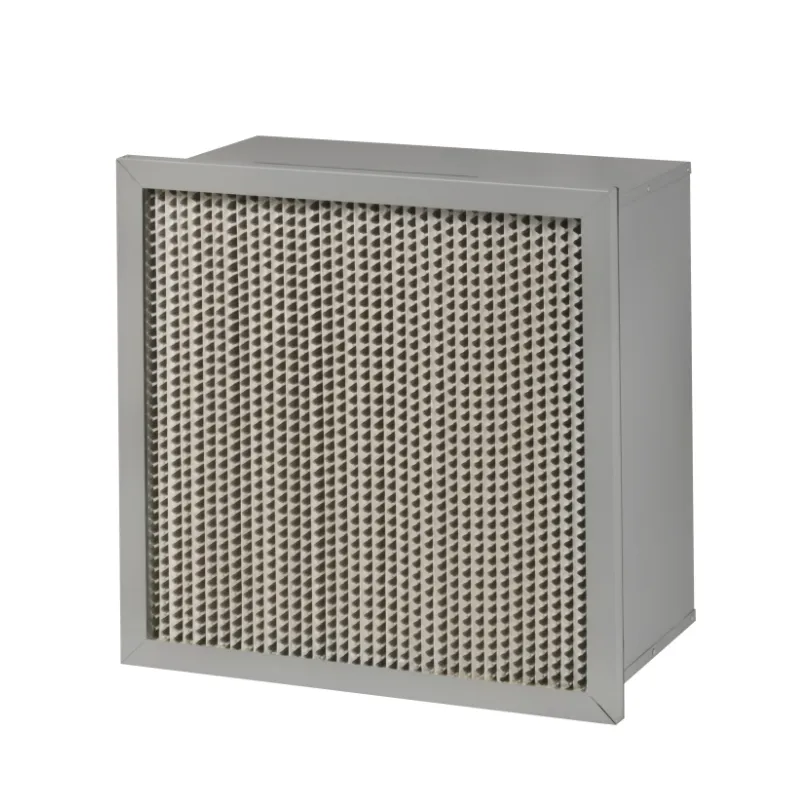
Why Conventional Filters Fail with Ultra-Fine Dust (PM2.5 and Submicron)
Limitations of Depth Filtration: Blinding, Pressure Drop Surge, and Efficiency Collapse Below 1 µm
Conventional depth filters capture particles within the bulk of the media—a design fundamentally mismatched for ultra-fine dust (PM2.5 and submicron). Three interrelated failures emerge:
- Blinding: Submicron particles penetrate deeply into the fiber matrix, embedding in internal voids and progressively sealing airflow pathways. Industry data shows pressure drop can surge by 200% after just 500 hours of exposure to submicron silica dust—well before scheduled maintenance.
- Pressure drop surge: As porosity collapses, fan energy demand spikes abruptly—not gradually—often triggering automatic shutdowns when differential pressure exceeds system limits. This unpredictability disrupts process continuity and inflates operational costs.
- Efficiency collapse below 1 µm: Standard MERV 10 filters lack sufficient pore fineness to retain particles in the 0.3–1.0 µm range, where penetration is highest (Parker Hannifin, 2023). Even MERV 14 filters achieve only 75–84% capture in this critical size band. Attempts to improve efficiency—such as adding melt-blown layers—worsen blinding by increasing thickness and impeding pulse cleaning.
Real-World Impact: Cement, Pharma, and Battery Manufacturing Data on Filter Failure Rates
These limitations translate directly into costly, real-world failures across high-stakes industries:
- In cement plants, hygroscopic kiln exhaust dust blinds baghouse filters within 3–6 months, triggering unplanned shutdowns costing up to $15,000 per event (industry estimate, 2023).
- Pharmaceutical facilities face cross-contamination risks when APIs <5 µm bypass conventional filters—leading to batch rejections and regulatory scrutiny.
- In lithium battery cathode production, submicron nickel-cobalt-manganese dust rapidly clogs polyester cartridges, cutting filter life to one-third of required duration.
Across all three sectors, observed filter lifetimes average less than half their predicted baselines—confirming that depth filtration is not merely suboptimal, but operationally unsustainable for submicron control.
PTFE-Coated Filter Technology: Enabling Stable, HEPA-Grade Ultra-Fine Dust Capture
ePTFE Membrane Architecture — Nanoscale Pore Uniformity (0.1–0.3 µm) and Surface-Only Loading
Expanded polytetrafluoroethylene (ePTFE) forms the functional core of advanced PTFE-coated filter media. Its microporous structure delivers highly uniform pores—typically 0.1–0.3 µm—precisely engineered to block PM2.5 and submicron particles at the surface, not within the media. This enables surface-only loading: dust accumulates as a loose, permeable cake that releases fully during pulse cleaning. When integrated into a nano cartridge platform, the membrane consistently achieves HEPA-grade efficiency—capturing ≥99.97% of particles down to 0.25 µm. Crucially, the chemically inert, hydrophobic PTFE layer resists moisture absorption, acid/alkali attack, and thermal degradation—preserving pore integrity and performance over thousands of cleaning cycles.
Surface Filtration Advantage: Sustained 92% Airflow Stability and Zero Blinding Over 12-Month Cycles
Unlike depth filters, PTFE-coated media eliminates progressive clogging by confining dust to the surface. Pulse cleaning restores near-original airflow instantly, and pressure drop stabilizes at low, predictable levels. Field data from industrial installations confirms these filters maintain 92% of initial airflow after 12 months of continuous operation—with zero documented cases of blinding. The result is lower fan energy use, elimination of unplanned downtime, and reliable compliance with emission limits. This stability makes PTFE-coated nano cartridges the only viable solution for mission-critical applications like battery electrode coating, sterile pharmaceutical processing, and cement finish grinding—where even transient inefficiency compromises safety, quality, or output.
Nano Cartridge Filter Integration: Boosting Submicron Efficiency to 99.997% in Critical Processes
Case Study: Lithium Battery Cathode Production — 3× Longer Lifecycle vs. Polyester, with Real-Time PM0.25 Monitoring
A leading lithium battery manufacturer replaced standard polyester cartridges with PTFE-coated nano cartridge filters on a high-volume cathode production line—where hazardous nickel-cobalt-manganese dust contains a dominant fraction <0.25 µm. The contrast was immediate:
- Polyester filters blinded rapidly, requiring replacement every 3 months to sustain minimum airflow (800 CFM).
- Nano cartridges maintained stable differential pressure (<1.5" w.g.) and full-rated airflow for 12 months—trippling service life.
Real-time particle monitoring verified sustained effluent control: PM0.25 concentrations remained below 0.1 µg/m³ throughout the year—well under OSHA’s 10 µg/m³ PEL for respirable cobalt and aligning with internal occupational health targets. Beyond compliance, the upgrade eliminated 75% of filter-change labor, reduced hazardous waste disposal by 60%, and prevented production stoppages tied to filter maintenance. This case demonstrates how nano cartridge filters shift filtration from a consumable cost center to a high-reliability process asset—where lifecycle value far outweighs upfront investment.
Selecting the Right PTFE-Coated Solution: Matching Nano Cartridge Filter Specifications to Industry Needs
Selecting the optimal PTFE-coated nano cartridge requires precise alignment between filter design and process conditions—not generic specifications. Key selection criteria include:
- Pore size (0.1–0.3 µm): Dictated by target particle size; 0.1 µm membranes are essential for PM0.25 control in battery or pharma settings, while 0.3 µm may suffice for coarser PM2.5-dominated streams.
- Support substrate & seals: Heat-set polyimide backings withstand continuous 200°C+ operations (e.g., cement clinker cooling), while EPDM or silicone seals ensure integrity in humid or chemically aggressive environments.
- Pleat geometry & surface area: Higher dust loads demand greater holding capacity—achieved through optimized pleat density and total media area—to extend service intervals without sacrificing pressure drop.
- Hydrophobicity: For hygroscopic dusts (e.g., hydrated lime, certain APIs), an ePTFE membrane’s inherent water repellency prevents capillary blinding and maintains cleanability.
Engineers who map these variables against emission requirements, maintenance windows, and total cost of ownership—not just initial filter price—consistently achieve stable, low-pressure-drop operation, extended service life, and measurable reductions in energy, labor, and waste.
FAQ
What causes conventional filters to fail when dealing with PM2.5 and submicron particles?
Conventional filters fail due to blinding, pressure drop surges, and inefficiency below 1 µm. Submicron particles clog internal filter pathways, increasing pressure and reducing the filter's effectiveness over time.
How do PTFE-coated filters handle ultra-fine dust compared to depth filters?
PTFE-coated filters use surface-only loading, where dust accumulates loosely on the filter's surface and can be cleaned effectively without clogging internal media. Their nanoscale pore uniformity ensures HEPA-grade efficiency for submicron particles.
What industries benefit most from PTFE-coated filters?
Industries such as cement manufacturing, pharmaceutical production, and lithium battery cathode production see significant benefits due to improved filtration efficiency, reduced downtime, and compliance with strict emission regulations.
How can PTFE-coated nano cartridges improve lifecycle cost efficiency?
These filters offer longer service life, reduced energy demand, fewer replacements, and minimized maintenance labor costs. Their durability and efficiency make them cost-effective over time.
Table of Contents
- Why Conventional Filters Fail with Ultra-Fine Dust (PM2.5 and Submicron)
- PTFE-Coated Filter Technology: Enabling Stable, HEPA-Grade Ultra-Fine Dust Capture
- Nano Cartridge Filter Integration: Boosting Submicron Efficiency to 99.997% in Critical Processes
- Selecting the Right PTFE-Coated Solution: Matching Nano Cartridge Filter Specifications to Industry Needs
- FAQ