
 EN
EN
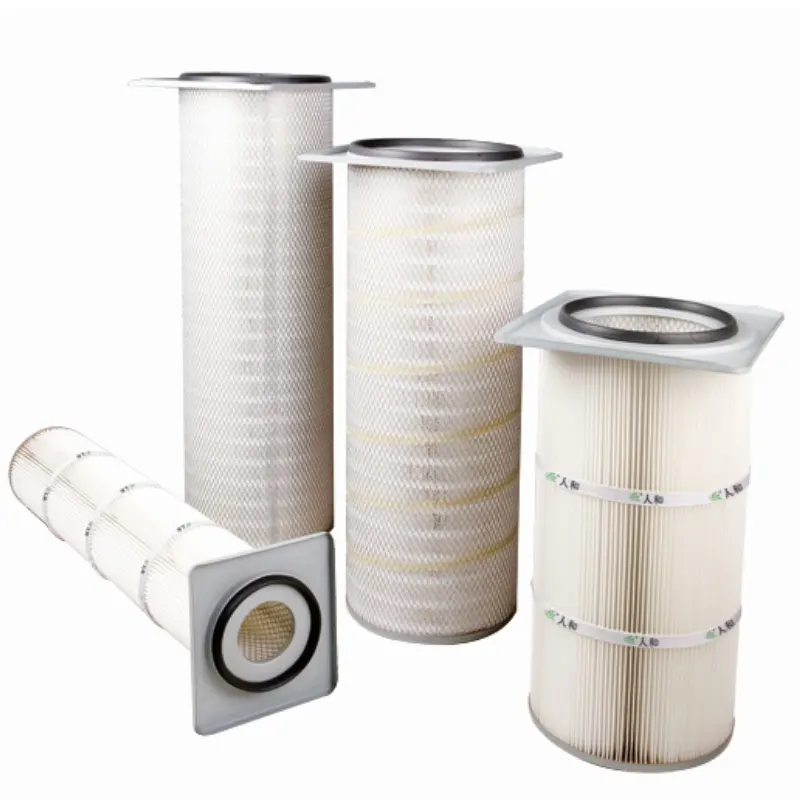
Why Gas Turbine Inlet Filters Demand Scientific, Not Scheduled, Maintenance
The cost of reactive maintenance: 68% of GT forced outages linked to unplanned filter degradation (EPRI, 2023)
Reactive maintenance on gas turbine inlet filters creates a false economy. When replacement relies on visible damage or sudden performance dips, the damage is already done. Data from the Electric Power Research Institute (EPRI) reveals that 68% of gas turbine forced outages stem from unplanned filter degradation—a preventable failure mode. The consequences include compressor fouling, blade erosion, and accelerated hot-section corrosion. Each incident disrupts power generation, increases fuel consumption, and drives up repair costs. A single unplanned outage can cost upwards of $740 k (Ponemon, 2023), factoring in lost output and emergency logistics. By shifting to a scientific, condition-based approach, operators intercept degradation before it cascades—protecting both revenue and asset life.
From calendar-based to condition-driven: Replacing fixed intervals with Δp‑rise 15% thresholds triggers diagnostic review
Calendar-based filter swaps assume uniform fouling, but real-world degradation rarely follows a schedule. Instead, a scientific maintenance strategy monitors differential pressure (Δp) continuously. When Δp climbs more than 15% above the clean-filter baseline, it signals a significant increase in airflow resistance—warranting immediate diagnostic review. This threshold is intentionally conservative, designed to catch early cake-layer formation or moisture-induced swelling before performance suffers. Acting on Δp trends—not arbitrary dates—avoids both premature replacements (waste) and delayed interventions (risk). The result is a condition-driven program that maximizes filter life, sustains design airflow, and preserves peak efficiency without unnecessary downtime.
How Optimized Maintenance Directly Boosts Gas Turbine Inlet Filter Performance and Efficiency
Quantifying the impact: Every 100 Pa sustained Δp increase reduces GT output by ~0.8% and degrades heat rate by 0.4%
Gas turbine inlet filters protect compressor blades—but their pressure drop directly impacts unit economics. A sustained 100 Pa increase in filter Δp reduces turbine output by approximately 0.8% and degrades heat rate by 0.4% (EPRI, 2023). For a 200 MW frame unit operating 8,000 hours annually, that small Δp drift can forfeit up to $740,000 in annual revenue. As filters load, the compressor works harder and consumes more fuel per MWh. Optimized maintenance—monitoring Δp trends, verifying pulse-cleaning effectiveness, and replacing elements only when condition-based thresholds trigger—keeps filters operating within a narrow, high-performance window. Preventing these small but cumulative losses safeguards both capacity and fuel economy.
Performance balancing act: Achieving ≥99.5% particle removal at 0.3 µm while maintaining Δp <250 Pa at design flow
High-efficiency gas turbine inlet filters must simultaneously capture sub-micron particles and resist aerodynamic restriction. The industry benchmark for modern installations is ≥99.5% removal of 0.3 µm particles—the most penetrating size capable of initiating compressor fouling—while keeping clean-filter Δp below 250 Pa at design airflow. This balance is demanding: finer filtration media typically increases resistance. Optimized maintenance protects it—pulse-cleaning systems are tuned to dislodge dust without damaging media, and predictive models flag irreversible cake-layer formation before non-linear Δp acceleration begins. Field data from coastal and desert plants show adherence to these targets through condition-based monitoring extends filter life by 40% and cuts unplanned downtime. Ultimately, a well-maintained system ensures the turbine breathes clean air without sacrificing output, directly boosting reliability and thermal efficiency.
Condition-Based Monitoring: Decoding Δp Trends to Predict Gas Turbine Inlet Filter Failure
Beyond dust loading: Non-linear Δp acceleration as an early indicator of irreversible cake-layer formation
Simple dust loading causes linear Δp growth—but the formation of a compacted cake layer triggers non-linear acceleration. This inflection point signals that fine particles have penetrated the media, embedding in the fiber matrix and bridging pores. Once cohesive and moisture-laden, the cake resists pulse-cleaning, and the filter enters permanent degradation. High-resolution Δp monitoring enables early detection of this shift—often a 15% rise within 24 hours—before irreversible fouling sets in. With 68% of forced GT outages linked to filter degradation (EPRI, 2023), acting on these signals avoids costly downtime and preserves design efficiency. Early intervention maintains compressor cleanliness and prevents the performance penalties tied to excessive Δp.
Selecting and Optimizing Gas Turbine Inlet Filters for Long-Term Reliability
MERV 13–14 vs. MERV 16: Evaluating salt capture, moisture tolerance, and pulse-cleaning recovery in coastal and arid environments
The choice between MERV 13–14 and MERV 16 gas turbine inlet filters depends on site-specific contaminant profiles. In coastal installations, MERV 16 filters with hydrophobic synthetic media are essential to capture hygroscopic salt aerosols that cause compressor corrosion. Their dense fiber matrix traps sub-micron salt particles, while moisture-repellent treatment prevents saturated media from collapsing under fog or spray. MERV 13–14 filters—often cellulose-polyester blends—are adequate for arid environments where dust dominates and salt is negligible, but may suffer rapid moisture uptake and reduced pulse-cleaning recovery in humid conditions. The table below contrasts key performance factors.
| Performance Factor | MERV 13–14 (Typical) | MERV 16 (High‑Efficiency) |
|---|---|---|
| Salt Capture Efficiency | 70–85% for 0.3–1 µm salt particles; relies on inertial impaction | 95% for 0.3 µm, including hygroscopic salt nuclei |
| Moisture Tolerance | Moderate; media may absorb moisture, raising Δp and risking microbe growth | High; hydrophobic synthetic media resist water absorption and maintain pleat stiffness |
| Pulse‑Cleaning Recovery | 60–75% recovery of initial Δp after pulse; cake releases inconsistently | 80–90% recovery; smooth, non‑porous surface sheds dust cake effectively |
Selecting MERV 16 significantly improves salt capture and moisture tolerance—but in purely arid sites, its cost premium may not be justified. A case-by-case analysis of local salt concentration and humidity is required.
Hybrid pre-filtration strategy: Inertial + electrostatic staging cuts main-stage fouling by 41% and extends service life
A hybrid pre-filtration approach—staging an inertial separator (e.g., weather louver) ahead of an electrostatic agglomerator—can slash particulate loading on primary gas turbine inlet filters. The inertial stage removes large water droplets and coarse sand (10 µm), while the electrostatic unit charges and agglomerates fine dust into larger clusters more easily captured downstream. Field data from combined-cycle plants show this configuration reduces main-stage fouling rate by 41% compared to single-stage filtration—effectively doubling filter service life before reaching the Δp change limit. This strategy is especially valuable in coastal and desert environments where both salt spray and fine dust coexist. The resulting lower steady-state Δp also recovers turbine output: every 100 Pa reduction in sustained Δp restores approximately 0.8% of rated power.
FAQ
Why is scientific maintenance preferred over scheduled maintenance for gas turbine inlet filters?
Scientific maintenance relies on real-time condition monitoring, such as Δp trends, to decide filter replacement, which prevents premature replacements and avoids unplanned outages caused by delayed interventions.
What does a Δp increase signify in gas turbine inlet filters?
A Δp increase over 15% of the base level typically signals heightened airflow resistance, which could indicate fouling or other performance issues in filters.
Why should operators consider MERV 16 filters for coastal installations?
MERV 16 filters offer higher salt capture efficiency and better moisture tolerance, making them suitable for coastal regions where salt aerosols and humidity are prevalent.
How can a hybrid pre-filtration strategy benefit gas turbines?
A hybrid pre-filtration strategy significantly reduces particulate loading on the main-stage filters, extends their service life, and improves turbine efficiency by maintaining a lower pressure drop (Δp).
Table of Contents
- Why Gas Turbine Inlet Filters Demand Scientific, Not Scheduled, Maintenance
- How Optimized Maintenance Directly Boosts Gas Turbine Inlet Filter Performance and Efficiency
- Condition-Based Monitoring: Decoding Δp Trends to Predict Gas Turbine Inlet Filter Failure
- Selecting and Optimizing Gas Turbine Inlet Filters for Long-Term Reliability
- FAQ