
 EN
EN
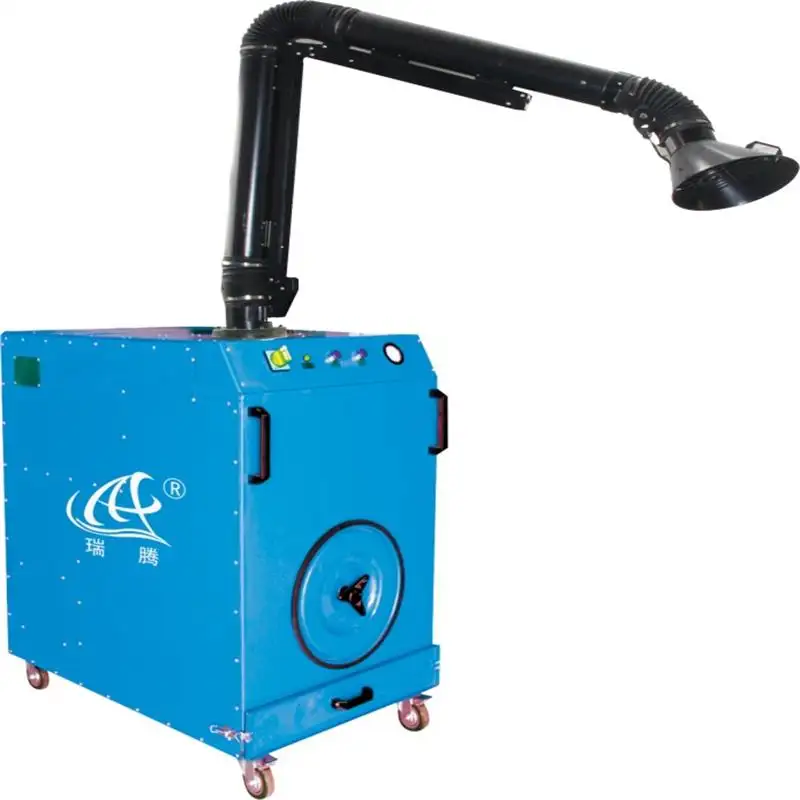
Key International Standards for Gas Turbine Filter Cartridge Performance
ISO 29463 & EN 1822: Defining High-Efficiency Filtration for Critical Turbine Inlet Protection
The ISO 29463 series — harmonized with the European EN 1822 standard — defines the most rigorous classification system for high-efficiency air filters in gas turbine inlet systems. It evaluates filter media at the Most Penetrating Particle Size (MPPS), typically 0.1–0.3 µm, where capture efficiency is lowest. Cartridges are assigned classes from E10 (≥85 % efficiency) to U17 (≥99.999995 %), with HEPA (H13–H14) and ULPA grades representing the upper tier. For gas turbines, this classification is decisive: sub-micron particles bypassing filtration melt into silicates in the combustion chamber, adhering to turbine blades and degrading aerodynamic performance. A single compressor blade erosion event can reduce power output by 2–3 %. Specifying ISO 29463-compliant cartridges with ≥99.95 % MPPS efficiency (e.g., H13) establishes a near-absolute barrier against the most damaging fine aerosols. The standard also mandates a leak test on every manufactured cartridge — not just a media sample — verifying that the full assembly sustains its rated performance under real-world pulsating load conditions. As such, adherence to ISO 29463 and EN 1822 forms the technical foundation of critical turbine inlet protection, directly linking filter integrity to hot-gas-path component life.
ISO 16890 (Replacing EN 779): Real-World Particulate Efficiency Ratings for Gas Turbine Filter Cartridge Applications
ISO 16890 replaced EN 779 to provide a more realistic assessment of gas turbine filter cartridge performance by measuring fractional efficiency across ambient particulate fractions — PM1, PM2.5, and PM10 — rather than relying on synthetic dust averages. Its ePM1 rating, in particular, reflects the cartridge’s ability to capture sub-micron particles responsible for compressor fouling and corrosion. Field data from coastal installations show that upgrading from an ePM1 50 % to ePM1 85 % cartridge extends compressor wash intervals by up to 40 % and recovers 1–2 % of lost output. Because ISO 16890 uses efficiency curves derived from actual urban and rural aerosol distributions, it enables accurate prediction of in-service fouling rates. This realism supports lifecycle cost modelling: higher ePM1 ratings often deliver payback within 12–18 months through reduced fuel consumption and maintenance labour — even if initial cartridge cost rises. For front-end engineering, ISO 16890 data serves as a primary input for predictive maintenance algorithms and availability guarantees, replacing the optimistic, lab-only metrics of EN 779 with a statistically grounded basis aligned to site-specific contamination profiles.
Gas-Specific Air Quality and Contaminant Testing Protocols
ASTM D1945 & D5454: Validating Gas Turbine Filter Cartridge Performance Against Hydrocarbon, Moisture, and Aerosol Challenges
Gas turbine filter cartridges must address not only solid particulates but also gaseous and aerosol-phase contaminants. ASTM D1945 outlines a gas chromatography method to analyze hydrocarbon composition in natural gas and other gaseous fuels — essential for validating the adsorptive or separative performance of cartridges in fuel-gas conditioning skids. Heavy hydrocarbons, if unmitigated, contribute to combustion instability and hot-section fouling. ASTM D5454 complements this by quantifying water vapor content using electronic moisture analyzers — critical for cartridges operating in humid environments, where excess moisture accelerates corrosion, promotes hydrate formation, and degrades filter media. While these standards were developed for fuel-gas applications, their principles extend to inlet air filtration: cartridge response to aerosol-borne hydrocarbons and moisture is routinely assessed by adapting D1945-type compositional analysis and D5454-type moisture measurements alongside ISO 8573-4 solid-particle testing. Field data from a major turbine operator indicates that cartridges validated against such integrated protocols reduce unscheduled shutdowns linked to fuel-gas contamination by up to 18 % (2023 reliability survey). Integrating ASTM D1945 and D5454 into qualification programs demonstrates a cartridge’s resilience against hydrocarbon, moisture, and aerosol challenges — ensuring consistent turbine protection and longer maintenance intervals.
Third-Party Certification and Independent Laboratory Verification
Third-party certification delivers impartial, evidence-based validation of a gas turbine filter cartridge’s performance — eliminating the bias inherent in self-declared or supplier-led claims. Accredited laboratories operating under ISO/IEC 17025 conduct rigorous testing against ISO 29463 for high-efficiency particulate removal and ISO 16890 for real-world dust loading and fractional efficiency. This independent verification confirms that the cartridge consistently meets its claimed ePM1, ePM2.5, or ePM10 ratings — along with initial pressure drop, mechanical integrity, and leak-tightness. For operators, such certification is a critical risk-management tool: it substantiates that installed filtration will protect the turbine from fouling, corrosion, and erosion — even under challenging site conditions — and supports compliance with insurers’ and OEMs’ quality assurance requirements. By relying on lab-verified data rather than marketing assertions, maintenance teams gain confidence in service interval predictions and total cost of ownership calculations — making third-party certification a cornerstone of reliable gas turbine inlet air protection.
Environmental Adaptation: How Certification Standards Address Site-Specific Threats to Gas Turbine Filter Cartridge Integrity
Desert Dust, Coastal Salt, and Industrial Pollutants: Matching Gas Turbine Filter Cartridge Certifications to Operational Realities
Gas turbine filter cartridge performance is defined not by laboratory ideals, but by the environment it must endure. In desert regions, airborne sand and fine dust demand high-efficiency particulate removal — best validated by ISO 29463 classifications like H13 or H14, which ensure robust capture of sub-micron particles. Coastal installations face salt-laden aerosols that corrode turbine blades; here, a cartridge certified to ISO 16890 with ePM1 ≥ 90 % provides essential fine-dust protection, while ASTM D5454 moisture resistance testing confirms the media remains stable under high humidity or fog. Industrial settings with hydrocarbon mists require additional ASTM D1945 assessments to verify oil-contaminant handling without wetting out. By aligning site-specific threats with the appropriate certification data, operators select cartridges that maintain structural and functional integrity — preventing unplanned downtime and extending turbine life.
Strategic Value: Linking Certification Compliance to Gas Turbine Filter Cartridge Lifecycle Performance
From ePM1 Ratings to Uptime: How ISO 16890 Data Drives Predictive Maintenance and LCC Optimization
ISO 16890’s ePM1 metric quantifies a gas turbine filter cartridge’s real-world ability to capture submicron particles (≤1 µm) — a key driver of compressor fouling and efficiency loss. This precision makes ePM1 a foundational input for predictive maintenance models. A 2023 case study from a major independent power producer found that upgrading to cartridges with ePM1 ≥ 85 % extended compressor wash intervals from 3,000 to 6,000 operating hours, cutting annual maintenance costs by approximately $120,000 per unit. With ePM1 as a calibrated indicator of fouling rate, operators can schedule filter changes and washes conditionally — avoiding both premature replacements and costly unplanned outages.
Lifecycle cost optimization follows directly. Higher ePM1 ratings correlate strongly with lower fouling, preserving aerodynamic efficiency and reducing fuel consumption. A 2022 analysis by a turbine performance consultancy determined that every 10 % improvement in ePM1 efficiency can lower annual fuel use by up to 0.4 %. Over a 15-year turbine life, these gains compound — while fewer cartridge replacements also reduce waste and logistics overhead. By anchoring operational decisions to certified, site-relevant data, maintenance teams shift from reactive, calendar-based practices to condition-based strategies — maximizing uptime, minimizing total cost of ownership, and strengthening long-term asset reliability.
Frequently Asked Questions (FAQ)
What is the significance of ISO 29463 and EN 1822 for gas turbine filters?
ISO 29463 and EN 1822 establish rigorous efficiency classifications for air filters, ensuring gas turbine filters can capture fine aerosols that otherwise degrade turbine performance and reduce power output.
How does ISO 16890 differ from EN 779 in evaluating filter efficiency?
ISO 16890 measures real-world fractional efficiency across particulate sizes (PM1, PM2.5, PM10), making its ratings more aligned to field conditions than the synthetic dust averages found in EN 779.
Why are ASTM D1945 and D5454 important for gas turbine filters?
These standards validate filter performance against hydrocarbon and moisture challenges, critical for reducing fouling, corrosion, and unplanned downtime in humid or contaminated environments.
What role does third-party certification play for turbine filters?
Third-party certification confirms filter media efficiency and integrity independently, ensuring compliance with insurance and OEM standards and enhancing maintenance reliability.
How does ISO 16890 support predictive maintenance?
ISO 16890 provides precise ePM1 ratings that correlate with fouling rates, enabling operators to optimize maintenance schedules and minimize lifecycle costs.
Table of Contents
- Key International Standards for Gas Turbine Filter Cartridge Performance
- Gas-Specific Air Quality and Contaminant Testing Protocols
- Third-Party Certification and Independent Laboratory Verification
- Environmental Adaptation: How Certification Standards Address Site-Specific Threats to Gas Turbine Filter Cartridge Integrity
- Strategic Value: Linking Certification Compliance to Gas Turbine Filter Cartridge Lifecycle Performance
-
Frequently Asked Questions (FAQ)
- What is the significance of ISO 29463 and EN 1822 for gas turbine filters?
- How does ISO 16890 differ from EN 779 in evaluating filter efficiency?
- Why are ASTM D1945 and D5454 important for gas turbine filters?
- What role does third-party certification play for turbine filters?
- How does ISO 16890 support predictive maintenance?