
 EN
EN
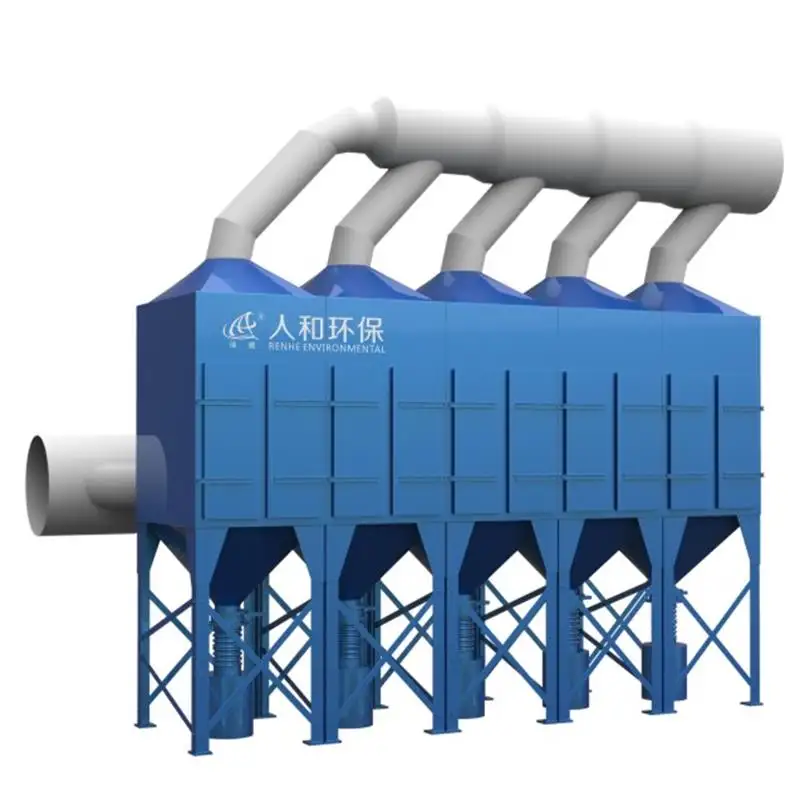
Why Filter Cartridge Health Dictates System Longevity
Mechanical cascade: How clogged cartridges increase pressure drop and strain blowers, motors, and ductwork
As a filter cartridge loads with particulate, airflow resistance rises—directly increasing differential pressure (ΔP) across the system. To maintain required air volume, the blower must overcome higher static pressure, forcing its impeller to work harder. This extra effort draws more current through motor windings, accelerating thermal degradation of insulation and lubricants. Bearings experience elevated radial and axial loads, shortening service life. Ductwork is similarly stressed: sustained high pressure fatigues seams, gaskets, and supports, raising the risk of leaks and structural failure. Left unchecked, this self-reinforcing cycle pushes blowers, motors, and ductwork toward unscheduled downtime. Regular cartridge maintenance interrupts this cascade before mechanical integrity is compromised.
Data insight: 42% average blower motor service life extension with scheduled filter cartridge replacement (2023 NEMA Benchmark)
The 2023 NEMA benchmark demonstrates that fixed-interval cartridge replacement extends blower motor service life by an average of 42% versus run-to-failure practices. By holding ΔP within design limits, motors operate cooler and with less thermal stress—preserving dielectric strength in windings and reducing cumulative bearing wear. Crucially, scheduled changeouts avoid the steep, non-linear ΔP surge that occurs beyond functional capacity—a condition that forces motors into near-stall operation and dramatically accelerates degradation. Smoothing operational load in this way preserves engineering margins, reduces replacement frequency, lowers labor costs, and improves overall equipment effectiveness (OEE). It confirms that filter cartridge health is not ancillary—it’s a primary determinant of system longevity.
Using Pressure Drop to Monitor Filter Cartridge Condition Accurately
Why ΔP is the most reliable real-time indicator of filter cartridge saturation—and what thresholds matter
Differential pressure (ΔP) is the most accurate, real-time metric for assessing filter cartridge saturation. As dust accumulates in the media, resistance increases steadily—causing ΔP to rise predictably. A clean cartridge typically operates below 3" w.c.; readings between 4–6" w.c. signal diminishing efficiency and warrant increased pulse cleaning frequency; and sustained ΔP above 6" w.c. generally indicates saturation and imminent replacement. Unlike visual inspection or time-based schedules, ΔP monitoring provides objective, non-destructive insight into remaining service life. When used strategically, it also delivers measurable energy savings—optimized changeouts based on ΔP can reduce system energy consumption by up to 15%, per industry field data.
Beyond replacement: How strategic inspection at 3.5" w.c. prevents premature media degradation and uneven aging
Relying solely on end-of-life ΔP thresholds risks missing early-stage damage. Inspecting cartridges whenever ΔP exceeds 3.5" w.c. allows technicians to identify subtle but critical issues: uneven dust cake distribution, localized media abrasion, or partial blinding. These conditions create hotspots of elevated stress, accelerating localized degradation and causing uneven aging across the cartridge surface. At this stage, pulse cleaning may already be underperforming—either failing to dislodge compacted dust or over-cleaning certain zones. Surface inspection reveals whether adjustments are needed: fine-tuning pulse pressure or frequency, verifying seal integrity, or checking for airflow imbalances. Addressing these issues proactively preserves media integrity, avoids rapid deterioration, and sustains predictable performance—extending usable life and preventing unplanned outages.
Optimizing Filter Cartridge Cleaning to Maximize Service Life
Pulse cleaning science: Balancing cleaning intensity to preserve nanofiber integrity and avoid cake compaction
Pulse jet cleaning is highly effective—but only when precisely calibrated. Over-pressurization (above 90 psi / ~6.2 bar) compresses the dust cake into the media, causing irreversible blinding and permanent ΔP elevation. Under-cleaning leaves residual dust, increasing baseline resistance and energy demand. Nanofiber-coated cartridges are especially sensitive: excessive pulse force can rupture the ultrafine surface layer, degrading filtration efficiency at the micron level. The 2023 CAGI Filtration Benchmark identifies 4.5–5.5 bar as the optimal pulse pressure range—extending cartridge service life by up to 25% while cutting compressed air use by 15%. To prevent cake compaction, cleaning should trigger only when ΔP reaches the manufacturer’s specified threshold—typically 3.5–5" w.c. On-demand systems that modulate pulse frequency in response to real-time ΔP eliminate unnecessary cycles, minimize media fatigue, and sustain long-term airflow stability.
Consequences of Delayed or Inconsistent Filter Cartridge Maintenance
Hidden compliance risk: 'Dust-free' facilities exceeding EPA PM10 limits by 2.3× due to bypass from aged filter cartridges
Delayed or inconsistent maintenance silently erodes filter cartridge integrity. Over time, deeply embedded dust stresses the media, promoting micro-cracks and seal fatigue. These flaws create unmonitored bypass paths—allowing fine particulate (PM10) to escape filtration undetected. Outlet duct readings may appear acceptable, masking significant emissions leakage. Industrial hygiene audits consistently show that facilities relying on visual checks alone underestimate actual PM10 discharge by wide margins. One documented case found a facility labeled “dust-free” emitting PM10 at 2.3× the EPA limit—solely due to degraded cartridges no longer maintaining a complete seal. This isn’t theoretical exposure: it carries direct regulatory risk, including citations and fines. The only robust safeguard is a disciplined, data-driven replacement protocol that treats the filter cartridge as a finite-consumable component—not a set-and-forget part.
FAQ Section
What is differential pressure (ΔP), and why is it important?
Differential pressure (ΔP) is the measure of airflow resistance across a filter cartridge. It’s a critical metric for assessing cartridge saturation and ensuring optimal system performance.
How often should filter cartridges be replaced?
Replacement frequency depends on your system and operational demand but adhering to scheduled replacements based on ΔP readings is essential to maximize service life and reduce risks.
What happens if filter cartridges are not cleaned properly?
Improper cleaning can lead to media damage, decreased filtration efficiency, and increased operational costs due to higher energy consumption or premature cartridge replacement.
Can scheduled maintenance reduce energy consumption?
Yes, optimized maintenance based on ΔP thresholds can lower system energy use by up to 15%, as it prevents unnecessary strain and maintains airflow efficiency.
What risks are associated with delayed cartridge maintenance?
Delaying cartridge maintenance can cause bypass leaks, regulatory non-compliance, fines, and reduced equipment lifespan.