
 EN
EN
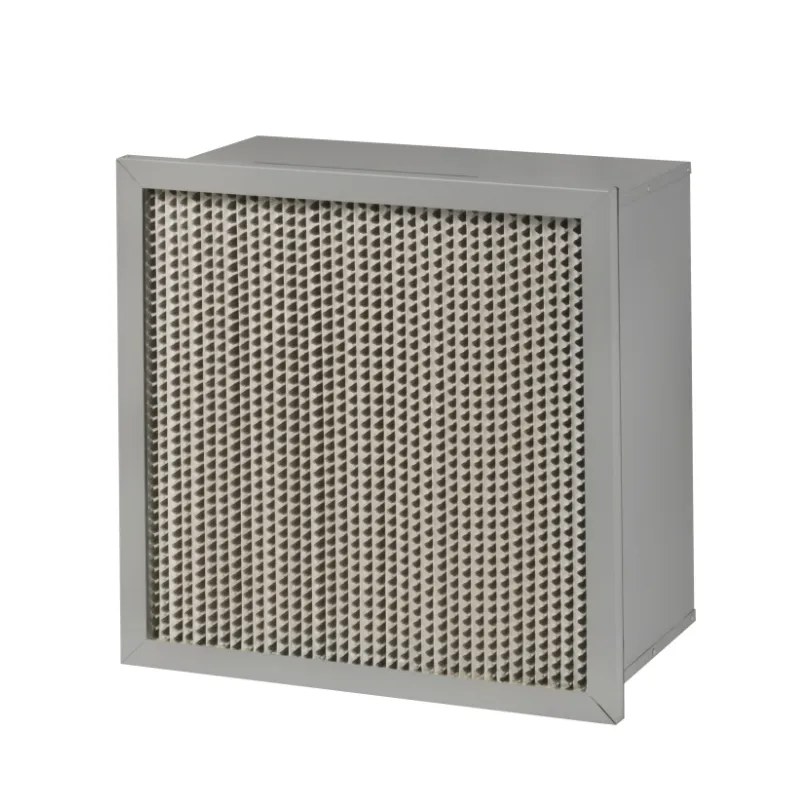
How Dust Collector Filters Degrade: Pressure Drop, Efficiency Loss, and the Physics of Blinding
Dust loading, filter cake formation, and irreversible blinding mechanisms
As dust-laden air passes through the filter media, particles accumulate on the surface, forming a porous cake. Initially, this cake enhances filtration efficiency by capturing finer particles. However, as loading continues, the cake thickens, increasing pressure drop (ΔP). Pulse cleaning can dislodge the surface cake, but fine particles often penetrate deep into the media fibers—a process known as depth loading. Over time, this internal clogging becomes irreversible, leading to blinding, where the filter’s pores are permanently obstructed. Blinded filters cannot be recovered by cleaning, causing a constant high ΔP. A clean dust collector filter typically operates at 1–2 inches H₂O, but a blinded filter can exceed 8 inches H₂O, forcing the fan to work harder and raising energy costs. Studies show that once depth loading exceeds 30% of the media’s void volume, airflow drops by 40% (Powder Technology Journal, 2022). This irreversible degradation forces premature replacement of dust collector filters.
The ΔP–airflow–capture efficiency triad and its nonlinear decay behavior
The relationship between differential pressure, airflow, and capture efficiency is inherently nonlinear. As dust collector filters clog, ΔP rises, prompting the fan to work harder to sustain target airflow. However, beyond a critical threshold—typically when ΔP surpasses 6 inches H₂O—the fan curve enters a steep decline, and even a small additional pressure drop causes a sharp reduction in airflow. Capture efficiency, which depends on adequate airflow velocity at the hood, then drops disproportionately. ASHRAE RP-1723 (2023) revealed that a 4-inch H₂O excess pressure drop can reduce capture efficiency by 15%, while an 8-inch H₂O excess can cut efficiency by over 30%. This nonlinear decay means that delaying filter replacement not only wastes energy but also elevates the risk of dust escape and unsafe re-entrainment.
Real-World Consequences of Overdue Dust Collector Filter Replacement
Safety & compliance risks: Combustible dust re-entrainment and rising OSHA citations (2020–2023)
When dust collector filters degrade past their effective service life, the accumulated filter cake becomes unstable. Fine, combustible particulates re-entrain into the airstream, creating a fuel-rich atmosphere inside ducts and enclosures. This dust re-entrainment elevates the risk of deflagration and explosion, especially under the right concentration and ignition source. Regulatory bodies have responded with intensified oversight. From 2020 to 2023, OSHA issued over 1,200 citations for combustible dust hazards, a 24% increase in enforcement actions (OSHA, 2023). Facilities operating with blinded filters often fail to meet NFPA 652 requirements for housekeeping and hazard analysis, exposing them to fines, shutdowns, and catastrophic safety incidents. Proactive filter replacement directly lowers the probability of re-entrainment and ensures compliance with evolving standards.
Operational cost impact: +22% fan energy use from 8″ H₂O excess pressure drop (ASHRAE RP-1723)
Filters that remain in service well beyond the recommended changeout interval force the system fan to work against a higher resistance. The pressure drop (ΔP) across the filter bank climbs nonlinearly, often exceeding 8 inches of water column above the design ΔP. ASHRAE RP-1723 research demonstrates that this excess pressure drop translates into a 22% increase in fan energy consumption (ASHRAE, 2022). The added electrical load not only drives up operational utility bills but also accelerates motor and bearing wear, leading to unplanned downtime. In many industrial plants, a single large dust collector operating with undue ΔP can waste tens of thousands of dollars annually in energy alone. Timely filter replacement based on measured performance, rather than a fixed calendar, minimizes this parasitic load and preserves the fan’s service life.
Key Variables That Determine Dust Collector Filter Lifespan
Dust type, concentration, and morphology: Why silica demands 2.7× more frequent changeouts than wood flour
The physical and chemical properties of the dust directly control filter replacement frequency. Crystalline silica particles are hard, angular, and abrasive, causing accelerated mechanical wear and micro-tears in filter media. In contrast, soft, fibrous wood flour forms a more permeable filter cake that can be dislodged more easily during pulse cleaning. Field data from industrial dust collection systems shows that silica, under identical dust loading (e.g., 5 g/m³), leads to irreversible blinding and pressure drop rise 2.7 times faster than wood flour. High silica concentrations (≥ 10 g/m³) further shorten lifespan by rapidly filling media pores, while irregular particle morphology worsens internal plugging. Thus, filter changeout schedules must be tailored to dust type, concentration, and morphology—not just one-size-fits-all pressure drop thresholds.
Beyond Pressure Drop: Reliable Indicators for Dust Collector Filter Replacement
When ΔP 6″ H₂O misleads: Detecting channeling, uneven loading, and localized breakthrough
Relying solely on a differential pressure (ΔP) reading above 6″ H₂O to trigger dust collector filter replacement can be deceptive. Channeling—where airflow carves preferential paths through the filter cake—can produce a stable ΔP while most filter media remains blinded. Uneven dust loading similarly skews the reading: one heavily caked filter row may drive the ΔP high, prompting premature changeout of still-serviceable filters. Worse, localized breakthrough from a torn bag can suddenly drop ΔP, obscuring the need for immediate action. Instead, operators should track the rate of ΔP change, compare pressure drops across individual filter compartments, and integrate emissions monitoring. Sudden ΔP spikes or drops signal cleaning system failure or ruptures, not just filter age. A data-driven approach that watches these trends, not just a static threshold, delivers safer, more efficient dust collection.
Building a Data-Driven Dust Collector Filter Replacement Schedule
A replacement schedule driven by real-time performance data prevents the waste and risk of fixed-interval changeouts. By monitoring the right variables, facilities can replace filters when they truly degrade—not on a calendar guess.
- Differential pressure tracking – Use ΔP sensors to trigger replacement only when the pressure drop exceeds a defined threshold (typically 6–8 in H₂O for most pulse-jet systems), preventing premature disposal and unnecessary labor.
- Emission and opacity monitoring – Continuous particulate monitors downstream catch early breakthrough, signaling that the filter media is losing capture efficiency even if ΔP looks normal.
- Data integration and trend analysis – Feed sensor data into a central system that logs pressure build-up rates, cleaning cycle frequency, and dust loading patterns. This makes it possible to predict end-of-life and schedule replacements during planned downtime, avoiding production interruptions.
- Dust-specific baselines – Different materials foul filters at different rates. Calibrate replacement criteria using historical data for the specific dust type, concentration, and morphology—as silica-loaded filters may need changeout up to 2.7 times more often than those handling wood flour.
Shifting to a data-driven schedule eliminates guesswork, cuts energy costs, and keeps dust collector filters operating at their rated efficiency—safeguarding both compliance and your bottom line.
FAQ Section
What is depth loading, and how does it affect dust collector filters?
Depth loading occurs when fine dust particles penetrate deep into the filter media, clogging it internally. Over time, this leads to irreversible blinding, where the filter pores are permanently obstructed, reducing airflow and increasing energy costs.
Why is differential pressure (ΔP) monitoring crucial in dust collector systems?
ΔP monitoring helps detect filter degradation by measuring resistance to airflow. Excessive ΔP indicates clogged filters, which elevate fan energy use and reduce capture efficiency.
How does the type of dust affect filter lifespan?
Dust type significantly impacts wear and clogging. For example, abrasive silica particles foul filters 2.7 times faster than softer materials like wood flour, necessitating tailored replacement schedules.
What are the safety risks of using overdue dust collector filters?
Degraded filters can re-entrain fine combustible dust into the airstream, raising explosion risks. Non-compliance with safety standards may lead to OSHA citations and increased oversight.
How can facilities create a data-driven filter replacement schedule?
Facilities can use ΔP sensors, emission monitors, and trend analysis to track filter performance, predict end-of-life, and avoid premature or overdue replacements.
Table of Contents
- How Dust Collector Filters Degrade: Pressure Drop, Efficiency Loss, and the Physics of Blinding
- Real-World Consequences of Overdue Dust Collector Filter Replacement
- Key Variables That Determine Dust Collector Filter Lifespan
- Beyond Pressure Drop: Reliable Indicators for Dust Collector Filter Replacement
- Building a Data-Driven Dust Collector Filter Replacement Schedule
-
FAQ Section
- What is depth loading, and how does it affect dust collector filters?
- Why is differential pressure (ΔP) monitoring crucial in dust collector systems?
- How does the type of dust affect filter lifespan?
- What are the safety risks of using overdue dust collector filters?
- How can facilities create a data-driven filter replacement schedule?