
 EN
EN
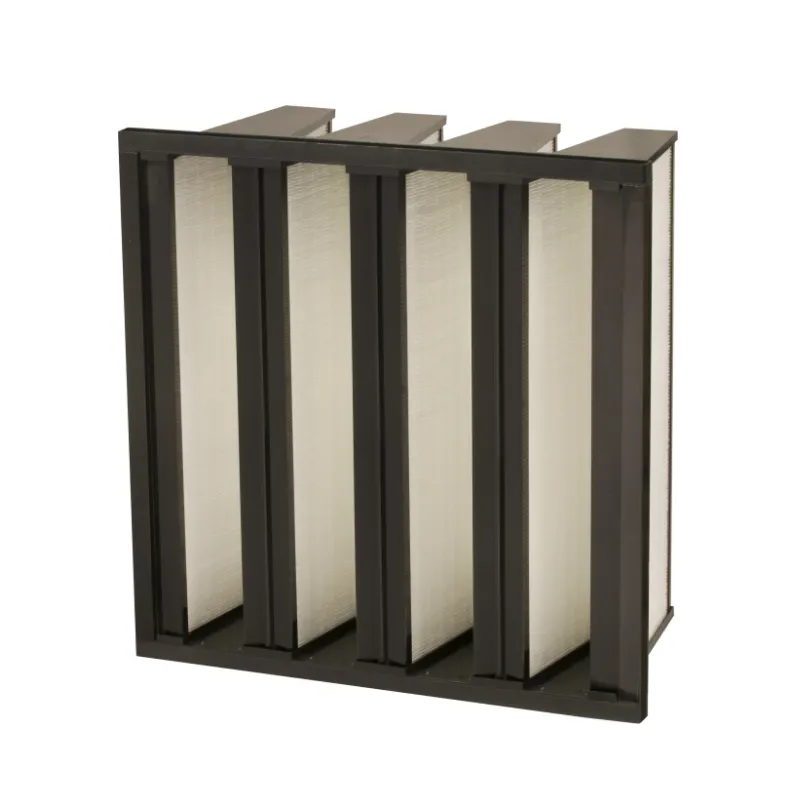
Filter Cartridge Airflow Performance: Reducing Pressure Drop and Energy Demand
Why pressure drop is the dominant constraint on dust collector throughput and system longevity
Pressure drop—the resistance to airflow across a filter cartridge—is the single most influential factor in dust collector performance. As particulate accumulates on the media, resistance rises, forcing the fan to work harder and increasing energy consumption. A 1-inch water column (w.c.) increase in pressure drop can raise fan energy use by 7%, eroding operational margins and accelerating mechanical wear. High-performance filter cartridges are engineered to maintain low, stable pressure drop over their service life. Premium designs enable more effective pulse cleaning, sustaining consistent airflow and extending replacement intervals by up to 50% compared to standard cartridges. Crucially, routine differential-pressure monitoring—not just scheduled maintenance—can yield energy savings of up to 15% by triggering cleaning or replacement at the optimal time. In industrial settings, a filter cartridge that resists rapid pressure rise is foundational to maximizing throughput, minimizing life-cycle costs, and protecting the entire dust collection system from premature failure.
How pleated filter cartridge geometry maximizes surface area—cutting velocity-induced resistance by up to 35% vs. bag filters
Pleated filter cartridge architecture multiplies available filtration surface area by folding media into deep, uniform pleats—delivering 3–4 times more area within the same housing volume as traditional bag filters. This geometric advantage directly reduces face velocity—the speed at which air passes through the media—and thereby lowers velocity-induced resistance. Independent studies confirm that well-engineered pleated cartridges reduce this component of pressure drop by up to 35% compared to bag systems. The expanded surface area also distributes dust loading more evenly, delaying blinding and enabling gentler, more effective pulse-cleaning cycles that preserve media integrity. For example, a metal fabrication facility that upgraded to nanofiber-coated pleated cartridges cut its operating pressure drop by 40% and reduced energy consumption by 20%. When paired with advanced media, the pleated filter cartridge delivers both the airflow headroom and energy efficiency required for high-volume, modern manufacturing workflows.
Filtration Efficiency Meets Flow: Media Innovation in Filter Cartridge Design
Balancing MERV/ISO 16890-rated capture (e.g., 99.97% @ 0.3 µm) with low ΔP airflow requirements
High-efficiency filter cartridges must capture submicron particles without compromising airflow. MERV 15/16 or ISO ePM1-rated media reliably achieve 99.97% particle capture at 0.3 µm—but dense, high-efficiency base media often increases pressure drop (ΔP), throttling throughput and raising energy costs. Innovations in pleat geometry help resolve this trade-off: optimized pleat spacing and deeper pleat packs increase effective surface area by 30–40%, lowering face velocity and reducing velocity-induced resistance. Industry data shows such designs cut ΔP by up to 35% versus conventional bag filters. As a result, a filter cartridge meeting strict efficiency standards can sustain pressure drop below 1.0" w.c. at rated airflow—preserving system performance and extending service life. Maintaining low ΔP is critical: even a 0.5" w.c. increase raises fan energy consumption by 10–15%, per U.S. Department of Energy benchmarking. Balancing capture efficiency with minimal airflow resistance remains a core objective of modern filter media engineering.
Nanofiber-coated filter cartridge media: Enabling high-efficiency operation at <0.8" w.c. pressure drop
Nanofiber technology enhances filter cartridge performance by applying a thin, porous layer of synthetic fibers (typically <1 µm in diameter) onto the base media surface. This ultrafine layer captures fine particles at the surface rather than allowing deep penetration—preventing pore clogging and preserving low pressure drop. The result is a filter cartridge capable of MERV 15 efficiency while operating at a sustained pressure drop below 0.8" w.c. in reverse-pulse systems. Independent testing shows nanofiber-coated media reduce energy consumption by 15–20% compared to untreated cellulose or polyester blends, while extending service life by up to 50% due to more complete and repeatable pulse cleaning. Surface-loading behavior also prevents dust cake compaction, ensuring stable airflow across thousands of cleaning cycles. For applications handling fine, hazardous dusts—such as silica or welding fumes—nanofiber-coated filter cartridges deliver regulatory-grade emission control and lower total cost of ownership.
Sustained Workflow Integrity: Automated Cleaning and Maintenance Advantages of Filter Cartridge Systems
Reducing unplanned downtime: How reverse-pulse cleaning extends filter cartridge service life and cuts cleaning frequency by 40%
Reverse-pulse cleaning uses controlled bursts of compressed air directed opposite to normal airflow, dislodging dust cakes without interrupting operations. This on-line cleaning maintains consistent airflow and low pressure drop—preventing the gradual performance decline that often triggers unscheduled shutdowns. Unlike manual cleaning—which requires system isolation, filter removal, and labor-intensive handling—automated reverse-pulse systems reduce cleaning frequency by up to 40%, according to 2023 industry data. For an operation previously dedicating 40 hours per month to manual cleaning, this translates to ~16 hours of reclaimed labor time, reallocated to higher-value tasks. The gentle, targeted pulses also minimize mechanical stress on the media, supporting extended service life: some high-integrity cartridges withstand up to 10 cleaning cycles before replacement. Consistent performance further reduces the risk of catastrophic failure—protecting production continuity and helping facilities maintain compliance with stringent emissions regulations. By transforming maintenance from reactive to predictable, reverse-pulse cleaning establishes filter cartridge systems as low-maintenance, high-reliability assets in industrial dust collection.
System Integration and Selection: Matching Filter Cartridge Specifications to Your Dust Collection Workflow
Selecting the correct filter cartridge is decisive in aligning dust collection performance with operational workflow demands. The cartridge must be matched to the specific dust characteristics—whether fine, abrasive, hygroscopic, or combustible—because mismatched media risks premature blinding, leakage, or safety hazards. Equally important is dimensional and geometric compatibility: a cartridge with insufficient surface area forces higher face velocity, increasing resistance and energy demand. Cleaning-system compatibility is non-negotiable—a cartridge designed for pulse-jet cleaning will underperform in a reverse-air unit, undermining cleaning efficacy and shortening service life. Efficiency ratings must also align with both regulatory thresholds (e.g., OSHA PELs or EPA MACT standards) and the need to protect downstream equipment like fans or heat exchangers. When specifications are methodically matched—based on real-world dust analysis, verified airflow requirements, and physical access constraints—the dust collector operates at stable differential pressure, reducing fan energy use and unplanned downtime. Ultimately, a rigorous, application-first selection process transforms the dust collector from a potential bottleneck into a reliable, energy-efficient component of the production workflow.
FAQ
What is pressure drop, and why is it important in dust collector performance?
Pressure drop refers to the resistance to airflow across a filter cartridge. It directly impacts the efficiency of a dust collector, as high pressure drop increases energy consumption and reduces system throughput.
How does pleated filter cartridge geometry improve efficiency?
Pleated designs increase the filtration surface area, lowering face velocity and reducing velocity-induced resistance by up to 35% compared to traditional bag filters, enhancing both efficiency and energy savings.
What are the benefits of nanofiber-coated filter cartridge media?
Nanofiber-coated media provide high efficiency (99.97% particle capture at 0.3 µm) while maintaining low pressure drop. They reduce energy consumption by 15–20% and extend service life by up to 50%.
What is reverse-pulse cleaning, and how does it extend service life?
Reverse-pulse cleaning uses compressed air bursts to dislodge dust without interrupting workflows. It reduces cleaning frequency by up to 40% and prolongs filter cartridge service life by minimizing mechanical stress.
How should I select the right filter cartridge for my system?
Filter cartridges should be chosen based on dust characteristics, regulatory requirements, efficiency ratings, and compatibility with the cleaning system to ensure optimal performance and longevity.
Table of Contents
- Filter Cartridge Airflow Performance: Reducing Pressure Drop and Energy Demand
- Filtration Efficiency Meets Flow: Media Innovation in Filter Cartridge Design
- Sustained Workflow Integrity: Automated Cleaning and Maintenance Advantages of Filter Cartridge Systems
- System Integration and Selection: Matching Filter Cartridge Specifications to Your Dust Collection Workflow
-
FAQ
- What is pressure drop, and why is it important in dust collector performance?
- How does pleated filter cartridge geometry improve efficiency?
- What are the benefits of nanofiber-coated filter cartridge media?
- What is reverse-pulse cleaning, and how does it extend service life?
- How should I select the right filter cartridge for my system?