
 EN
EN
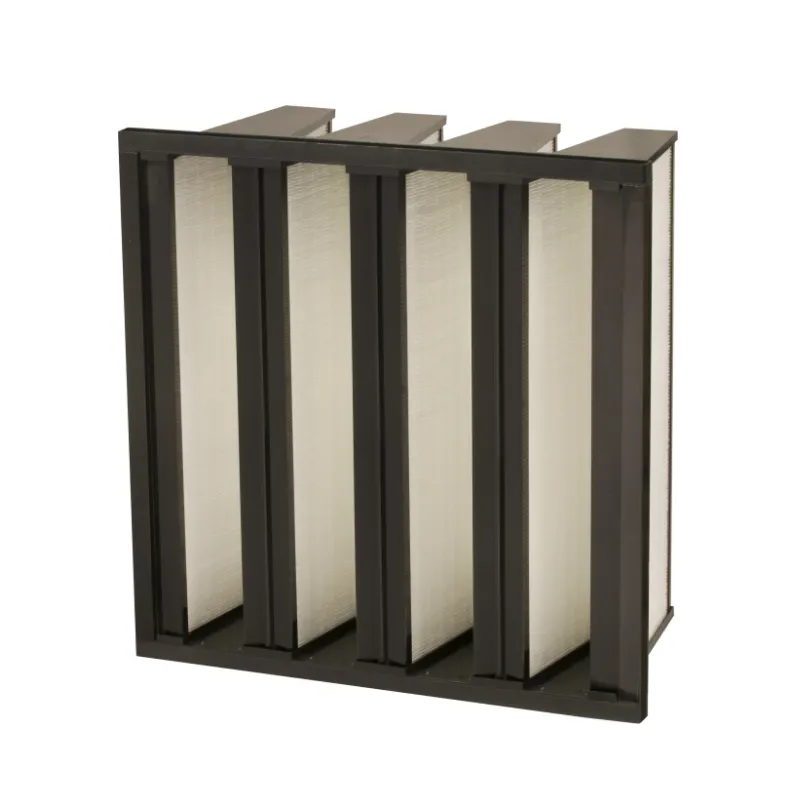
Regulatory Landscape Driving Adoption of Cartridge Dust Collectors
Compliance with national energy efficiency standards (e.g., China’s GB 19761, EU Ecodesign)
Industrial facilities face mounting pressure to reduce energy consumption due to regulations like China’s GB 19761—which sets minimum efficiency requirements for fan systems—and the EU Ecodesign Directive (2009/125/EC), which mandates improved energy performance and extended product lifecycles for industrial equipment. Cartridge dust collectors support compliance through inherently lower pressure drop (typically below 1.5 kPa), reducing fan power demand by 25–35% compared to traditional baghouses. Their compact pleated filter design delivers greater surface area in less space, lowering face velocity and system resistance. Modern units integrate IE3 premium-efficiency motors and variable frequency drives (VFDs) that dynamically adjust airflow to match real-time process demand—cutting energy use during partial-load operation. A 2023 industry analysis found such upgrades reduced ventilation-related energy costs by up to 30%. Washable or extended-life filter media further align with Ecodesign principles by reducing replacement frequency, waste generation, and maintenance resource use—helping operators meet carbon reduction goals without compromising dust capture performance.
Meeting stringent emission limits: OELs, PM2.5/PM10 control, and ATEX safety requirements
Global regulatory frameworks are tightening controls on airborne particulates: Occupational Exposure Limits (OELs) set by agencies like OSHA govern worker inhalation risks, while ambient air standards increasingly target PM2.5 and PM10 emissions. Cartridge dust collectors achieve sub-micron filtration efficiency exceeding 99.9% at 0.3 µm—capturing fine particles that conventional baghouses often bypass. This performance ensures sustained compliance with clean air mandates including the EU Industrial Emissions Directive and local stack emission limits. In explosive dust environments, compliance with the ATEX Directive 2014/34/EU is enabled through conductive filter media, anti-static grounding, and certified explosion-relief venting. A 2022 multi-industry report found facilities using these integrated solutions reduced PM2.5 stack emissions by over 40% versus legacy units. Continuous differential pressure monitoring and automated, demand-based pulse cleaning maintain consistent filtration integrity—preventing performance drift and ensuring long-term adherence to evolving regulatory thresholds. The result is demonstrable risk reduction: fewer compliance violations, enhanced worker protection, and uninterrupted production.
Energy Efficiency Advantages of Cartridge Dust Collectors
Lower pressure drop design enabling 25–35% less fan power vs. baghouses
Cartridge dust collectors achieve substantial energy savings primarily through their low-pressure-drop architecture. Unlike baghouses—where air must travel through long, high-resistance tubular bags—cartridge systems use tightly packed pleated media that maximizes filtration area within a compact footprint. This design reduces face velocity and flow resistance, keeping operating pressure differentials consistently below 1.5 kPa. As a result, fan power consumption drops by 25–35% compared to equivalent baghouse installations. The stable, low-resistance airflow also enables less frequent pulse cleaning, cutting compressed air usage and associated energy costs. These efficiencies directly lower electricity demand and carbon intensity—making cartridge systems a strategic choice for facilities prioritizing operational sustainability and cost control.
Integration of IE3 motors, VFDs, and high-efficiency fans for adaptive load management
Energy optimization extends beyond filter design: modern cartridge dust collectors integrate IE3 premium-efficiency motors (delivering 3–5% higher efficiency than standard models), backward-curved high-efficiency fans, and variable frequency drives (VFDs) for intelligent airflow modulation. Rather than running at fixed speed, the VFD adjusts fan output in response to actual dust loading, process cycles, or ambient conditions—reducing energy use by up to 50% during low-production periods. This adaptive load management not only slashes annual operating costs but also extends filter life by minimizing unnecessary pulsing and mechanical stress. The synergy between low-resistance filtration and responsive drive technology ensures peak performance is delivered only when needed, reinforcing both economic and environmental objectives.
Emission Reduction Performance and Sustainable Operation
Sub-micron filtration efficiency (99.9% at 0.3 µm) supporting clean air compliance
Cartridge dust collectors deliver verified sub-micron filtration efficiency exceeding 99.9% at 0.3 µm—a critical benchmark for capturing respirable PM2.5 and hazardous ultrafine particles. This level of performance is achieved through engineered filter media with uniform pore structure, combined with optimized internal airflow distribution that minimizes channeling and bypass. It directly supports compliance with occupational health standards (e.g., OSHA OELs), ambient air quality regulations (including the EU Industrial Emissions Directive), and combustible dust safety frameworks like ATEX. In sensitive sectors—including pharmaceutical manufacturing, precision metalworking, and food processing—this capability prevents cross-contamination, safeguards product integrity, and mitigates fire and explosion risks from accumulated fines. By reliably removing particles at the most hazardous size range, these systems reduce environmental impact while affirming organizational commitment to health, safety, and sustainable operations.
Smart differential pressure monitoring and predictive filter maintenance to sustain low emissions and energy use
Sustained performance relies on intelligent system management—not just high-efficiency components. Integrated differential pressure sensors continuously monitor filter loading in real time, triggering pulse-jet cleaning only when pressure rise indicates actual dust accumulation—not on arbitrary timers. This demand-based approach conserves compressed air, reduces wear on filter media, and maintains optimal airflow. Advanced controllers apply predictive algorithms to historical pressure trends, forecasting filter end-of-life with high accuracy and enabling planned, off-shift replacements—avoiding unplanned downtime and performance degradation. Because clogged filters increase resistance and fan energy demand, this proactive strategy also preserves the system’s low-energy advantage. Operators can further refine cleaning logic to match seasonal variations or batch-process profiles, ensuring emissions remain consistently below regulatory thresholds while minimizing total cost of ownership.
FAQ
What are cartridge dust collectors?
Cartridge dust collectors are air filtration systems that utilize pleated filters to capture dust and airborne particles. They are commonly used in industrial settings to improve air quality and ensure compliance with emission standards.
Why are cartridge dust collectors energy efficient?
These systems are designed with a low-pressure-drop architecture, minimizing airflow resistance and reducing fan power demand. Additionally, they often integrate advanced motors and variable frequency drives for adaptive energy management.
How do cartridge dust collectors meet emission standards?
They achieve sub-micron filtration efficiency exceeding 99.9% at 0.3 µm, effectively capturing PM2.5 and other particulates to comply with environmental and occupational health regulations.
What industries benefit from cartridge dust collectors?
Sectors such as pharmaceutical manufacturing, precision metalworking, and food processing benefit from these systems due to their ability to prevent cross-contamination, enhance safety, and support sustainable practices.