
 EN
EN
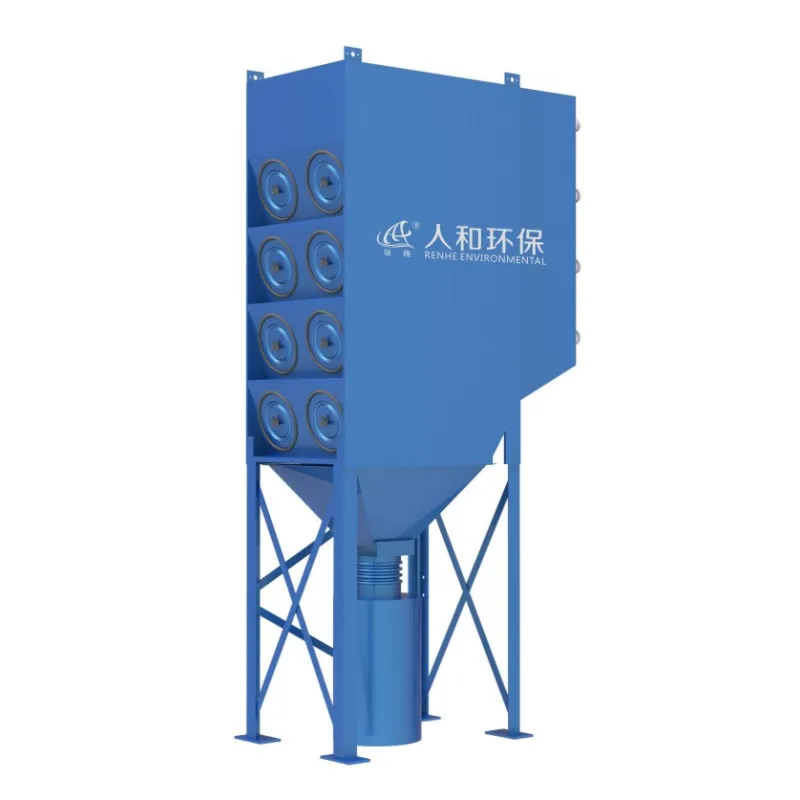
Filter Blinding and Excessive Pressure Drop
How dust cake formation causes blinding in bag and cartridge dust collector filters
As dust-laden air passes through dust collector filters, particles accumulate on the surface to form a dust cake. Initially, this layer enhances filtration by capturing submicron particles—acting as a beneficial secondary filter. But continued accumulation compresses the cake, especially within the tight pleats of cartridge media or the vertical folds of bag filters, trapping dust in valleys and forming a dense, low-permeability barrier. This progressive blinding increases airflow resistance, triggering a sharp rise in differential pressure—commonly exceeding the design limit of 0.5–1.0 kPa (ACGIH, 2022). The resulting pressure drop strains the fan motor, reduces system airflow, and raises energy consumption. Left unchecked, the cake becomes permanently embedded, accelerating wear and forcing premature filter replacement.
When a stable dust cake helps vs. harms filtration efficiency
A thin, uniform, and regularly renewed dust cake improves overall capture efficiency—particularly for fine and respirable particles—without significantly increasing resistance. This state is sustainable when pulse cleaning is precisely timed and calibrated to shed excess dust while preserving a light, functional layer. However, the cake turns harmful when it thickens unevenly, hardens due to moisture or chemical reaction, or adheres strongly to the media—raising ΔP more than 50–75% above the clean-filter baseline. In hygroscopic or sticky dust applications, such as those found in food processing or polymer manufacturing, the cake resists cleaning cycles and rapidly evolves into a sealed, impermeable layer. Effective operation hinges on balancing cleaning intensity with real-time differential pressure monitoring to initiate pulses only when needed—not on fixed timers.
Ineffective Pulse Cleaning and System Failures
Causes of Inconsistent Cleaning: Pressure, Duration, and Frequency Mismatches
Pulse cleaning relies on controlled bursts of compressed air to dislodge dust from filter media. Under-pressurized pulses lack the energy to overcome adhesive forces in the dust cake, leading to incomplete cleaning, persistent pressure rise, and accelerated blinding. Over-pressurization, meanwhile, risks mechanical damage—fracturing seams, eroding fiber coatings, or stretching media beyond tolerance. Pulse duration must be sufficient to propagate cleaning energy across the full filter surface; too-short pulses leave residual dust in lower zones. Equally critical is frequency: excessive pulsing wastes compressed air, induces unnecessary flex fatigue in the media, and can compact rather than remove dust. Optimal performance requires coordinated tuning of all three parameters—pressure, duration, and frequency—based on dust loading, media type, and system configuration.
Compressed Air Quality Issues Undermining Cleaning Energy for Dust Collector Filters
Even perfectly calibrated pulse controls fail without clean, dry, and stable compressed air. Moisture causes valve diaphragms to swell or stick, resulting in missed or partial cleaning events. Oil aerosols coat internal components and reduce valve responsiveness, while fine particulates abrade moving parts and clog orifices. More critically, condensed water mixes with airborne dust to form a paste that seals filter pores irreversibly. Maintaining supply pressure between 90–100 psi—and installing refrigerated or desiccant dryers paired with coalescing filters—is essential to preserve cleaning efficacy. Routine inspection for leaks, condensate buildup, and drain functionality ensures each pulse delivers its full design energy to the filter surface.
Filter Media Misapplication and Early Failure
Matching dust collector filters to dust properties: hygroscopic, abrasive, and sticky challenges
Selecting appropriate dust collector filters demands rigorous alignment with dust characteristics—not just particle size, but behavior under process conditions. Hygroscopic dusts (e.g., sugar, flour, hydrated lime) absorb ambient moisture and swell cellulose-based media, causing rapid blinding and pressure spikes. A hydrophobic membrane—such as expanded polytetrafluoroethylene (ePTFE)—prevents moisture absorption and maintains permeability. Abrasive dusts (e.g., silica, metal grinding fines) mechanically wear standard felt media; solutions include heavier-weight felts, surface-loading cartridges with protective scims, or ceramic-coated substrates. Sticky dusts—often generated in chemical synthesis or thermal processes—adhere tenaciously to fibers; smooth, non-stick coatings (e.g., silicone or fluoropolymer finishes) minimize adhesion and improve cleanability. Misapplication based on incomplete dust characterization routinely leads to unplanned downtime, elevated replacement costs, and compromised worker safety. Conducting periodic dust analysis—including moisture content, abrasiveness index, and adhesion testing—supports evidence-based media selection.
Operational Neglect Leading to Contamination and Saturation
Moisture, oil, and thermal contamination accelerating dust collector filter degradation
Moisture, oil, and thermal stress act synergistically to degrade filter performance—often undetected until failure occurs. Uncontrolled moisture ingress, typically from undersized or failed air dryers, condenses on cool filter surfaces, binding dust into a hardened, cement-like layer that resists pulse cleaning and drastically increases pressure drop. One documented case showed a 60% reduction in filter life after a refrigerated dryer malfunctioned (Industrial Air Filtration, 2022). Oil contamination—whether from compressor carryover, upstream process leaks, or degraded lubricants—coats fibers with a hydrophobic film that blocks pores, impedes cleaning, and attracts fine particulates. Thermal neglect compounds both issues: sustained operation above the media’s rated temperature causes fiber shrinkage, glazing, or embrittlement—particularly in polyester or nylon media—leading to micro-tears and bypass. Proactive mitigation includes daily draining of moisture traps, quarterly oil-in-air testing, and continuous monitoring of dew point and inlet temperature—with automated alarms set at operational thresholds. These simple checks consistently extend service life and reinforce system reliability.
Frequently Asked Questions
What causes filter blinding in dust collector systems?
Filter blinding occurs due to the progressive accumulation of dust cakes on filter media, which forms a dense barrier that traps particles and increases airflow resistance.
How does pulse cleaning help maintain filter efficiency?
Pulse cleaning uses compressed air to dislodge accumulated dust and renew the filter surface. Proper calibration of pressure, duration, and frequency ensures efficient cleaning without damaging the filter media.
What factors lead to early filter failure?
Early filter failure often stems from misapplication of filter media, contamination (e.g., moisture, oil, thermal stress), or inadequate maintenance practices like neglected inspections and cleaning schedules.
How does compressed air quality affect dust collector filters?
Quality concerns like moisture, oil aerosols, and particulates can hinder the responsiveness of the system, degrade valve components, and irreversibly seal filter pores, reducing cleaning efficacy.
What can be done to extend the life of dust collector filters?
Periodic maintenance, moisture and oil control, optimized pulse cleaning, and proper alignment of the filter media with dust characteristics can help extend filter life and reduce operational costs.