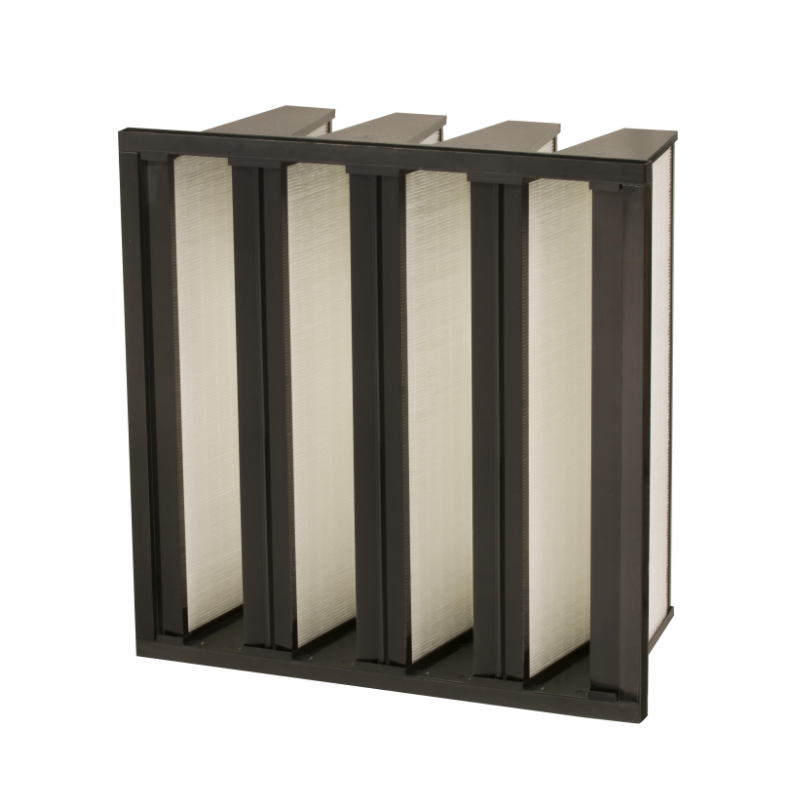
A bin vent is a small filter mounted on top of a silo, bin, or hopper. It treats the displaced air when powder is loaded, and it keeps dust from blowing out of the tank. The unit is often mistaken for a standard dust collector with a smaller housing. That comparison misses the design intent. A bin vent works at the source of the storage vessel, and its job is to return captured material to the same vessel whenever the process allows. A bottomless bin vent takes that logic one step further. The filter body has no hopper, no rotary valve, and no collection drawer. Dust dislodged from the filter falls straight back into the silo. The missing bottom is not a cost cut. It is the material path.
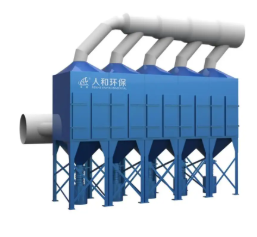
The airflow in a bottomless vent moves from the silo headspace up through the filter media and out to atmosphere or to a downstream duct. Dust is captured on the dirty side of the media. A pulse of compressed air flexes the media, the dust cake releases, and gravity does the rest. There is no screw conveyor, no bin, and no manual emptying step. That short path matters for three reasons. Product loss drops because the captured powder returns to inventory. Housekeeping load falls because there is no collection container to empty and no transfer point to spill. And the vessel stays closed, which reduces exposure during routine cleaning. The tradeoff is that the vent must be mounted vertically, with enough clear space below the filter for the released dust to fall without hitting a ledge or a sensor.
Direct return only works when the captured dust is the same material as the stored product and when the process accepts that material back. Good candidates include single-product silos, mineral fillers, plastic pellets with fines, and many dry bulk powders that are not hazardous or highly hygroscopic. The design becomes questionable in several cases:
Multi-product silos where cross contamination is a quality issue.
Toxic or sensitizing dusts where any return path needs containment review.
Sticky, damp, or caking powders that can bridge on the filter and fail to release.
Food or pharmaceutical streams where a return path needs a formal risk assessment.
A bottomless vent is not a universal answer. It is a simple answer for a narrow material path.
A mineral powder plant in southern China had a row of silos with conventional bin vents that discharged into small hoppers. The hoppers needed weekly manual emptying, and the powder was lost as waste. A retrofit replaced the hoppers with bottomless vent bodies. The pulse-cleaned dust now falls back into the silo. The manual emptying step disappeared, and the waste stream shrank. The retrofit also exposed a limitation. During the humid season, fine dust adhered to the filter pleats and the pressure drop climbed. The fix was insulation on the vent body and a shorter pulse interval. The direct return worked, but it needed moisture control, not just a missing bottom.
The table below compares a conventional vent with a bottomless design on the points that matter in procurement and maintenance.
| Item | Conventional bin vent | Bottomless bin vent | Check before selection |
|---|---|---|---|
| Collected dust | Drops into hopper | Falls back into silo | Same material accepted |
| Emptying | Manual or valve | None | Access for inspection |
| Product loss | Higher | Lower | Batch records |
| Cross contamination | Contained | Possible if product changes | Single-product service |
| Moisture risk | Lower in hopper | Higher at filter | Insulation and purge |
| Dust hazard | Collected dust handled | Dust returns to vessel | NFPA 652 DHA |
The table is not a ranking. It is a list of decisions. A bottomless vent needs a vertical fall path, a filter media that releases the cake cleanly, and a pulse system sized for the dust load. A pressure gauge is not optional. It is the first sign that the cake is not releasing. For combustible dust, NFPA 652 requires a dust hazard analysis, and the return path belongs in that review.
The first check is material identity. If the silo switches products, the return path can move fines from one batch into another. The second check is moisture. A vent on a cold silo can condense water on the filter and turn a free-flowing powder into a wall cake. The third check is airflow. The vent must handle the displacement air during filling without pressurizing the silo or pulling a vacuum during discharge. The fourth check is maintenance access. A bottomless body still needs a way to inspect the media, change filter elements, and verify the pulse valves. The fifth check is emissions. Returning dust to the silo does not remove the need to meet the local particulate limit. For projects that need consistent fabrication, batch-level component control, and a supply chain that can match silo interfaces, Renhe's production base and quality process can support the documentation and delivery side of the work.
 Hot News
2026-11-13
2026-11-13
2026-11-13
2026-11-13
2026-11-13
2026-11-12
Renhe focuses on air filter cartridge, gas turbine air filter, Pleated Filter Media, industrial dust, Our main products have been recognized as high-tech products in Jiangsu Province, famous trademarks in Wuxi City, and CE certification.
NO. 31 Xingyuan Road, Jiefang Industrial Park, Gushan Town, Jiangyin City, Jiangsu Province, China (214414)
Copyright © 2024 Jiangsu Renhe Environmental Equipments Co., Ltd Privacy Policy
 EN