When a buyer asks what emission levels a collector can achieve, the question is usually shorthand for something more practical: will the outlet air pass the local limit, and will it still pass a year later? A number quoted on its own answers neither. Emission performance is the result of filter media, sealing, cleaning and the way the system is operated. This article explains how a sintered plate dust collector reaches low discharge in a specific application, what a published figure actually referred to, and how to assess a claim. No generic emission guarantee is given, because the result depends on the dust and the operating envelope.
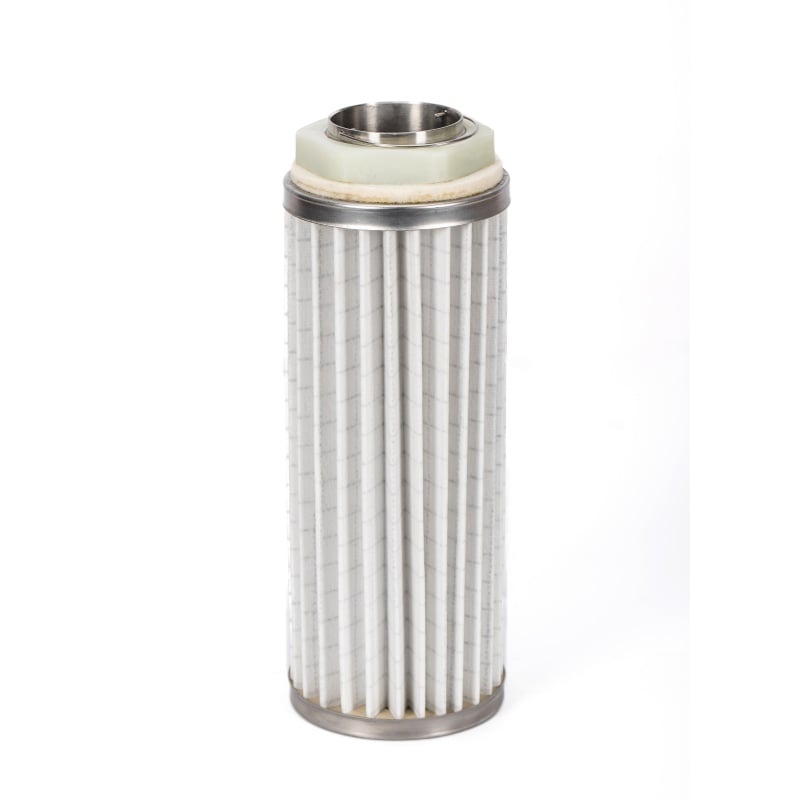
The element in a sintered plate dust collector is made from rigid polyethylene plates formed by a sintering process, often called plastic sintered plates. The plate is self-supporting and pleated, which the supplier describes as increasing filter area substantially over a flat surface. More area lowers face velocity, and lower face velocity makes it harder for fine particles to drive deep into the media. That is the structural reason the design can hold performance when dust is abrasive or cleaning is frequent. Plastic sintered plates are also washable, so the plant can restore the element instead of replacing it. For buyers studying emission levels, the point is that stable geometry keeps the filtration path consistent.
Filtration efficiency is a useful measure, but it is not the same as an emission guarantee. A high bench figure tells you how the media performs under controlled conditions. In the field, leakage at a seal or a damaged gasket can let unfiltered air into the clean plenum, and the outlet reading then reflects that bypass rather than the media. In a sintered plate dust collector, burst resistance and dimensional stability matter here: a plate that bows opens gaps. Buyers should ask how filtration efficiency was measured and how the housing keeps its seal over time. Ask what happens to filtration efficiency after the plate is washed and reinstalled, since a restored element should return to its earlier behaviour.
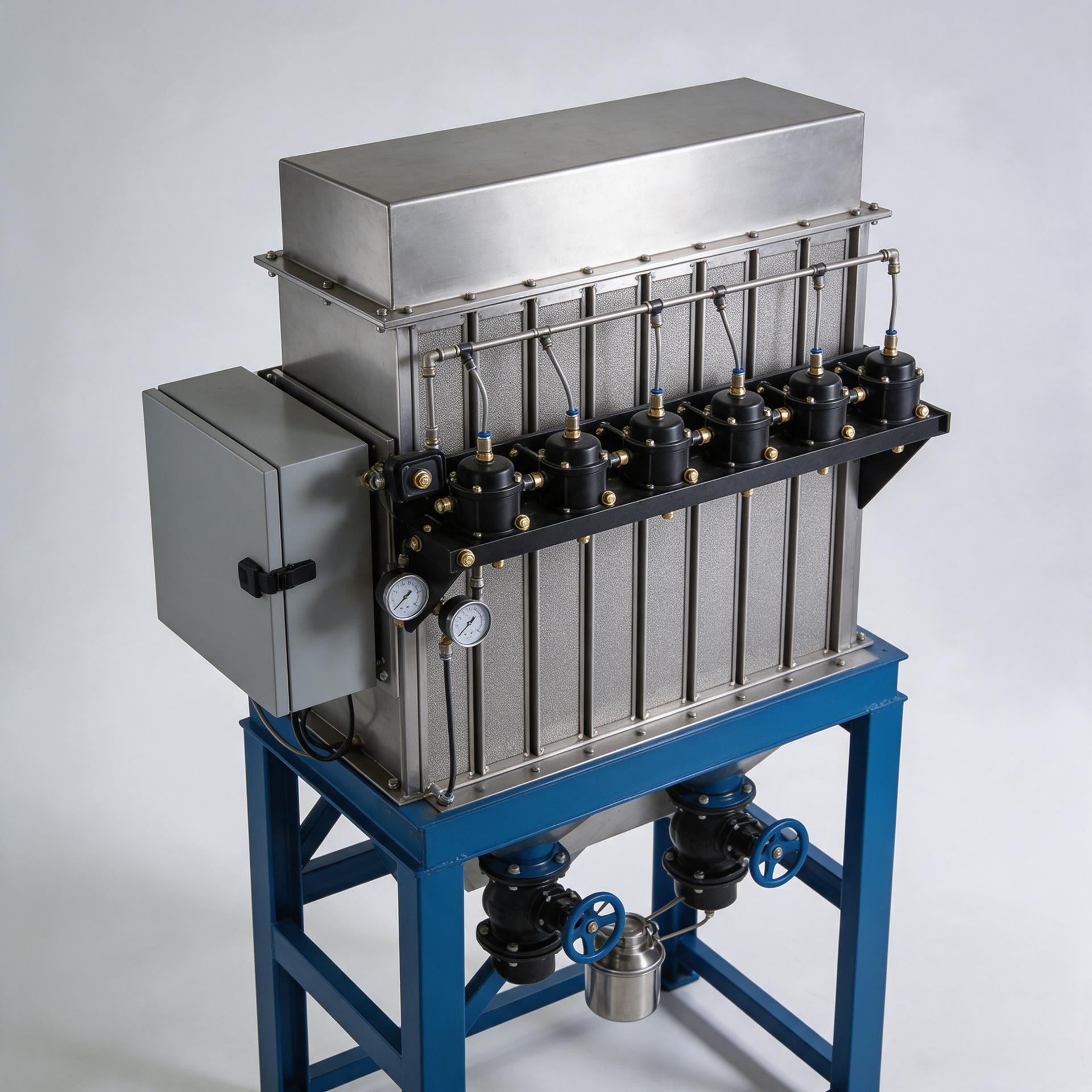
High precision is a system property, not a label on a plate. It combines a fine pore structure, generous filter area and a cleaning method that restores the surface without damaging it. In a sintered plate dust collector the cleaning can be a pulse, and the rigid plate tolerates the reversal without collapsing. High precision also depends on the downstream stage: where limits are tight, a second-stage high-efficiency unit is often placed after the main chamber. A supplier quoting high precision should describe the whole arrangement, not just an element rating. Without that context, a buyer may compare one component figure against a complete system and misread the likely emission levels.
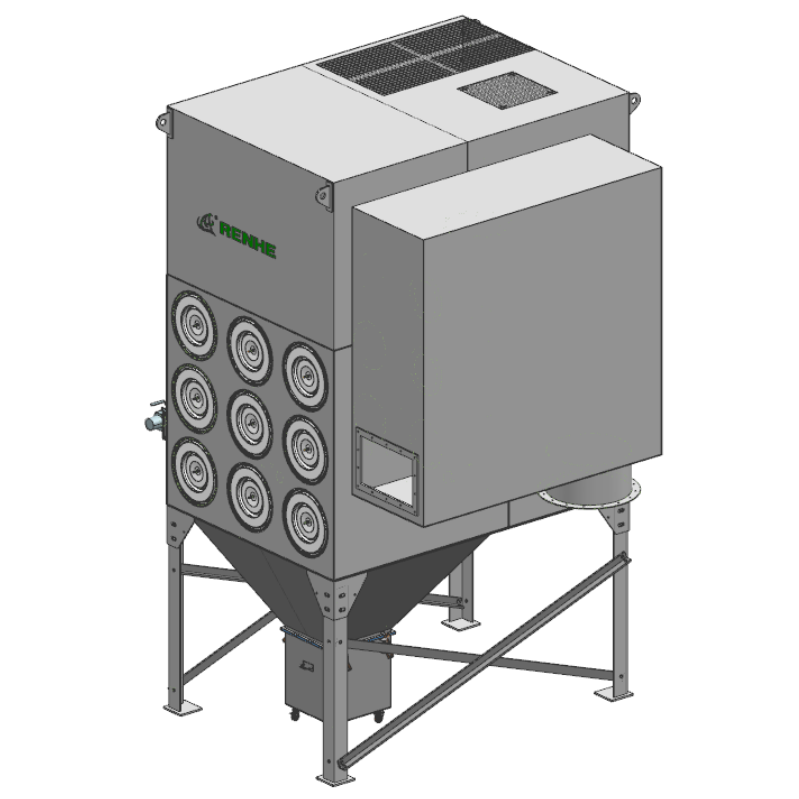
A knowledge-base case gives a concrete data point, provided its conditions are stated. In an automatic sand drenching dust control project for a foundry running a lost-wax casting line in a temperature-controlled hall, sand dust was drawn through a hood, carried in ducting to the filtration chamber, passed through a second-stage high-efficiency unit, and the cleaned air returned to the workshop. The reported capture rate was above ninety-eight percent, and the discharge concentration was below one milligram per cubic metre. Those figures describe that specific installation, that dust and that arrangement. They are not a universal rating for a sintered plate dust collector, and the discharge concentration should not be lifted from its context. The case shows what high precision can look like when collection, filtration and return air are designed together.
Verify an emission claim by asking about the measurement basis: what was sampled, over what period and under what production load. Ask whether reported emission levels came from the outlet of the complete system or from a component test. Request the test document rather than a summary. Check that housing and sealing design are part of the discussion, because a sintered plate dust collector can only deliver low discharge if bypass is controlled. Ask how discharge concentration is monitored in service and what action follows a rising trend. A vendor who explains the conditions behind a number is usually more reliable than one offering a single impressive figure.
State the dust, the airflow, the inlet load and the outlet limit you must meet. Ask how the supplier would configure a sintered plate dust collector and whether a second stage is assumed. Ask what evidence supports the stated filtration efficiency. Then request material guidance and review specifications before you accept an emission claim.
Question one: Can a sintered plate dust collector guarantee a fixed emission number?
Answer: Only for a defined application. Emission levels depend on dust, airflow, sealing and operating practice. Treat any figure as conditional and ask which case it came from.
Question two: What does the below one milligram figure actually refer to?
Answer: It refers to the discharge concentration measured in a specific foundry sand control case with a second-stage unit. It is not a general high precision rating for every installation.
Question three: Does better filtration efficiency mean lower emissions?
Answer: Not by itself. A sintered plate dust collector needs good seals and stable cleaning as well. Check the whole system before expecting the media rating to appear at the outlet.
 Hot News
2026-11-21
2026-11-21
2026-11-21
2026-11-21
2026-11-21
2026-11-20
Renhe focuses on air filter cartridge, gas turbine air filter, Pleated Filter Media, industrial dust, Our main products have been recognized as high-tech products in Jiangsu Province, famous trademarks in Wuxi City, and CE certification.
NO. 31 Xingyuan Road, Jiefang Industrial Park, Gushan Town, Jiangyin City, Jiangsu Province, China (214414)
Copyright © 2024 Jiangsu Renhe Environmental Equipments Co., Ltd Privacy Policy
 EN