
 EN
EN
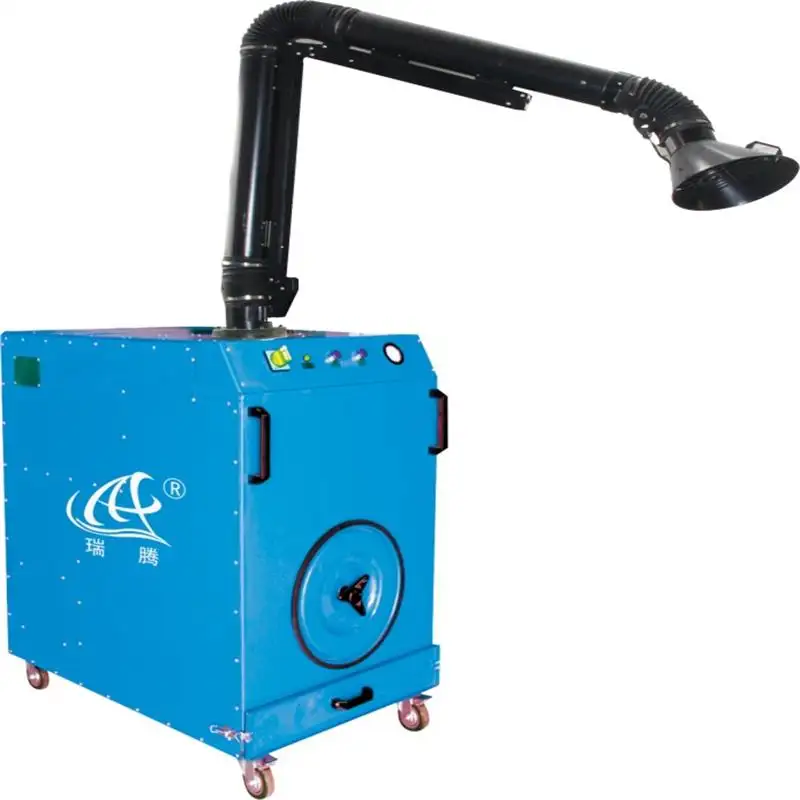
Core Cleaning Mechanism: How the Pulse Jet Filter Cartridge Removes Dust Without Disrupting Flow
Physics of the Compressed Air Pulse and Shockwave Propagation Through Pleated Media
The cleaning cycle begins with a rapid diaphragm valve releasing a burst of compressed air—typically 60 to 100 psi—into a blow pipe. This jet accelerates through a nozzle, generating a low-pressure zone via the Venturi effect that draws in a large volume of secondary, clean-side air from the collector housing. The resulting shockwave travels axially down the cartridge, instantly reversing airflow through the pleated media. This reversal forces the filter media to flex sharply, shattering the rigid dust cake on its outer surface. With pulse durations tightly controlled between 50 and 150 milliseconds, the system delivers high-energy cleaning without halting filtration. While one cartridge is pulsed, others continue operating—ensuring uninterrupted airflow and continuous production.
Dust Cake Dynamics: Formation, Adhesion, and Controlled Release During a Single Pulse
A dust cake is not waste—it’s a functional, high-efficiency pre-filter layer that captures fine particles the base media alone might miss. Its permeability governs differential pressure (dP) across the cartridge: as the cake thickens, resistance rises and fan energy consumption increases. The pulse jet’s purpose is not total removal, but controlled release. The shockwave must overcome interparticle and particle-to-media adhesion forces to shed the outer, denser portion of the cake—sending it cleanly into the hopper—while preserving a thin, residual layer. This retention prevents post-pulse emission spikes and allows rapid reformation of an effective filtration barrier, sustaining consistent outlet emissions and stable dP control.
Pulse Parameter Optimization for Long-Term Pulse Jet Filter Cartridge Stability
Balancing Pulse Pressure (60–100 psi) and Duration (50–150 ms) to Prevent Media Fatigue
Cartridge service life hinges on precise calibration of pulse pressure and duration. Excessive settings cause repetitive flexing and premature media fatigue; insufficient ones fail to dislodge the dust cake effectively. A 2023 maintenance study found cartridges operated at 70–90 psi with 100 ms pulses achieved 40% longer service life than those run at 100 psi and 150 ms.
| Pressure Range (psi) | Typical Application | Recommended Pulse Duration (ms) |
|---|---|---|
| 60–70 | Light dust, sensitive media | 50–80 |
| 70–90 | Standard industrial | 80–120 |
| 90–100 | Heavy dust, high load | 100–150 |
Pulse duration must stay within 50–150 ms: below 50 ms risks inadequate shockwave formation; above 150 ms wastes compressed air and raises fiber fatigue risk. Modern systems integrate on-demand pulsing with real-time differential pressure feedback to dynamically adjust parameters—ensuring uniform shockwave transmission through the pleated media without permanent deformation. Consistent dP monitoring thus balances cleaning efficacy, energy use, and long-term stability.
Consequences of Under-Pulsing and Over-Pulsing on Differential Pressure Drift and Cycle Consistency
Under-pulsing leaves excess dust cake, causing gradual dP rise, reduced airflow, and increased fan load—often triggering unnecessary additional pulses that accelerate wear. Over-pulsing delivers excessive energy, producing sharp, unstable dP fluctuations and inconsistent cycle timing. A 2022 industrial study showed that over-pulsing by just 20% more than recommended doubled compressed air use and raised filter replacement frequency by 30%. These pressure swings destabilize airflow and disrupt uniform dust cake renewal. When under-pulsing and reactive over-compensation alternate, the system falls into cyclic instability—characterized by oscillating dP and inefficient, unpredictable cleaning rhythms.
Structural Response of the Pulse Jet Filter Cartridge: Media Flexing, Shockwave Transmission, and Energy Dissipation
Axial and Radial Deformation Behavior in Pleated Cartridge Media During Pulse Events
During pulsing, pleated media undergoes complex axial and radial deformation driven by shockwave propagation. Peak pressure distribution along the cartridge length determines where flexing is most intense: axial stretching dominates near the open end, while radial movement concentrates at the closed end due to pressure wave reflection. Energy dissipates progressively through the media structure, with pleat geometry playing a decisive role in both deformation uniformity and dust release efficiency. Numerical modeling confirms that optimizing pleat design—alongside pulse intensity—enhances cleaning consistency and mitigates localized stress that contributes to media fatigue.
Critical Hardware Integration: Nozzle Design and Air Distribution for Uniform Pulse Delivery Across the Cartridge Array
Nozzle Geometry, Alignment, and Spacing Effects on Jet Penetration Depth and Cleaning Uniformity
Uniform cleaning across the cartridge array depends entirely on precision-engineered nozzle integration. Converging-diverging nozzles accelerate compressed air to supersonic speeds, significantly boosting induced secondary airflow and deepening jet penetration into the cartridge throat. This counters natural pressure decay along the manifold, ensuring even cartridges at the farthest positions receive full cleaning energy. Alignment must be exact: any misalignment between nozzle centerline and cartridge opening creates asymmetric air distribution—leading to uneven flexing, one-sided media fatigue, and dust compaction on the opposite side. Spacing between nozzle and cartridge face is equally critical: too large a gap erodes jet momentum before reaching the pleats; too small a gap restricts secondary airflow induction. Optimizing these three variables—geometry, alignment, and spacing—is essential to stabilizing the operating differential pressure across the entire pulse jet filter cartridge array.
FAQ
What is the purpose of the compressed air pulse in a pulse jet filter cartridge?
The compressed air pulse initiates a shockwave that reverses airflow through the filter media, dislodging dust while ensuring continuous filtration without stopping the operation.
Why isn’t the entire dust cake removed during a cleaning pulse?
The outer layer of the dust cake is shed during each cleaning pulse, while a thin residual layer is retained to act as a high-efficiency pre-filter, preventing post-pulse emission spikes and ensuring stable differential pressure.
How does pulse duration and pressure affect the lifespan of the cartridge?
Optimal pulse parameters minimize repetitive flexing and media fatigue. Settings that are too high or too low can reduce the cartridge’s service life and lead to inefficiencies.
What are the consequences of under-pulsing and over-pulsing?
Under-pulsing causes excess dust build-up, while over-pulsing wastes compressed air and destabilizes airflow. Both can lead to inefficiencies and hardware wear.
How does nozzle design impact cleaning efficiency?
Nozzle geometry, alignment, and spacing ensure even distribution of air pulses, maximizing jet penetration depth, cleaning uniformity, and preventing uneven wear on the cartridge media.
Table of Contents
- Core Cleaning Mechanism: How the Pulse Jet Filter Cartridge Removes Dust Without Disrupting Flow
- Pulse Parameter Optimization for Long-Term Pulse Jet Filter Cartridge Stability
- Structural Response of the Pulse Jet Filter Cartridge: Media Flexing, Shockwave Transmission, and Energy Dissipation
- Critical Hardware Integration: Nozzle Design and Air Distribution for Uniform Pulse Delivery Across the Cartridge Array
-
FAQ
- What is the purpose of the compressed air pulse in a pulse jet filter cartridge?
- Why isn’t the entire dust cake removed during a cleaning pulse?
- How does pulse duration and pressure affect the lifespan of the cartridge?
- What are the consequences of under-pulsing and over-pulsing?
- How does nozzle design impact cleaning efficiency?