
 EN
EN
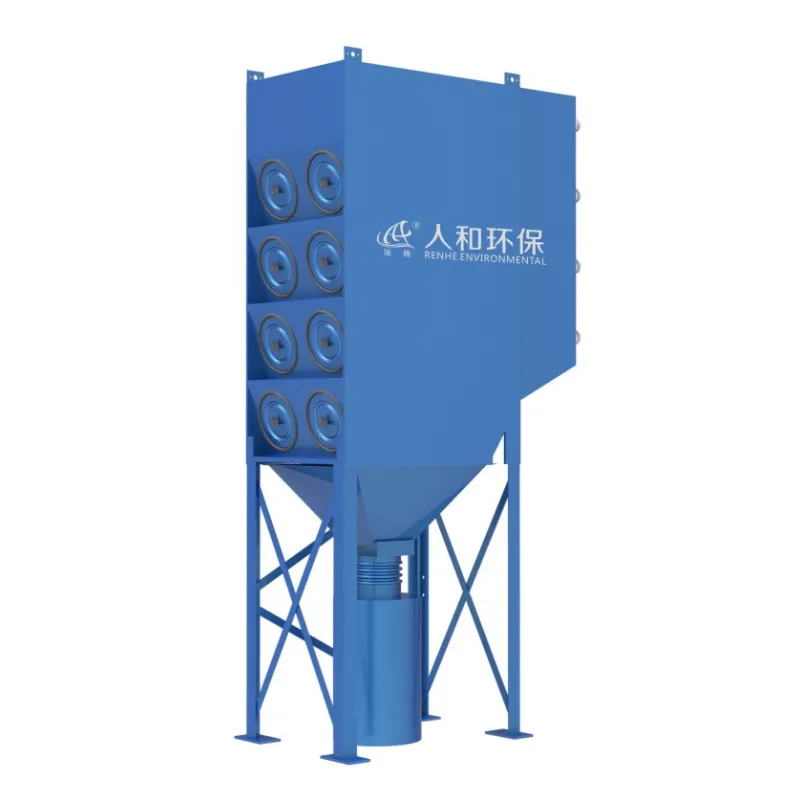
Pleated Filter Cartridge Geometry and Turbulence Reduction
Pleat Depth, Spacing, and Angle: Optimizing Laminar Flow Pathways
The physical dimensions of a pleated filter cartridge directly shape airflow behavior in dust collection pipelines. Pleat depth, spacing, and angle collectively determine whether flow remains smooth and laminar—or becomes turbulent, increasing air resistance. Excessively deep pleats with narrow gaps constrict airflow, creating velocity spikes and recirculation zones that waste energy. Wider spacing reduces turbulence but sacrifices filtration area, requiring careful balance. A shallow, acute pleat angle helps guide dust-laden air gently into the media, promoting laminar pathways and lowering pressure drop. As Li et al. (2019) demonstrated, even minor adjustments to these geometric parameters significantly influence both filtration efficiency and cleaning performance—confirming that pleat geometry is not merely structural but functional. Optimized design transforms the cartridge from a passive barrier into an active contributor to system efficiency, enabling air to move through with minimal resistance and reducing fan energy demand.
Structural Rigidity and Uniform Pleat Integrity Under High-Velocity Dust Flow
Long-term low air resistance depends on the cartridge’s ability to maintain its designed geometry under dynamic operating conditions. High-velocity dust flow subjects pleats to sustained dynamic pressure, risking deformation, collapse, or flutter. Such distortion disrupts uniform pleat spacing—introducing irregular flow channels that trigger turbulence and elevate pressure drop over time. Structural rigidity ensures pleats remain straight and evenly spaced, even at peak air volumes. As Kim and Lee (2019) observed, loss of pleat integrity directly degrades effective filtration area during operation. A rigid, well-supported pleat pack preserves intended airflow pathways and prevents the sharp resistance rise often seen after filter break-in. Uniform pleat integrity also promotes consistent dust loading across the surface—avoiding localized blinding that forces air through narrowed paths at higher velocities. In demanding industrial settings, this robustness sustains low air resistance throughout service life, protecting the entire dust collection pipeline from unnecessary energy consumption.
Pleated Filter Cartridge Surface Area Expansion and Air-to-Cloth Ratio Optimization
3×–5× Media Surface Gain: Direct Impact on Effective Airflow Resistance
The core advantage of pleated filter cartridges lies in their ability to multiply filtration surface area without enlarging housing dimensions. Precise pleating delivers 3× to 5× more surface area than a flat-sheet filter of identical footprint—directly lowering the air-to-cloth ratio (filtration velocity), the primary lever for reducing airflow resistance.
| Filter Type | Effective Surface Area | Air-to-Cloth Ratio (at 2.0 m³/s) | Typical Initial ΔP at 2.0 m/s |
|---|---|---|---|
| Flat-sheet bag filter | 1.0 m² | 2.0 m/min | 600 Pa |
| Pleated filter cartridge | 4.0 m² | 0.5 m/min | 180 Pa |
Table: Surface area expansion from pleating cuts air-to-cloth ratio by 75%, dropping initial pressure drop by ~70% (ASHRAE, 2022).
Darcy’s law confirms that, at constant flow rate, pressure drop is inversely proportional to filtration area. The 4× surface area gain proportionally reduces face velocity—shifting operation deeper into the laminar flow regime and cutting energy losses from turbulent dissipation. Bench testing consistently shows that this surface expansion lowers initial airflow resistance by 30–60% compared to traditional bag filters, translating directly to reduced fan energy use and more stable system operation.
Pleated Filter Cartridge Pressure Drop Performance Across Operational Life
ASHRAE TC 5.3 Bench Test Data: Sustained Low ΔP vs. Flat-Sheet Baselines
ASHRAE TC 5.3 standardized bench tests confirm that pleated filter cartridges deliver significantly lower differential pressure (ΔP) than flat-sheet media across their full service life. Controlled dust-loading trials show pleated designs achieve a 30–40% reduction in airflow resistance over the entire loading cycle.
| Stage | Pleated Cartridge ΔP (Pa) | Flat-Sheet ΔP (Pa) |
|---|---|---|
| Initial | 120 | 180 |
| After 500 hours | 250 | 400 |
| Terminal | 400 | 700 |
This performance stems from the expanded surface area’s effect on face velocity: lower velocity reduces energy required to drive air through the media, sustaining a lower baseline ΔP and delaying the point at which pressure rise triggers cleaning cycles or fan ramp-up. For facilities targeting ventilation energy savings, this sustained low-resistance operation translates directly into lower operational expenditure and more predictable system pressures.
Dust Loading Dynamics: Why Pleated Cartridges Maintain Lower Air Resistance Longer
Pleated cartridges resist rapid pressure rise due to how dust distributes across their expanded surface. With 3–5 times more area than an equivalent flat-sheet filter, incoming dust spreads over a larger region—reducing mass per unit area and slowing restrictive dust cake formation. Additionally, the open pleat channels promote uniform flow distribution, preventing the localized blinding common in flat media. As a result, the incremental ΔP increase per gram of loaded dust is markedly lower. Even after extended operation, terminal resistance remains substantially below that of flat-sheet alternatives—often doubling service life before reaching maximum allowable pressure drop. This benefit is especially pronounced with fine, cohesive dusts, where pleat spacing avoids rapid bridging that chokes flat media. The net effect is consistent, low air resistance across the full duty cycle—minimizing fan energy use and change-out downtime.
Real-World Validation: Pleated Filter Cartridge Efficiency in Industrial Dust Pipelines
Cement Plant Retrofit Case Study: 37% Static Pressure Reduction and Energy Savings
A cement plant’s central dust collection pipeline struggled with chronically high air resistance, forcing fans to operate at elevated power to sustain required airflow. During a 2022 overhaul, flat-sheet bag filters were replaced with pleated filter cartridges. The expanded media area immediately reduced static pressure drop by 37%—from 1,200 Pa to 756 Pa. This cut fan energy draw by 22%, delivering annual electricity savings of $48,000. Crucially, the pleated geometry maintained uniform dust cake development across cleaning cycles—preserving the lower pressure drop long-term. Twelve months of monitoring confirmed no compromise in filtration performance: stack emissions remained well within permit limits. The retrofit demonstrates how upgrading to pleated filter cartridges delivers immediate energy savings and sustained operational reliability—even in high-dust, high-demand industrial environments.
FAQ
What is the main function of pleated filter cartridges?
Pleated filter cartridges are designed to improve filtration efficiency and reduce energy consumption by increasing surface area for airflow, thereby maintaining low resistance and optimal performance in industrial applications.
How do pleated filter cartridges impact pressure drop?
By expanding the filtration surface area, pleated filter cartridges reduce the air-to-cloth ratio, which significantly lowers the initial and long-term pressure drop during operation.
Can pleated filter cartridges improve energy efficiency?
Yes, pleated filter cartridges reduce energy consumption by maintaining laminar airflow, reducing turbulence, and lowering fan energy demand, which is crucial in industrial systems.
Why is maintaining structural rigidity important for these cartridges?
Structural rigidity ensures the pleats remain intact under high-velocity airflow, preventing deformation that could lead to turbulence, increased resistance, and uneven dust distribution.
What were the results of the cement plant retrofit case study?
The retrofit of flat-sheet bag filters with pleated filter cartridges resulted in a 37% reduction in static pressure and a 22% decrease in fan energy consumption, saving the plant $48,000 annually.
Table of Contents
- Pleated Filter Cartridge Geometry and Turbulence Reduction
- Pleated Filter Cartridge Surface Area Expansion and Air-to-Cloth Ratio Optimization
- Pleated Filter Cartridge Pressure Drop Performance Across Operational Life
- Real-World Validation: Pleated Filter Cartridge Efficiency in Industrial Dust Pipelines
-
FAQ
- What is the main function of pleated filter cartridges?
- How do pleated filter cartridges impact pressure drop?
- Can pleated filter cartridges improve energy efficiency?
- Why is maintaining structural rigidity important for these cartridges?
- What were the results of the cement plant retrofit case study?