
 EN
EN
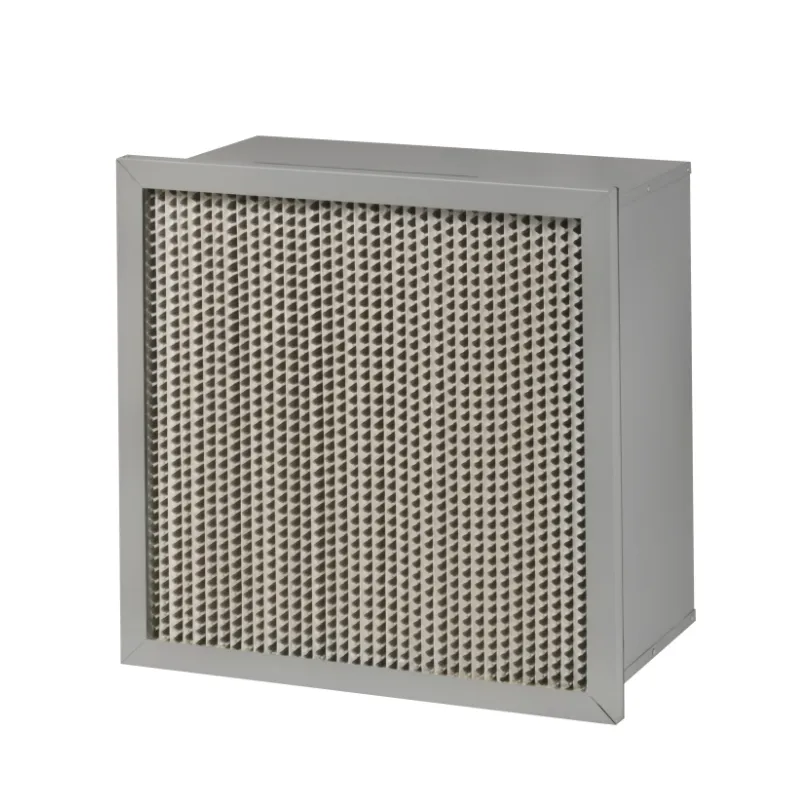
How Nano Cartridge Filters Enable Advanced Contaminant Removal
Mechanism: Size-selective nanofiltration and surface-functionalized capture of microplastics, PFAS, and pathogens
Nano cartridge filters achieve advanced contaminant removal through a dual mechanism: size-selective nanofiltration and surface-functionalized capture. The filter media—typically composed of nanofibers under 500 nm in diameter—forms a highly uniform pore structure with an effective cutoff near 0.005 µm. This physically excludes microplastics, bacteria, and protozoan cysts. Simultaneously, the nanofiber surface is engineered with functional groups such as amine or carboxyl ligands that electrostatically attract and chemically bind dissolved contaminants like per- and polyfluoroalkyl substances (PFAS). In a 2022 Water Research Foundation study, amine-functionalized polyacrylonitrile nanofiber cartridges removed over 99.5% of PFAS from groundwater—outperforming conventional granular activated carbon. For viruses, which often evade mechanical filtration alone, the combination of ultrafine pores and tailored surface charge significantly enhances capture. Validated in field trials across municipal water reuse systems, this integrated approach enables a single nano cartridge to serve as a multi-contaminant barrier—eliminating the need for cascaded treatment stages.
Performance benchmark: 99.7% removal efficiency in NEWater pilot deployments and municipal reuse applications
Singapore’s NEWater pilot program (2023) confirmed nano cartridge filters consistently deliver 99.7% removal of microplastics and PFAS—meeting the nation’s rigorous indirect potable reuse standards. When deployed as a direct replacement for conventional ultrafiltration, the nanofiber-based cartridge achieved treated water turbidity below 0.1 NTU and PFAS concentrations under 0.05 ng/L, well within the U.S. EPA’s health advisory limits. Similar performance has been observed in municipal reuse facilities across California and Arizona, where the same technology reduced total organic carbon by 67% and haloacetic acid formation potential by 82% in tertiary effluent. This high efficiency stems from the filter’s uniform sub-micron pore distribution and strong affinity of its functionalized surface for trace contaminants. As a result, the technology is now being scaled into full-size reuse plants—delivering a reliable, single-step barrier against emerging contaminants previously requiring multiple treatment layers.
Integration of Nano Cartridge Filters into Zero Liquid Discharge and Industrial Wastewater Systems
Hybrid design advantages: TiO₂-nanofiber membranes with electrostatic enhancement for heavy metal recovery (Cu²⁺, Cr⁶⁺)
Modern nano cartridge filters leverage a hybrid architecture that integrates a polymer-based size-exclusion matrix with a functionalized titanium dioxide (TiO₂) nanofiber layer. Unlike passive sieves, this design actively targets ionic pollutants via electrostatic enhancement. The TiO₂ surface—when ligand-modified—develops a strong positive charge ideal for capturing negatively charged oxyanions such as hexavalent chromium (Cr⁶⁺). Conversely, the filter’s negatively charged backbone efficiently adsorbs cationic metals like copper (Cu²⁺) at high flux. This dual-action mechanism supports selective recovery of valuable metals from complex industrial streams. A 2023 pilot study by a leading manufacturer demonstrated concentration of Cu²⁺ from a dilute 5 mg/L feed to a 2,000 mg/L retentate—a volumetric concentration factor of 400—enabling viable downstream metal recycling.
Operational impact: Enabling compliance with <0.05 mg/L effluent limits and reducing brine volume in ZLD trains
Integrating nano cartridge filters into Zero Liquid Discharge (ZLD) and Minimal Liquid Discharge (MLD) systems delivers measurable operational and economic advantages. Their ability to consistently reduce heavy metal effluent concentrations below 0.05 mg/L helps facilities meet stringent global discharge thresholds before thermal evaporation—the most energy-intensive stage in ZLD. By removing these contaminants upstream, the filters protect downstream reverse osmosis (RO) and brine concentrator membranes from fouling and scaling. This process intensification not only ensures regulatory compliance but also cuts final brine volume by over 30% in typical semiconductor fabrication plants—directly lowering energy demand and operating costs across the entire treatment train.
Regulatory Drivers and Standardization Challenges for Nano Cartridge Filter Adoption
Policy tailwinds: EPA’s 2024 Emerging Contaminants Rule and EU’s PFAS restriction proposal accelerating demand
Regulatory momentum is rapidly accelerating adoption of nano cartridge filters. The U.S. EPA’s 2024 Emerging Contaminants Rule establishes near-zero enforceable limits for PFAS in drinking water, while the EU’s proposed PFAS restriction targets thousands of compounds across industrial and consumer sectors. These directives place immediate compliance pressure on utilities and manufacturers—many of whom find conventional granular activated carbon or reverse osmosis systems unable to reliably meet new sub-ppt (parts per trillion) thresholds. Nano cartridge filters, with their precisely tuned pore geometry and functionalized surfaces, remove both short- and long-chain PFAS at 99.7% efficiency without sacrificing throughput—making them a cost-effective retrofit for legacy treatment trains. Extended producer responsibility mandates and public disclosure requirements further incentivize early adoption of demonstrably effective nanofiltration technologies ahead of enforcement deadlines.
Critical gap: Absence of ISO/ASTM standards for nano cartridge filter longevity, fouling resistance, and nanomaterial leaching verification
Despite strong regulatory drivers, a critical barrier remains: no ISO or ASTM standards exist to evaluate nano cartridge filter longevity, fouling resistance, or nanomaterial leaching. Without standardized testing protocols for service life across variable water chemistries, operators cannot reliably compare products or forecast replacement intervals—leading to unplanned downtime or premature disposal. Fouling resistance—essential for maintaining low operating pressure and energy use—is currently assessed using proprietary methods, rendering cross-vendor benchmarking impractical. Even more urgent is the lack of consensus leaching tests for engineered nanoparticles (e.g., titanium dioxide, silver), which could be released during backwashing or aging. Regulators remain cautious about endorsing nano-enabled filtration without verifiable safety data—creating a paradox: the technology is urgently needed to meet health-based contaminant limits, yet the absence of standardized quality assurance frameworks impedes broad deployment in municipal and food-grade applications. A coordinated effort among filter manufacturers, research institutions, and standards bodies is essential to develop performance classifications and third-party certification criteria that will unlock the technology’s full market potential.
FAQ Section
What are nano cartridge filters?
Nano cartridge filters are advanced filtration systems that leverage nanofiber technology for contaminant removal, including microplastics, pathogens, PFAS, and heavy metals.
How effective are nano cartridge filters in removing PFAS?
They achieve over 99.7% removal efficiency of PFAS, making them highly effective and surpassing conventional methods such as granular activated carbon.
Can nano cartridge filters be used in industrial applications?
Yes, they are widely used in industrial systems, such as Zero Liquid Discharge setups, for heavy metal recovery and reducing brine volume.
Are there standards for nano cartridge filter performance?
Currently, there are no ISO or ASTM standards for nano cartridge filter longevity, fouling resistance, or safety verification, which poses challenges for adoption.
How do nano cartridge filters benefit sustainable water treatment?
They act as a single-step barrier against contaminants, enhancing efficiency, reducing energy demand, and contributing to compliance with strict discharge regulations in water treatment processes.