
 EN
EN
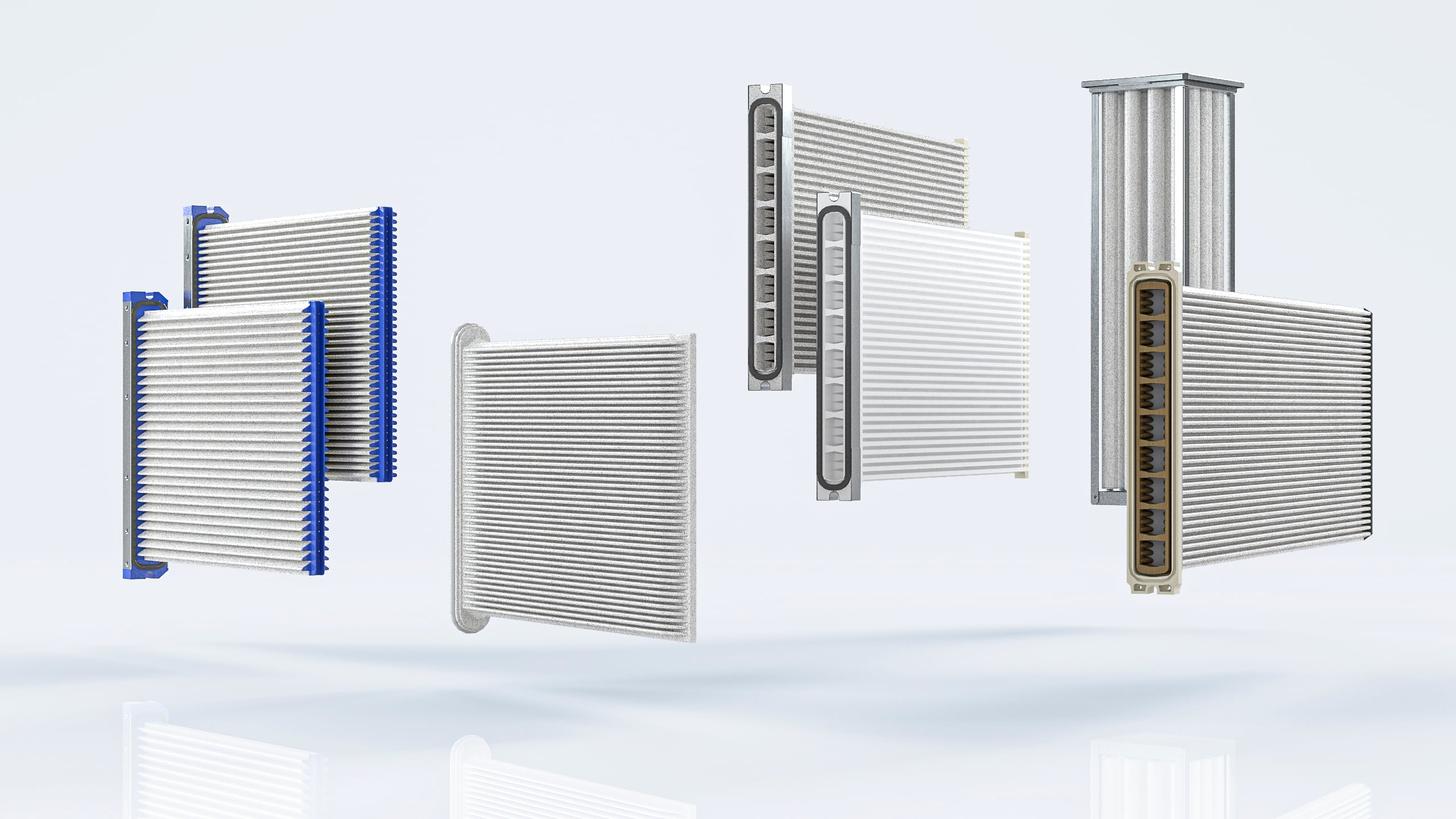
Core Mechanism: How Pleated Filter Cartridge Geometry Lowers Air Flow Resistance
From Flat to Pleated: Surface Area Expansion (3×–5×) and Its Impact on Air-to-Cloth Ratio
Traditional flat panel filters force the entire airstream through minimal media area, resulting in a high air-to-cloth ratio that directly increases resistance. Pleated filter cartridges overcome this by folding the media into precise, accordion-like ridges—expanding effective filtration surface area by 3 to 5 times within the same housing footprint. This expansion slashes the air-to-cloth ratio, distributing airflow across a far larger capture surface and reducing localized velocity at the media interface. The result is lower initial pressure drop, slower particle impaction, and more uniform dust loading deep within the pleats. Over time, this delays face plugging and yields a flatter, more predictable resistance curve—transforming a bottleneck-prone barrier into a high-capacity, low-resistance pathway.
Effective Filtration Velocity Reduction: Why 4× Surface Area Yields ~75% Lower Velocity and ~60% ΔP Drop
Filtration velocity—the speed at which air passes through the media—is inversely proportional to available surface area. Quadrupling the area reduces velocity to one-quarter of its original value (a 75% reduction). Since pressure drop (ΔP) scales approximately with the square of velocity, this geometric shift delivers a real-world ΔP reduction of ~60%, moderated by practical factors like pleat tip losses, media compressibility, and dust cake formation. Critically, the lower velocity also shifts dominant particle capture from energy-intensive inertial impaction toward gentler mechanisms—interception and diffusion—reducing fan energy demand and extending time-to-replacement. The pleated filter cartridge thus lowers resistance not by changing the media chemistry, but by re-engineering the flow path to sustain efficient, low-stress airflow.
Optimized Pleat Architecture for Laminar Flow and Turbulence Control
Uniform Pleat Spacing, Radius, and Depth: Engineering Consistent Flow Pathways
Aerodynamic performance hinges on precision—not just total surface area. Uniform pleat spacing, controlled radius (typically 2–3× media thickness), and consistent depth collectively engineer stable, laminar flow channels. Even spacing prevents localized acceleration and boundary layer separation; a smooth entry radius minimizes contraction losses at the inlet; and uniform depth avoids preferential flow paths that trigger turbulence. Together, these features create parallel, low-Reynolds-number conduits where airflow remains attached and ordered. The outcome is a flattened pressure-velocity profile across the full element—suppressing chaotic mixing, reducing energy waste, and delivering stable, low-resistance operation that cuts fan energy use and extends service life.
Long-Term ΔP Stability: How Pleated Filter Cartridge Extends Service Life and Delays Clogging Surges
Pleated geometry fundamentally reshapes the ΔP lifecycle. Unlike flat or bag filters—where dust rapidly concentrates on limited surface area—the expanded, distributed media footprint spreads particulate load evenly across pleats. This results in gradual, linear ΔP rise rather than exponential surges, delaying terminal pressure drop by 2–3× compared to depth-style alternatives. The open-flow core and uniform pleat architecture further prevent premature blinding, maintaining a wide, stable operating window for most of the service cycle. The net effect is fewer maintenance interventions, reduced energy penalties from high-differential operation, and significantly less unplanned downtime.
| Parameter | Pleated Filter Cartridge | Bag/Depth Filter |
|---|---|---|
| Surface area available | 3×–5× larger, spreading particulate load widely | Limited, prone to rapid surface blinding |
| Dust loading pattern | Gradual, distributed across pleats | Concentrated, quick cake‑layer formation |
| ΔP increase rate | Slow, near‑linear until dust‑holding capacity is reached | Rapid, often exponential after initial loading |
| Typical service life extension | 2×–3× longer under identical inlet conditions | Baseline, frequent change‑outs required |
Real-World Validation: ASHRAE RP-1672 and ISO 16890 Data Supporting Pleated Filter Cartridge Efficiency Gains
Independent testing under ASHRAE RP-1672 and ISO 16890 confirms the pleated filter cartridge’s measurable resistance reduction in industrial applications. RP-1672 data shows that expanded surface area directly lowers face velocity and initial pressure drop—key drivers of fan energy savings. ISO 16890 particle-size efficiency ratings further validate performance: well-designed pleated cartridges achieve high ePM₁ and ePM₂.₅ efficiency without airflow compromise, thanks to uniform pleat geometry sustaining low-drag flow. Field deployments consistently demonstrate extended ΔP stability, lower total energy consumption, and longer service intervals versus flat-panel or bag filters. By meeting MERV-A (ASHRAE 52.2) and ePM regulatory benchmarks, the pleated design delivers quantifiable reliability, regulatory compliance, and lower total cost of ownership.
FAQ Section
What is the main advantage of pleated filter cartridges over flat panel filters?
The main advantage is their expanded filtration surface area, which lowers air-to-cloth ratios and reduces airflow resistance, resulting in improved efficiency and extended service life.
How does pleated design reduce filtration velocity?
By increasing the surface area, pleated filter cartridges reduce the speed at which air moves through the media, leading to lower pressure drop and energy requirements.
Why is uniform pleat spacing important?
Uniform pleat spacing ensures stable laminar airflow, minimizes turbulence, and delivers consistent low-resistance operations.
What data supports the effectiveness of pleated filter cartridges?
Independent testing under ASHRAE RP-1672 and ISO 16890 confirms reduced resistance, improved particle-size efficiency, and extended service intervals.
Table of Contents
- Core Mechanism: How Pleated Filter Cartridge Geometry Lowers Air Flow Resistance
- Optimized Pleat Architecture for Laminar Flow and Turbulence Control
- Long-Term ΔP Stability: How Pleated Filter Cartridge Extends Service Life and Delays Clogging Surges
- Real-World Validation: ASHRAE RP-1672 and ISO 16890 Data Supporting Pleated Filter Cartridge Efficiency Gains
- FAQ Section