
 EN
EN
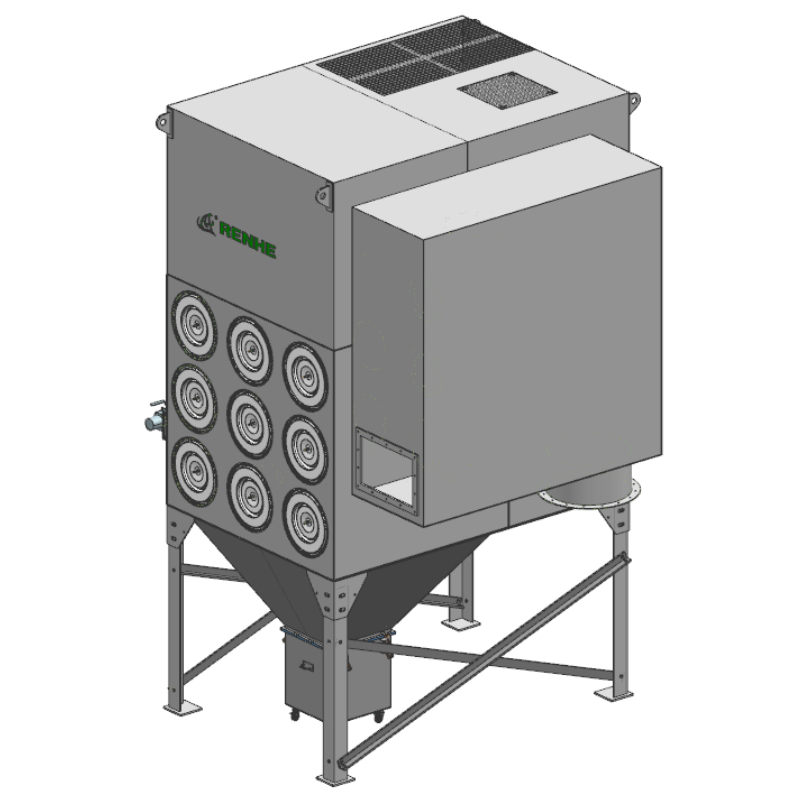
Energy Efficiency Gains from Modern Industrial Dust Collector Design
Modern industrial dust collector systems increasingly prioritize energy performance as a direct path to lower carbon footprints and operational costs. Two design advances—variable frequency drive (VFD) integration with optimized airflow paths, and the precise balancing of filtration efficiency against pressure drop—stand out for their ability to slash fan power demand while maintaining strict emission control. Together, these measures enable facilities to cut dust collection energy use substantially, reinforcing the role of an industrial dust collector in low-carbon industrial development.
VFD-integrated fan systems and optimized airflow paths cut energy use by up to 40%
Variable frequency drives allow the main fan motor to modulate speed according to real-time dust load, rather than running at a fixed, maximum capacity. When production slows or fewer workstations are active, the VFD reduces revolutions per minute—directly lowering energy consumption. Field audits show that combining VFDs with engineered airflow paths—such as smooth duct transitions, properly sized hoods, and streamlined inlet cones—can reduce total system energy use by up to 40%. Computational fluid dynamics modeling helps eliminate sharp bends and obstructions that waste static pressure, while high-efficiency backward-curved impellers and IE4/IE5 premium-efficiency motors further amplify savings. The net effect is a dust collector that automatically scales power draw to demand, preventing unnecessary carbon emissions from constant-speed operation.
Balancing filtration efficiency and pressure drop to minimize fan power demand
Every filter media imposes resistance to airflow, measured as differential pressure (dP). Tighter, higher-efficiency media often increase dP—forcing the fan to consume more electricity per unit of air cleaned. To break this trade-off, modern industrial dust collectors deploy high-performance media such as nanofiber, PTFE membrane, or spunbond polyester with surface filtration properties. These materials achieve 99.9% fine particulate capture while maintaining 20–40% lower initial pressure drop than conventional depth-loading filters. Coupled with optimal air-to-cloth ratios and on-demand pulse-jet cleaning, they stabilize dP over extended intervals—avoiding steep power surges caused by clogged filters. Fan laws confirm that a 1-inch water gauge reduction in static pressure saves ~4% of fan motor power. Thoughtful integration of filter area, cleaning strategy, and media selection typically trims fan energy demand by 5–15% without compromising regulatory compliance—making this balance foundational for verifiable carbon reduction.
Industrial Dust Collector Contributions to Scope 1 & 2 Emission Reduction
Recirculation strategies: Reducing outdoor exhaust and associated heating/cooling energy losses
Recirculating filtered air instead of exhausting it outdoors directly cuts Scope 1 and 2 emissions. Returning cleaned air to the facility preserves the energy already invested in heating or cooling, eliminating the need to condition large volumes of makeup air. The U.S. Department of Energy (2021) reports HVAC energy reductions of up to 40% in recirculating systems. In cold climates, this slashes natural gas use—and associated Scope 1 emissions—while summer cooling demand drops, reducing Scope 2 electricity consumption. Properly designed recirculation loops also stabilize indoor pressure and temperature, lowering auxiliary loads on fans and compressors. When paired with low-pressure-drop, high-efficiency filters, recirculation delivers rapid ROI—often under two years—making it a cornerstone of low-carbon industrial operations.
Lifecycle carbon impact of filter media: Reusable vs. disposable, and end-of-life handling
The choice of filter media in an industrial dust collector directly influences Scope 1 and 2 emissions across its lifecycle. Reusable filters—made from durable synthetic or metal materials—can be cleaned and reused for years; disposable filters require frequent replacement, generating recurring solid waste. End-of-life handling of disposables often involves incineration or landfilling, both of which risk on-site Scope 1 emissions if incinerated.
| Filter Type | Energy Impact (Scope 2) | Waste Handling (Scope 1) | Typical Replacement Frequency |
|---|---|---|---|
| Reusable | Requires cleaning energy (e.g., compressed air pulses) | Minimal waste; cleaned periodically | 3–5 years |
| Disposable | Lower direct cleaning energy, but frequent replacement logistics | High waste volume; may require on-site incineration | 3–6 months |
Reusable filters carry a higher initial carbon footprint but deliver lower total lifecycle emissions—especially when cleaning energy comes from low-carbon sources. Disposable filters generate recurring waste and associated emissions, whereas reusable units can be refurbished or recycled at end-of-life. Selecting the right media thus enables dual optimization: reduced energy use and minimized direct emissions—supporting both Scope 1 and 2 reduction goals.
Regulatory Alignment: How Industrial Dust Collector Compliance Supports National Low-Carbon Policies
Government mandates such as the U.S. Clean Air Act and the EU Industrial Emissions Directive now require particulate emissions below 5 mg/Nm³—compelling facilities to adopt high-efficiency dust collection. Beyond avoiding penalties, this regulatory alignment directly advances national decarbonization strategies. A compliant industrial dust collector enables safe recirculation of filtered air, slashing the energy required to heat or cool makeup air—a major Scope 2 emission source. By meeting stringent air quality standards, companies simultaneously reduce their carbon footprint and mitigate reputational and operational risks tied to non-compliance. This dual benefit transforms regulatory requirements into a practical lever for energy-conscious industrial design—turning compliance into a catalyst for sustainable operations.
Smart Industrial Dust Collector Systems for Data-Driven Carbon Optimization
IoT-enabled monitoring of differential pressure, airflow, and filter condition for predictive efficiency tuning
Networked industrial dust collector systems equipped with IoT sensors continuously track differential pressure, airflow rates, and filter integrity—providing real-time visibility into operational performance. This granular data powers predictive algorithms that adjust fan speed and cleaning cycles precisely to current dust loads, eliminating energy waste from fixed-interval operation. For example, initiating pulse-jet cleaning only when differential pressure crosses a defined threshold avoids unnecessary compressed-air pulses and associated energy cost. Field studies show such intelligent tuning reduces energy consumption by up to 25% while maintaining required filtration efficiency—delivering significant cuts in indirect carbon emissions tied to electricity use. Predictive maintenance alerts based on filter condition trends also prevent unplanned downtime, which often triggers emergency repairs with high embodied carbon. By shifting from reactive to proactive management, smart industrial dust collector systems optimize both operational expenditure and carbon footprint—making them essential for sustainable manufacturing.
FAQ
What are the benefits of using a VFD-integrated fan system in dust collectors?
VFD integration allows the fan motor to modulate speed based on real-time dust loads, reducing energy consumption by up to 40% compared to systems running at fixed speeds.
Why is balancing filtration efficiency and pressure drop important?
Higher filtration efficiency often increases pressure drop, requiring more fan power. Using advanced filter media minimizes this balance, reducing energy consumption without compromising particle capture rates.
What is the lifecycle impact difference between reusable and disposable filters?
Reusable filters have lower total lifecycle emissions and waste compared to disposable filters, despite their higher initial carbon footprint.
How does air recirculation reduce Scope 1 and Scope 2 emissions?
Recirculation preserves indoor heating/cooling energy, reducing the need for conditioning large volumes of fresh air and the related fuel or electricity consumption.
Table of Contents
- Energy Efficiency Gains from Modern Industrial Dust Collector Design
- Industrial Dust Collector Contributions to Scope 1 & 2 Emission Reduction
- Regulatory Alignment: How Industrial Dust Collector Compliance Supports National Low-Carbon Policies
- Smart Industrial Dust Collector Systems for Data-Driven Carbon Optimization
- FAQ