
 EN
EN
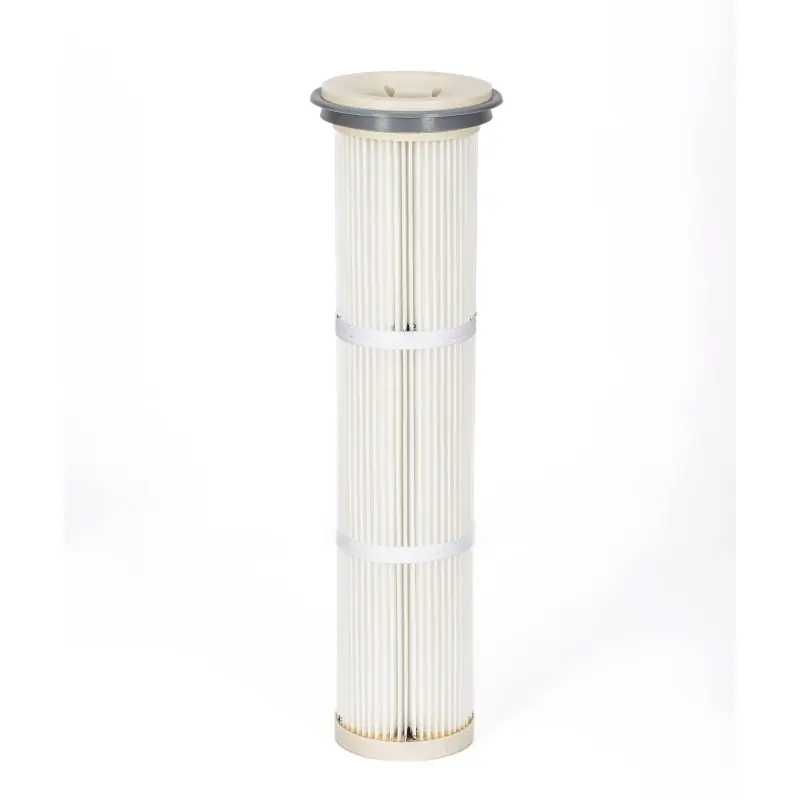
Why Gas Turbine Inlet Filters Are Critical for Compressor Blade Longevity
How airborne particulates cause erosive and corrosive degradation of compressor blades
Airborne contaminants degrade compressor blades through two interrelated mechanisms: erosion and corrosion. Erosion occurs when hard particles—such as silica dust, fly ash, or sand—impact blade surfaces at velocities exceeding 300 m/s. These micro-impacts roughen the airfoil profile, reducing aerodynamic efficiency and creating stress concentrations that accelerate fatigue. Corrosion is driven by hygroscopic salts and acidic aerosols; chlorides and sulfates adhere to blades, absorb ambient moisture, and initiate electrochemical pitting that can reduce material fatigue life by up to 40% (EPRI, 2021). Even sub-2.5 µm particles—often undetected by conventional filtration—settle in inner compressor stages and bake into tenacious deposits. This fouling narrows flow passages, raising heat rate by 2–3% and diminishing power output. The combined effect shortens blade replacement intervals and increases the risk of unplanned outages.
F9/H14 filtration efficiency directly extends blade life: Field evidence from leading manufacturers
Upgrading to high-efficiency inlet filtration delivers measurable improvements in blade longevity. Class F9 filters (EN 779) capture ≥95% of 0.4 µm particles, while H14 HEPA media achieve 99.995% removal at the most penetrating particle size. At a desert installation, a major turbine OEM found that switching to F9 final filters reduced blade erosion pits by 45% over two years—correlating to a 30% extension in service life. In a coastal plant, deployment of H14 filters eliminated chloride-induced pitting almost entirely: post-inspection after 16,000 operating hours revealed no measurable corrosion depth, compared to an average of 0.15 mm per year with standard filtration. These outcomes stem from the filters’ ability to block sub-micron salt aerosols and fine abrasive dust—contaminants that otherwise nucleate corrosion or mechanical wear. As a result, advanced filtration preserves isentropic efficiency and defers costly blade replacements.
Multi-Stage Gas Turbine Inlet Filters Combat Coastal and Industrial Contaminants
Salt mist, chloride aerosols, and fine particulates in harsh environments accelerate turbine degradation
Coastal and industrial sites expose gas turbine inlets to persistent, aggressive contaminants—including salt mist, chloride-laden aerosols, and fine abrasive dust. When these bypass single-stage filtration, they deposit on hot compressor blades and trigger erosion and hot corrosion. Salt particles as small as 2.5 µm can induce sulfidation at blade operating temperatures above 800°C, with studies documenting up to 5% efficiency loss within just 400 operating hours (Gas Turbine Institute, 2022). Moisture dramatically accelerates chloride-induced pitting, weakening blade surfaces and reducing fatigue margins. In industrial settings, mixed dusts containing silica and metallic oxides act as grinding agents, compounding profile wear. Without robust multi-stage protection, operators resort to frequent water washes or compressor cleanings—disrupting availability and increasing lifecycle costs. Left unmitigated, this degradation escalates rapidly, raising the likelihood of forced outages.
Coalescing pre-filters + nanofiber final media achieve 99.995% removal of sub-2.5µm chloride-laden aerosols
Effective defense against harsh-environment contaminants requires a multi-stage approach: coalescing pre-filters paired with high-efficiency nanofiber final media. The coalescing stage captures and drains fine mist and larger aerosol droplets before they saturate downstream layers—preserving the integrity and service life of the final filter. The nanofiber final stage leverages gradient-density fiber architecture to trap chloride-laden particles smaller than 2.5 µm with exceptional efficiency. Independent testing confirms consistent removal rates exceeding 99.995% for these aggressive aerosols (Filtration Performance Lab, 2023). By eliminating the vast majority of chloride precursors, the system significantly curbs hot corrosion potential. Field data from coastal power plants show that three-stage configurations with nanofiber final media extend blade service life by up to 40% and cut unplanned corrosion-related maintenance by half—delivering stable performance even under high humidity and heavy salt loading.
Self-Cleaning Gas Turbine Inlet Filters Stabilize Performance and Cut Maintenance Burden
Rapid pressure drop rise in conventional filters triggers bypass or forced shutdowns
Conventional static filters accumulate dust, salt, and hydrocarbon aerosols continuously—causing differential pressure to rise sharply. In high-particulate environments, pressure drop can triple within 72 hours. Once it exceeds the turbine’s safe operational limit, control logic opens bypass doors to prevent compressor stall. This admits unfiltered air, immediately exposing blades to erosion and fouling. In extreme cases, insufficient airflow triggers automatic unit trip. Self-cleaning inlet filters eliminate this failure cascade by maintaining a near-constant resistance curve—ensuring uninterrupted, filtered operation without bypass events.
Pulse-jet cleaning restores 92–96% efficiency and reduces unscheduled maintenance by up to 70%
Pulse-jet cleaning systems use short, high-velocity bursts of compressed air fired from the clean side of the filter to dislodge surface-loaded debris without interrupting turbine operation. The shock wave propagates through the media, fracturing the dust cake so it falls into a collection hopper. Field data from multiple utility operators confirm recovery rates of 92–96% of virgin filter efficiency—evidenced by differential pressure returning to near-new levels (EPRI, 2022). This capability extends filter service intervals from weeks to several years. As a result, unscheduled maintenance—including forced filter changes and turbine washes—declines by up to 70%. Continuous, in-service cleaning stabilizes power output and lowers total cost of ownership.
Smart Monitoring Enables Predictive Maintenance for Gas Turbine Inlet Filters
Filter degradation is invisible until performance collapse—masking early failure signals
Gas turbine inlet filters are mission-critical yet operate largely “out of sight.” Their degradation often remains undetected until sudden performance collapse—triggering bypass, efficiency loss, or forced shutdown. Traditional monitoring relies on periodic visual inspections and static differential pressure alarms, which cannot identify early-stage fouling or subtle efficiency decay. A filter may appear intact while fine particulates and corrosive aerosols gradually increase resistance—eventually crossing safety thresholds without warning. This hidden deterioration forces reactive maintenance, inflating costs and compromising turbine availability. Proactive insight demands continuous, multi-parameter sensing—not intermittent checks.
IoT-enabled differential pressure, particle counting, and humidity telemetry support ±48h RUL prediction
Modern smart monitoring integrates IoT sensors that continuously track differential pressure across filter stages, downstream particle concentration, and ambient humidity. These real-time data streams feed machine learning models trained to recognize subtle degradation signatures—such as rising particle counts at the final stage (indicating media breakthrough) or elevated humidity coinciding with chloride exposure. By correlating these variables, the system predicts remaining useful life (RUL) with ±48-hour accuracy. That narrow window enables precise scheduling of filter replacements—avoiding both premature changeouts and risky deferred maintenance. Operators gain time to coordinate logistics, minimize production impact, and maintain optimal turbine health. This predictive approach has reduced unplanned gas turbine downtime by up to 85% and cut maintenance costs by 30%.
FAQ
Why are gas turbine inlet filters important for compressor blades?
Gas turbine inlet filters prevent airborne contaminants like dust, salts, and aerosols from damaging compressor blades through erosion and corrosion.
What is the benefit of using high-efficiency filters?
High-efficiency filters capture fine particles with precision, extending compressor blade lifespan, maintaining turbine efficiency, and reducing unplanned maintenance.
What environments benefit most from multi-stage filtration systems?
Coastal and industrial environments, which encounter high levels of salt mist, chloride aerosols, and abrasive dust, benefit greatly from multi-stage filtration systems.
How do self-cleaning filters improve operational reliability?
Self-cleaning filters stabilize differential pressure, prevent unfiltered air bypass, reduce maintenance frequency, and ensure uninterrupted turbine operation.
Can modern filters predict when maintenance is needed?
Yes, IoT-enabled filters can predict remaining useful life (RUL) with ±48-hour accuracy using real-time data streams and machine learning models.
Table of Contents
- Why Gas Turbine Inlet Filters Are Critical for Compressor Blade Longevity
- Multi-Stage Gas Turbine Inlet Filters Combat Coastal and Industrial Contaminants
- Self-Cleaning Gas Turbine Inlet Filters Stabilize Performance and Cut Maintenance Burden
- Smart Monitoring Enables Predictive Maintenance for Gas Turbine Inlet Filters
-
FAQ
- Why are gas turbine inlet filters important for compressor blades?
- What is the benefit of using high-efficiency filters?
- What environments benefit most from multi-stage filtration systems?
- How do self-cleaning filters improve operational reliability?
- Can modern filters predict when maintenance is needed?