
 EN
EN
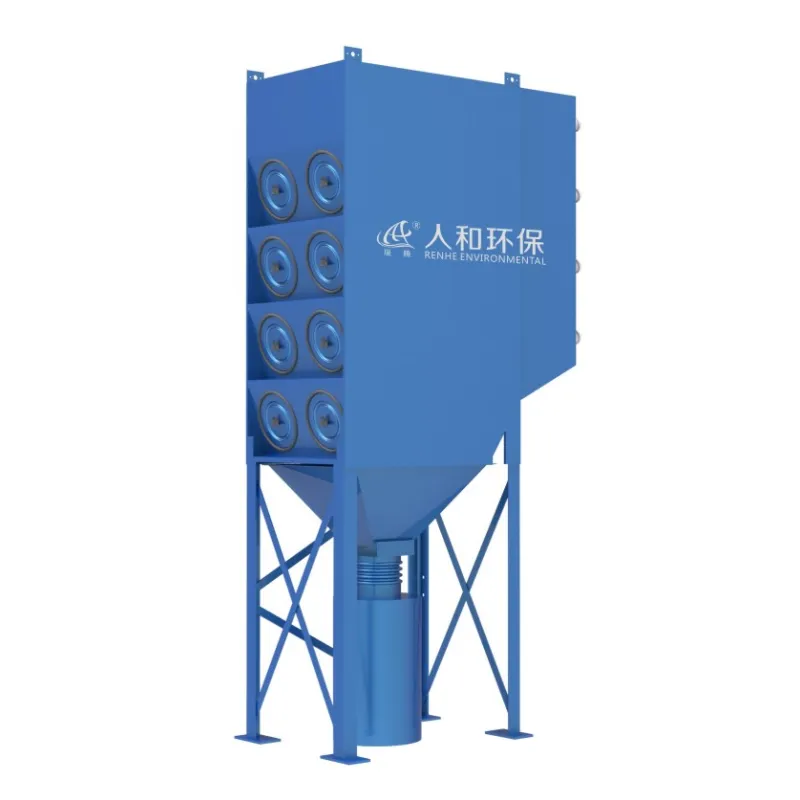
IoT-Enabled Monitoring and Diagnostics for Cartridge Dust Collectors
Real-time tracking of airflow, pressure differential, and dust accumulation via embedded sensors
Embedded sensors transform cartridge dust collector maintenance from reactive guesswork into data-driven precision. These sensors continuously monitor airflow velocity, differential pressure across filters, and particulate loading—enabling early detection of performance shifts before they impact operations. A rising pressure drop, for instance, signals filter blinding hours before visual inspection would reveal it; airflow anomalies can indicate duct leakage or fan degradation; and optical or triboelectric dust sensors quantify captured mass with high fidelity. Local controllers compare live readings against validated baseline performance curves, triggering alerts when deviations exceed a 5% threshold. In industry trials, this approach reduced unplanned filter-related downtime by 20% compared to calendar-based replacement schedules. It also enables intelligent pulse-cleaning optimization, cutting compressed-air use without compromising filtration integrity—laying the groundwork for true condition-based maintenance.
From threshold alerts to AI-driven anomaly detection: Enhancing reliability and uptime
Threshold-based alerts are just the starting point. Advanced systems apply machine learning to sensor streams—pressure, airflow, vibration, and cleaning cycle timing—to detect subtle, pre-failure patterns invisible to conventional monitoring. Trained on months of operational history, these models identify early signatures of solenoid valve decay, developing seal leaks, or uneven filter loading. Rather than waiting for a fixed limit to be breached, the AI forecasts when a filter will reach critical resistance—down to the hour—and recommends maintenance during a planned shift. Pilot deployments show this predictive layer reduces unplanned downtime by up to 32%. Crucially, the system distinguishes process-induced fluctuations (e.g., batch changes) from genuine faults, slashing false alarms. As it ingests new data, its accuracy improves—extending equipment life while reinforcing operational reliability.
Seamless Integration of Cartridge Dust Collectors with Smart Factory Infrastructure
Cloud-based remote monitoring for cross-facility visibility and centralized control
Cloud-based remote monitoring delivers unified oversight of cartridge dust collectors across single facilities or multi-site operations. Sensors feed real-time data—airflow, differential pressure, dust loading—into secure, encrypted cloud platforms, often preprocessed at the edge for low-latency local response and bandwidth efficiency. Plant managers access dynamic dashboards from any device, enabling rapid, evidence-based decisions. Automated alerts trigger when parameters breach configurable thresholds, preventing escalation to unscheduled downtime. Cross-facility analytics benchmark performance, spotlighting outliers and accelerating adoption of proven best practices. Historical trend analysis further refines filter change intervals—reducing both premature replacements and compliance risk. Corporate environmental teams leverage the same platform to verify air quality compliance across locations in real time. According to a 2023 Deloitte study, manufacturers using such cloud monitoring cut unplanned downtime by up to 32%, improving both cost efficiency and regulatory readiness.
ERP/MES interoperability: Automating maintenance logs, regulatory compliance, and cartridge replacement workflows
ERP and MES integration closes the loop between operational intelligence and enterprise execution. When sensors detect rising pressure differentials or other failure precursors, the system auto-generates maintenance work orders in the ERP, assigns technicians, and reserves replacement cartridges from inventory—eliminating manual entry and missed interventions. Compliance reporting becomes fully automated: every filter change, cleaning cycle, and emission reading is timestamped, logged, and audit-ready. Synchronizing with MES allows production scheduling to adapt intelligently—e.g., aligning filter maintenance windows with planned line stops, or adjusting cleaning frequency in response to high-dust batches. If predictive analytics flag an end-of-life filter, the MES can proactively insert a brief, non-disruptive maintenance slot. This orchestration cuts administrative overhead and ensures timely interventions that preserve equipment health. A 2024 industry survey found such integrations reduce maintenance documentation time by 40% and lift overall equipment effectiveness.
Predictive Maintenance and Energy Optimization Powered by Cartridge Dust Collector Data
Leveraging historical filter performance analytics for air quality assurance and energy savings
Historical analysis of differential pressure, airflow, and dust loading reveals the precise inflection point where increasing filter resistance begins to drive disproportionate energy consumption—without commensurate gains in filtration efficiency. Moving beyond fixed schedules, this insight enables condition-based replacement that sustains optimal airflow for consistent contaminant capture, directly supporting worker health and air quality compliance. Energy savings follow naturally: overloaded filters force fans to run at higher static pressure, while premature replacements waste energy used in manufacturing and shipping. Smart, data-optimized systems reduce total energy consumption by up to 25% versus conventionally managed units (Porvoo 2025). The result is a balanced system—protecting both indoor air quality and operational economics.
Reducing unplanned downtime by up to 32% through data-driven predictive maintenance
Predictive maintenance powered by continuous sensor data is central to intelligent factory resilience. Algorithms trained on pressure differentials, vibration signatures, and cleaning cycle efficacy forecast component failures well in advance—allowing interventions during scheduled downtime rather than emergency outages. Given that unplanned manufacturing downtime costs $5,000–$25,000 per incident, even modest reductions deliver strong ROI. Sensor-driven programs lower overall maintenance costs by 20–35% and, critically, cut unplanned downtime by up to 32% (Porvoo 2025). This transforms the dust collector from a latent risk into a predictable, high-availability asset—supporting uninterrupted production flow and reinforcing plant-wide reliability.
Dynamic Interoperability: Synchronizing Cartridge Dust Collectors with Production and Environmental Systems
A modern cartridge dust collector must operate as a connected node—not an isolated unit. Through standardized protocols like OPC UA or MQTT, its real-time data—pressure drop, fan speed, PM emissions—is shared bidirectionally with MES, ERP, and environmental management systems. This enables production to adapt dynamically: if a high-dust batch begins, the MES can automatically increase pulse-jet cleaning frequency, while the ERP logs the event for future maintenance planning. Simultaneously, continuous PM readings feed the facility’s environmental management system, validating compliance with air quality permits. When emission thresholds approach regulatory limits, the system triggers alerts to the Building Management System (BMS), which may modulate HVAC dampers or initiate load-shedding to prioritize clean air delivery. This cross-system orchestration eliminates data silos—turning the dust collector into an active enabler of production throughput, energy efficiency, and regulatory assurance.
FAQs
What are the benefits of IoT-enabled monitoring for cartridge dust collectors?
IoT-enabled monitoring provides real-time insights into airflow, pressure differentials, and particles, allowing proactive maintenance and reducing downtime by up to 32%.
How does AI improve cartridge dust collector performance?
AI models analyze sensor data to predict component failures in advance, ensuring maintenance aligns with operational schedules and avoids unplanned downtime.
Why is cloud-based monitoring important?
Cloud-based monitoring enables cross-facility visibility, automated alerts, and optimized processes while ensuring compliance with air quality standards.
What impact does predictive maintenance have on operational costs?
Predictive maintenance reduces overall maintenance costs by 20–35% and slashes unplanned downtime, improving reliability and reducing financial strain.
How does MES/ERP interoperability enhance efficiency?
MES/ERP integration automates maintenance logs, regulatory compliance, and scheduling, minimizing manual effort and ensuring timely interventions.
Can cartridge dust collector data help optimize energy usage?
Yes, analyzing historical data enables condition-based maintenance, improving airflow efficiency and reducing energy consumption by up to 25%.
Table of Contents
- IoT-Enabled Monitoring and Diagnostics for Cartridge Dust Collectors
- Seamless Integration of Cartridge Dust Collectors with Smart Factory Infrastructure
- Predictive Maintenance and Energy Optimization Powered by Cartridge Dust Collector Data
- Dynamic Interoperability: Synchronizing Cartridge Dust Collectors with Production and Environmental Systems
-
FAQs
- What are the benefits of IoT-enabled monitoring for cartridge dust collectors?
- How does AI improve cartridge dust collector performance?
- Why is cloud-based monitoring important?
- What impact does predictive maintenance have on operational costs?
- How does MES/ERP interoperability enhance efficiency?
- Can cartridge dust collector data help optimize energy usage?