When buyers compare dust collectors, they usually look at purchase price, footprint and efficiency. Compressed air consumed by pulse cleaning rarely appears in that comparison, yet it is a continuing operating cost for the life of the equipment. A pleated cartridge dust collector can reduce that cost because its cleaning system does not have to work as often. The saving is not a trick of the control settings; it follows from having more media area in the same housing. Understanding the link between area and cleaning frequency helps buyers judge whether the claim is meaningful for their own duty.
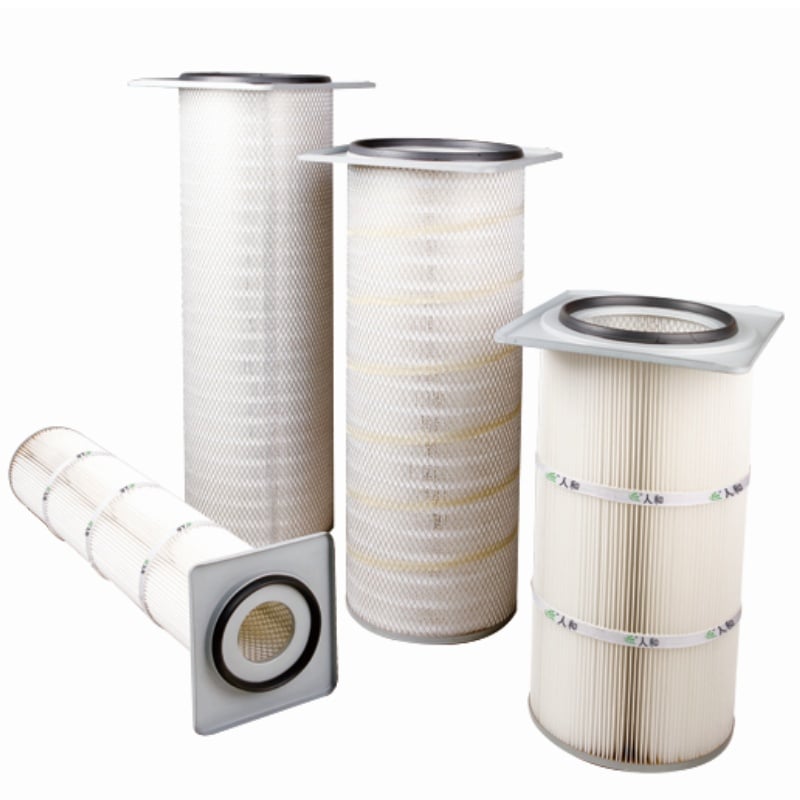
Pulse cleaning restores airflow by dislodging dust from the filter media. The sooner resistance rises, the more often the system must pulse, and every pulse consumes compressed air. A pleated cartridge dust collector packs a larger filter area into the same footprint than a conventional arrangement, so each part of the media collects less dust for a given airflow and dust load. Resistance climbs more slowly between pulses. Operators typically find that the cleaning interval can be extended while pressure drop stays within the same working band. Fewer pulses across a shift translate directly into lower compressed air demand.
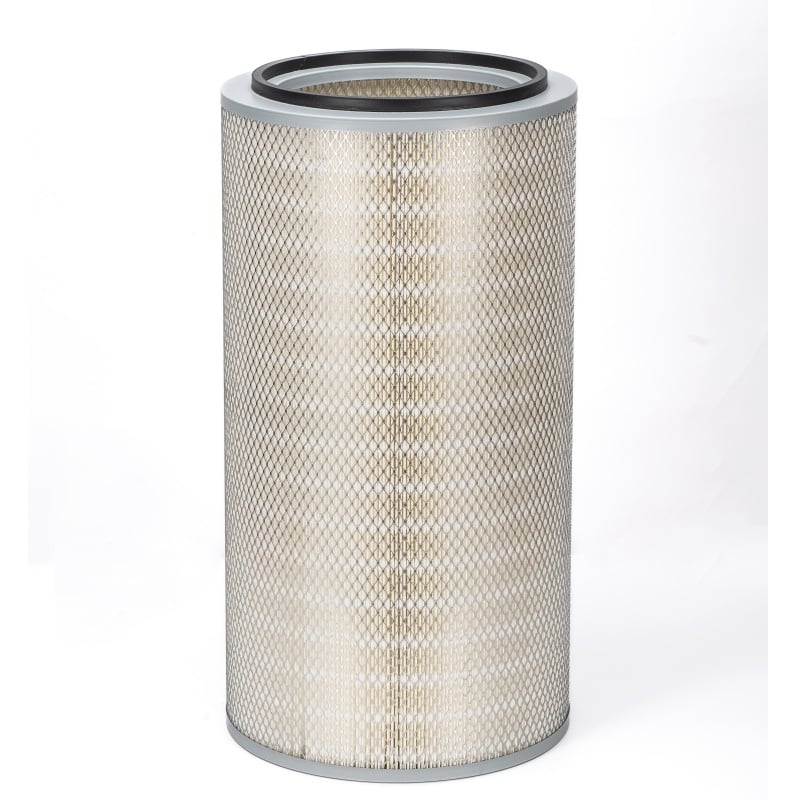
The pleated form is what makes the area gain possible. Instead of a flat or simple cylindrical surface, the media is folded so that far more surface fits inside one element. That extra surface captures dust without raising face velocity, which is why a pleated cartridge dust collector can hold lower resistance for longer. Because cleaning is triggered by differential pressure, a slower rise means fewer cleaning events. The compressed air saving is therefore a consequence of geometry and control logic, not of a smaller fan. Buyers should confirm that the stated area applies to the exact element being offered and to the real operating conditions.
No collector saves a fixed amount of air in every application. The result depends on the dust load, how fine and sticky the dust is, the airflow, and how the cleaning system is set. A pleated cartridge dust collector handling light, dry dust may pulse rarely, while the same unit on a heavy, adhesive dust may need frequent cleaning. Claims should be tied to a stated duty and checked under comparable conditions. The advantage is clearest where the dust is dry and the area difference is large. Ask the supplier to explain the basis of any saving rather than accepting a broad statement.
The benefit is most noticeable in duties where dust is dry, free flowing and continuously presented to the media. In those conditions a pleated cartridge dust collector can run for long periods between pulses, and compressed air demand falls accordingly. A pleated cartridge dust collector handling such dust may need only occasional cleaning, while the same unit on an adhesive powder may pulse constantly. Before quoting a saving, compare the dust and airflow of the new application with the case behind the claim. A supplier who asks about the dust is more credible than one who quotes a universal figure. Confirm the cleaning frequency actually achieved in service, not a theoretical maximum, and verify test documents.
An application example comes from an enterprise dismantling waste electrical and electronic equipment, a process that releases particulate as screens and housings are broken down. The ventilation had to handle dust of variable composition, so the plant selected a pleated cartridge dust collector to gain generous media area within a limited space. With the larger area, the cleaning system pulsed less often for the same airflow, reducing compressed air use across the shift. The team monitored pressure drop to confirm that the longer interval did not let resistance drift upward. A supplier such as Jiangsu Renhe could document the filter area and the cleaning logic. Review specifications before committing.
The way to confirm a compressed air saving is to measure it, not to assume it. Count the cleaning pulses over a representative period at a fixed airflow and compare with the previous collector. A pleated cartridge dust collector should show a lower pulse count if the area advantage is real and the dust is comparable. Also watch the residual pressure after each cleaning, because stretching the interval too far can leave a heavy dust cake that is harder to remove. Any saving must be weighed against stable pressure drop and clean outlet air. Request material guidance and verify test documents when comparing options.
Question one: How does a pleated cartridge dust collector save compressed air?
Answer: Its pleated media gives more filter area in the same space, so resistance rises more slowly and the pulse cleaning system fires less often. Fewer pulses mean less compressed air consumed over a shift.
Question two: Is the compressed air saving the same in every application?
Answer: No. It depends on dust load, dust character, airflow and cleaning settings. A pleated cartridge dust collector saves most where dust is dry and the area difference is large; heavy or sticky dust narrows the benefit.
Question three: Does less frequent cleaning mean a pleated cartridge dust collector works less well?
Answer: Not if pressure drop stays stable. Check the residual pressure after each pulse and the outlet appearance. If resistance climbs steadily, the cleaning interval is too long regardless of the air saved.
 Hot News
2026-11-25
2026-11-25
2026-11-25
2026-11-25
2026-11-25
2026-11-25
Renhe focuses on air filter cartridge, gas turbine air filter, Pleated Filter Media, industrial dust, Our main products have been recognized as high-tech products in Jiangsu Province, famous trademarks in Wuxi City, and CE certification.
NO. 31 Xingyuan Road, Jiefang Industrial Park, Gushan Town, Jiangyin City, Jiangsu Province, China (214414)
Copyright © 2024 Jiangsu Renhe Environmental Equipments Co., Ltd Privacy Policy
 EN