
 EN
EN
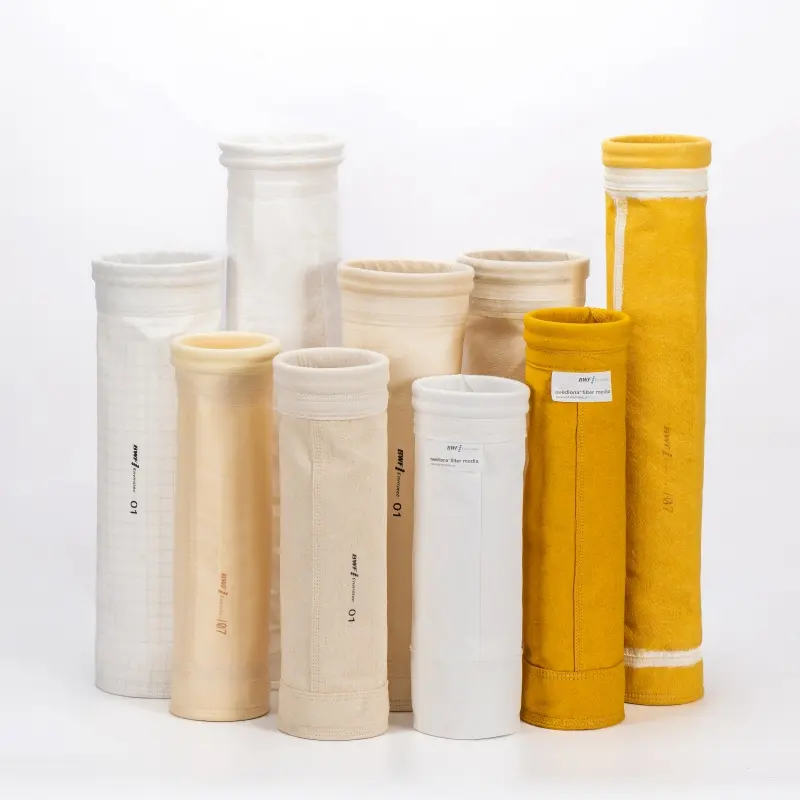
Core Technological Advantages of Nano Cartridge Filters
Sub-100 nm Pore Precision for Critical Water and Air Contaminant Removal
Nano cartridge filters feature engineered pore structures below 100 nm—enabling near-complete removal of viruses, colloidal silica, PFAS molecules, and other sub-micron contaminants that bypass conventional filtration. In air applications, nanofiber layers achieve MERV 15 performance: 85–95% efficiency for 0.3–1.0 μm particles, with independent testing confirming 99.99% capture of 0.3 μm test aerosols under standard conditions (2023). For water treatment, these ultrafine pores act as a physical barrier against heavy-metal precipitates and endotoxins, while the high surface-area architecture sustains flow rates up to 30% higher than traditional pleated cartridges. The result is dual-value performance: robust protection of downstream equipment and reduced energy demand per unit of treated fluid or air.
Nanofiber-Enhanced Polypropylene: Dual-Mode Mechanical + Adsorptive Filtration
Nanofiber-enhanced polypropylene cartridges integrate melt-blown polypropylene’s depth-loading capacity with a functionalized nanofiber veil optimized for surface capture. Larger particulates are strained mechanically in the substrate, while the nanofiber layer—often modified with polar or chelating groups—adsorbs dissolved heavy metals, emulsified oils, and trace organics. This dual-mode action eliminates the need for separate adsorption stages, simplifying system design and reducing footprint. Industry data show such composites cut pump-system energy use by 15–20% versus glass-fiber alternatives, thanks to lower pressure drop and advanced pleating that increases effective media area by 30–40%. The polypropylene base delivers broad chemical resistance—supporting use in acidic, alkaline, or oxidizing streams common in metal finishing, pharmaceutical wastewater, and chemical manufacturing. With service life extended 40–60% over conventional cartridges, these filters reduce replacement frequency, labor, and solid waste generation.
Regulatory Tailwinds Driving Nano Cartridge Filter Adoption
EU Urban Wastewater Directive (2024) and US EPA PFAS Rules Mandating Nanoscale Removal
The revised EU Urban Wastewater Treatment Directive (2024) sets binding targets for micropollutant removal—including pharmaceuticals, pesticides, and microplastics—with member states required to achieve ≥80% microplastic reduction by 2030. Simultaneously, the US EPA’s final PFAS rule establishes enforceable maximum contaminant levels of 4 parts per trillion for PFOA and PFOS—demanding filtration capable of molecular-scale capture. Nano cartridge filters meet both requirements through sub-100 nm pore precision and nanofiber-mediated adsorption. Their dual-mode mechanism provides reliable, consistent removal of persistent pollutants without requiring major infrastructure overhauls. As a result, industrial and municipal facilities face mounting regulatory pressure to upgrade prefiltration—making nano cartridges not just compliant but operationally essential. Noncompliance carries significant financial risk, including fines and forced shutdowns; early adoption supports cost-effective alignment with tightening discharge limits across North America and Europe.
Alignment with Zero Liquid Discharge (ZLD) and Industrial Recycling Compliance
Zero Liquid Discharge (ZLD) mandates—now standard in power generation, chemical processing, and textiles—require 95% wastewater recovery. Nano cartridge filters serve as high-integrity pretreatment for reverse osmosis (RO) systems, removing suspended solids, colloids, and bacteria that cause membrane fouling. By extending RO membrane life and cutting chemical cleaning frequency, they directly improve ZLD economics. Their low pressure drop and high dirt-holding capacity deliver a documented 35% reduction in energy consumption versus conventional cartridges—enhancing project viability. Further supporting sustainability goals, the EU’s Circular Economy Action Plan and US state-level water reuse incentives accelerate ZLD deployment. With service life extended 40–60% and disposal volumes reduced accordingly, nano cartridges strengthen the business case for closed-loop water management—positioning them as foundational to circular economy implementation in water-intensive industries.
Sustainability and Operational Benefits of Nano Cartridge Filters
Extended Service Life (40–60%) and 35% Lower Energy Use vs. Conventional Cartridges
Nano cartridge filters shift from depth-based to surface-loading filtration: contaminants accumulate on the nanofiber layer rather than penetrating deep into the media. This preserves structural integrity, enables efficient cake removal during backwashing or pulse cleaning, and maintains stable pressure drop over time. Validated across multiple industrial pilots, this design extends service life by 40–60% compared to standard melt-blown cartridges. The resulting lower resistance to flow translates directly into energy savings—typically 35% for pumps and fans—yielding tens of thousands in annual electricity reductions for large-scale installations. A 2024 cross-sector analysis found facilities using advanced surface-loading filters achieved average operating cost reductions of 55%, energy use drops of 38%, and maintenance expense cuts of 51%. Fewer clogging events also mean fewer change-outs—reducing labor, disposal volume, and production interruptions. These gains directly advance corporate ESG reporting metrics, reinforcing nano cartridges as high-impact levers for economic and environmental performance.
Key Challenges and Next-Generation Evolution of Nano Cartridge Filters
Mitigating Nanomaterial Leaching Risks Through Advanced Encapsulation Design
Nanomaterial leaching remains the primary safety concern—particularly when nanofibers degrade under chemical exposure or mechanical stress. To address this, leading manufacturers now embed the active nanofiber web within a fused polymer matrix, physically locking nanoparticles in place. This encapsulation uses melt-blown polypropylene carrier layers that fully envelop the functional nanofiber layer, preventing release even during aggressive cleaning cycles or extreme pressure differentials. Independent third-party testing confirms no detectable nanoparticle release over full-service life under drinking-water and medical-grade protocols—a critical milestone for regulatory acceptance and end-user confidence.
Smart Integration: IoT Monitoring and Predictive Replacement Algorithms
Next-generation nano cartridge filters are evolving into intelligent system components. Embedded IoT sensors monitor differential pressure, real-time flow rate, and particle loading—feeding predictive algorithms that estimate remaining service life with high accuracy. This enables condition-based maintenance, replacing calendar-driven changeouts and eliminating both premature replacements and unplanned failures. Remote monitoring of distributed filter banks allows operators to detect performance deviations before downstream impacts occur. When saturation approaches, the system auto-schedules replacement—cutting labor, minimizing waste, and maximizing media utilization. As Industry 4.0 adoption expands, smart filtration transforms the cartridge from a passive consumable into a data-driven asset—supporting operational resilience, sustainability reporting, and long-term TCO optimization.
FAQs on Nano Cartridge Filters
What are the primary contaminants removed by nano cartridge filters?
Nano cartridge filters are designed to remove sub-micron contaminants such as viruses, colloidal silica, PFAS molecules, heavy metals, emulsified oils, and trace organics from water and air applications.
How do nano cartridge filters support energy savings?
The advanced pleated architecture and surface-loading filtration design reduce pressure drop, enabling pumps and fans to operate more efficiently. This results in energy savings of up to 35% compared to conventional cartridges.
How do these filters align with Zero Liquid Discharge (ZLD) mandates?
Nano cartridge filters act as pretreatment for reverse osmosis systems, reducing membrane fouling and cutting chemical cleaning frequency. Their high dirt-holding capacity improves ZLD compliance and enhances sustainability.
Are nano cartridge filters safe for sensitive applications like drinking water?
Yes, manufacturers have developed advanced encapsulated designs that prevent nanomaterial leaching. Third-party testing confirms no detectable nanoparticle release under rigorous water and medical-grade protocols.
How does IoT integration benefit nano cartridge filter systems?
IoT sensors allow real-time monitoring of filter performance, enabling predictive maintenance and optimizing service life. This reduces unplanned failures, labor costs, and waste while improving overall system efficiency.
Table of Contents
- Core Technological Advantages of Nano Cartridge Filters
- Regulatory Tailwinds Driving Nano Cartridge Filter Adoption
- Sustainability and Operational Benefits of Nano Cartridge Filters
- Key Challenges and Next-Generation Evolution of Nano Cartridge Filters
-
FAQs on Nano Cartridge Filters
- What are the primary contaminants removed by nano cartridge filters?
- How do nano cartridge filters support energy savings?
- How do these filters align with Zero Liquid Discharge (ZLD) mandates?
- Are nano cartridge filters safe for sensitive applications like drinking water?
- How does IoT integration benefit nano cartridge filter systems?