
 EN
EN
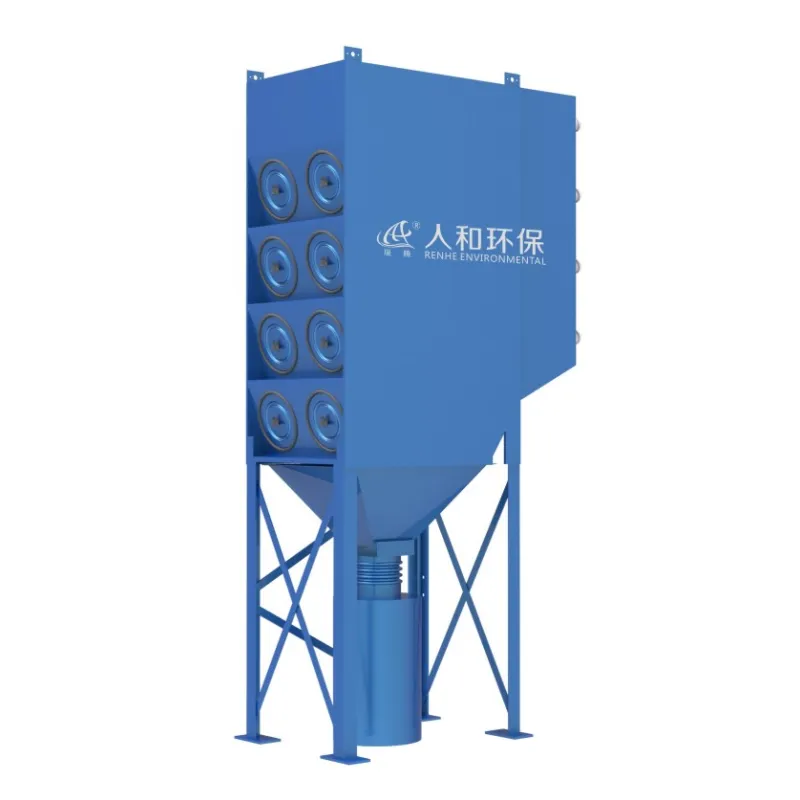
Core Mechanism: How the Self-Cleaning Reverse Air Filter Maintains Continuous Filtration
Reverse-Blow Cleaning Principle: Compressed Air Pulses Dislodge Dust Without Flow Interruption
A self-cleaning reverse air filter uses precisely timed pulses of compressed air to dislodge dust from filter surfaces while maintaining uninterrupted airflow. During normal operation, process air flows from the outside of filter bags or cartridges inward, trapping dust on the exterior. A short-duration pulse—typically 0.05 to 0.15 seconds—is injected in reverse through a diaphragm valve and blowpipe from a compressed air reservoir. The resulting shockwave flexes the filter media outward, fracturing the dust cake. Dislodged material falls directly into a collection hopper, while the fan continues drawing air through unaffected filters. Because only a small fraction of elements are cleaned at once, full filtration capacity is sustained. Key components include a compressed air manifold, solenoid-operated diaphragm valves, and internal support cages that prevent collapse. The entire sequence is rapid enough to keep pressure drop nearly constant—ensuring no production interruption.
Autonomous Triggering: Pressure-Drop Sensing and PLC-Driven On-Demand Cleaning Cycles
Modern systems rely on differential pressure sensors—not fixed timers—to initiate cleaning only when necessary. A Programmable Logic Controller (PLC) continuously monitors pressure drop across the filter media; when it reaches a preset threshold (typically 100–150 mm water column), the PLC triggers a row of pulse valves to clean that specific set of filters. After cleaning, pressure drops and the system waits for the next trigger. This on-demand approach reduces compressed air consumption by up to 40% versus timer-based systems and extends filter life by eliminating unnecessary pulsing. The PLC also logs cycle frequency and trends, helping maintenance teams detect gradual performance shifts. By aligning cleaning energy with actual dust accumulation, the system preserves operational stability without manual oversight.
Operational Impact: Eliminating Downtime in 24/7 Production Environments
Real-World Uptime Gains: Cement Plant Case Study Shows 99.8% Availability
In a cement plant processing clinker grinding dust, a self-cleaning reverse air filter replaced legacy baghouses requiring manual cleaning every 72 hours. Its autonomous, pressure-triggered reverse-blow pulses cleaned filter bags without interrupting airflow. Over 12 months, the plant achieved 99.8% operational availability—a 15% improvement over the prior year. That translated to 1,700 additional production hours and 6,800 tons of extra clinker output [Cement Industry Performance Review 2024]. Predictable cleaning eliminated scheduled shutdowns, reducing maintenance labor by 80% and annual filter replacement costs by $120,000. PLC-driven adaptation to real-time dust load optimized filter life and sustained 99.9% filtration efficiency. Workers avoided confined-space entry hazards, and stable airflow minimized energy use. The result was not just improved reliability—but a strategic enabler of continuous, profitable operation.
Industrial Fit: Solving High-Dust Challenges with Self-Cleaning Reverse Air Filter Technology
Balancing Filter Cake Formation and Efficient Discharge in Continuous Process Streams
In high-dust applications like cement or mineral processing, an optimal filter cake is critical: thick enough to capture fine particulates, yet thin enough to avoid excessive pressure drop and airflow restriction. Self-cleaning reverse air filters resolve this tension by discharging accumulated dust in situ, without halting the process. Compressed air pulses strike the clean side of the media, creating momentary reverse pressure that flexes the fabric and sheds the cake into the hopper. Because cleaning is triggered by real-time differential pressure readings, only loaded segments are cleaned—leaving others online. This selective, on-demand action maintains consistent cake thickness, airflow, and filtration efficiency (99.9%) throughout extended production runs.
Strategic Advantage: Reducing Maintenance Burden and Total Cost of Ownership
The self-cleaning reverse air filter transforms maintenance economics by automating dust removal—eliminating the manual interventions that drive cost and risk. Facilities typically see a 30% reduction in maintenance expenses and 10% lower spare parts consumption, as on-demand cleaning extends filter service life. Equipment uptime improves by 10–20%, and unexpected breakdowns fall by 70%. Labor productivity rises 5–20%, while inventory carrying costs drop 10–30% due to reduced need for backup filter elements. These cumulative efficiencies delay capital expenditures on new equipment by 3–5%, positioning the filter not as a consumable, but as a strategic asset—especially in continuous-process industries where unplanned downtime directly erodes margin.
FAQ
Q1: How does the self-cleaning reverse air filter work?
The self-cleaning reverse air filter uses compressed air pulses to dislodge dust buildup from the filter media without disrupting airflow. This ensures continuous filtration and maximized efficiency.
Q2: What triggers the cleaning cycle?
Cleaning is triggered by a differential pressure sensor that monitors pressure drop and instructs the Programmable Logic Controller (PLC) to initiate cleaning only when needed, reducing energy consumption and extending filter life.
Q3: What industries can benefit most from this technology?
Industries like cement, mineral processing, and other high-dust environments benefit greatly, as the technology handles high particulate loads without process interruptions.
Q4: Is manual intervention required for maintenance?
No, the system is fully automated, logging cleaning cycles and trends to reduce manual oversight and maintenance interventions.
Q5: Are there cost savings associated with this technology?
Yes, facilities can experience reduced maintenance expenses (up to 30%), lower spare parts usage (10%), improved uptime, and reduced inventory costs—all contributing to a lower total cost of ownership.
Table of Contents
- Core Mechanism: How the Self-Cleaning Reverse Air Filter Maintains Continuous Filtration
- Operational Impact: Eliminating Downtime in 24/7 Production Environments
- Industrial Fit: Solving High-Dust Challenges with Self-Cleaning Reverse Air Filter Technology
- Strategic Advantage: Reducing Maintenance Burden and Total Cost of Ownership
- FAQ